With the nation searching for ways to pass down mem- ories of World War II to future generations, some junior high, high school and university students -- born in the last 30 years, in the Heisei era -- are fulfilling the role by acting as storytellers with the support of central and local governments.
Now that 73 years have passed since the end of the war, preserving memories of peoples' hardships in the years immediately after the war has also become a pressing issue.
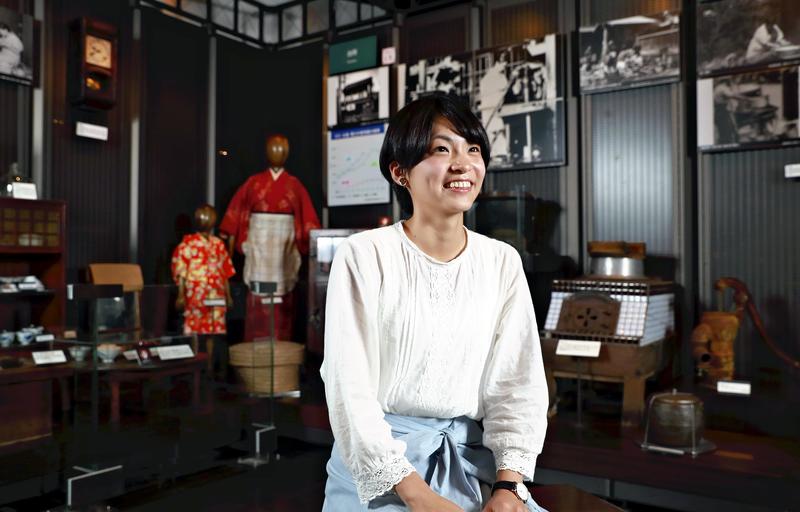
"Can people born during the Heisei era like me, who have little knowledge about war, really serve as storytellers? I worry about this sometimes," said Saho Takagi, a third-year student at Tohoku University. "However, I want to start by facing down our history and knowing our past."
The 22-year-old student has been taking the second session of a program organized by the National Showa Memorial Museum (see ) aimed at training members of the public in the storytelling skills necessary to relate wartime experiences. The facility specializes in exhibiting the daily life of people during and after the war.
Since October last year, Takagi and seven others taking part in the second session -- who are in their 20s to 60s -- have been studying such themes as the evacuation of children to the countryside, the suffering inflicted on bereaved families of the war dead, and the military pension system, using materials owned by the museum and video testimonials by those who actually experienced the times.
After completing the three-year session, the participants will work as storytellers at the museum, conveying to visitors what life was like in those days.
According to the Internal Affairs and Communications Ministry, these were about 21.8 million people alive in Japan who were born before the war as of October last year. The pre-war generation has decreased by 25 million over the course of the Heisei era, and now accounts for less than 20 percent of the total population.
People born during the Meiji (1868-1912) and Taisho (1912-26) eras -- many of whom experienced the war firsthand as adults -- made up 14 percent of the total population in 1989, but now account for only 1.3 percent.
This is why the government has been supporting programs to train storytellers of wartime experiences since fiscal 2016 at facilities like the National Showa Memorial Museum and the Shokei-kan, both in Chiyoda Ward, Tokyo. The latter facility focuses on preserving materials related to sick and wounded servicemen during the war.
For Takagi, one remark in particular left a deep impression. When she visited the Yokaren Peace Memorial Museum in Ibaraki Prefecture with fellow participants this past spring, an 89-year-old man who was a trainee in the naval aviator preparatory course during the war told her: "I'm leaving everything up to you."
"Dreaming of becoming pilots, young people of around 15 left their families, enduring a tough life and strict training," the man said. "We couldn't show any sign of weakness to our families because all letters were inspected. Some of my fellow trainees would instead lock themselves up in the toilets to cry alone."
Takagi said the man encouraged her with a bit of wisdom he was given from an older trainee who ended up serving in a suicide attack unit. "There are still so many things we don't know," he told her.
Takagi has two more years left in the National Showa Memorial Museum's training program, during which time she hopes to advance her knowledge one step at a time.
Support from local governments
Those who survived the atomic bombs in Hiroshima and Nagasaki are getting older, too. According to the Health, Labor and Welfare Ministry, the average age of holders of special hibakusha health-care certificates exceeded 82 as of the end of March this year. Although holders numbered more than 350,000 at the start of the Heisei era in 1989, their numbers had fallen by over half to 154,859.
In Hiroshima and Nagasaki, initiatives are gaining momentum to encourage young people to conduct interviews with hibakusha so that they can share their stories.
The Hiroshima city government has been running a program since fiscal 2012 to develop storytellers capable of relating what hibakusha experienced. At present, 117 people have finished the three-year program and work as storytellers at the Hiroshima Peace Memorial Museum and other facilities.
The Nagasaki city government also launched a project in fiscal 2014 in which relatives of A-bomb survivors are asked to talk about their loved ones' experiences. The program was upgraded in 2016 to include people other than relatives who have listened to hibakusha. Currently, 21 people serve as storytellers recounting Nagasaki survivors' tales.
Rena Nakashima, 16, is the youngest of the 21. The second-year high school student is a fourth-generation member of a family who survived the atomic bomb, but has never listened to her family's firsthand experiences in detail.
Nakashima spent one year listening to the experiences of an 88-year-old woman who became a victim of the atomic bombing when she was 15. She was working at a weapons factory 1.2 kilometers from the bomb's epicenter.
Nakashima began working as a narrator in June this year. At the Nagasaki Atomic Bomb Museum and her own school, she talks about the difficulties the woman experienced as a result of the discrimination she faced when trying to get into medical school and find a spouse, saying, "The atomic bomb has derailed people's lives."
"We're the last generation who can listen to hibakusha face-to-face," Nakashima said. "I want to tell people about how she feels, especially people in my generation, because she was around the same age as us when the bomb hit."
At the Center of the Tokyo Raids and War Damage in Koto Ward, Tokyo, high school and university students listened to survivors' stories about the air raids and then shared them with museum visitors during their summer vacation, displaying picture-cards and reading aloud picture books to make the stories more realistic. The students thus helped to pass down the memories of a calamity that claimed 100,000 lives. The facility will also launch a full-fledged program to train such storytellers in the future.
Meanwhile, at the Maizuru Repatriation Memorial Museum in Maizuru, Kyoto Prefecture, which holds materials that have been added to UNESCO's Memory of the World list, 63 storytellers explain to visitors about the internment of Japanese soldiers in Siberia during the years immediately after the war and the repatriation of Japanese citizens. Of the 63 storytellers, 11 are junior high and high school students.
"To ensure the quality of the stories being passed down, you need to spend a lot of time training those who discuss wartime experiences," said Satoshi Tonoike, a professor in peace studies at Akita University. "It's more important than anything to continue to make efforts."
(From The Yomiuri Shimbun, Aug. 16, 2018)
--National Showa Memorial Museum
Opened in Kudanminami, Tokyo, in 1999, the facility collects, exhibits and preserves documents and testimonies on the hardships experienced by the general public, including bereaved families of the war dead, from around 1935 to 1955 in the Showa era.
Resolve to keep memories from fading
If you look at both World War II and the period of great hardship immediately after the war, people in generations who have no experience of those times account for 70 percent of the population. It has become more difficult to discuss with real emotion the misery of war, the pains and sadness of people's lives at that time, and how hard it was to rebuild the nation after the war.
But no matter how difficult it becomes, we have to pass down the preciousness of peace. We have to have the will and resolve to resist allowing these memories to fade over the course of time.
One of the ways to resist this fading has been demonstrated by the Emperor and Empress, who have interacted with those who went through the war. Through their many silent bows during trips to console the spirits of the war dead, the Emperor and Empress seem to say, through their gestures, that we must never forget the value of peace and the misery of war.
The National Showa Memorial Museum was built to tell subsequent generations about the hardships experienced by the general public, including bereaved families of the war dead, during and after the war. It is important to be creative and imaginative when passing down these memories in the years ahead, and our museum is working hard to feature visual and interactive elements in our exhibits. We have to ask the young people born in the Heisei era to help us.
When we ask children to comment on their visit to our museum, many of them say something like, "For the first time, I understand how precious peace is" and "Now I know the hardships my grandfather went through." Some children also learn about the air raids for the first time when they come here.
War involves an aspect of fear in which the general public becomes caught up in misplaced zeal and supports the war regime. It is difficult to convey this aspect, but I believe this is one of our missions.
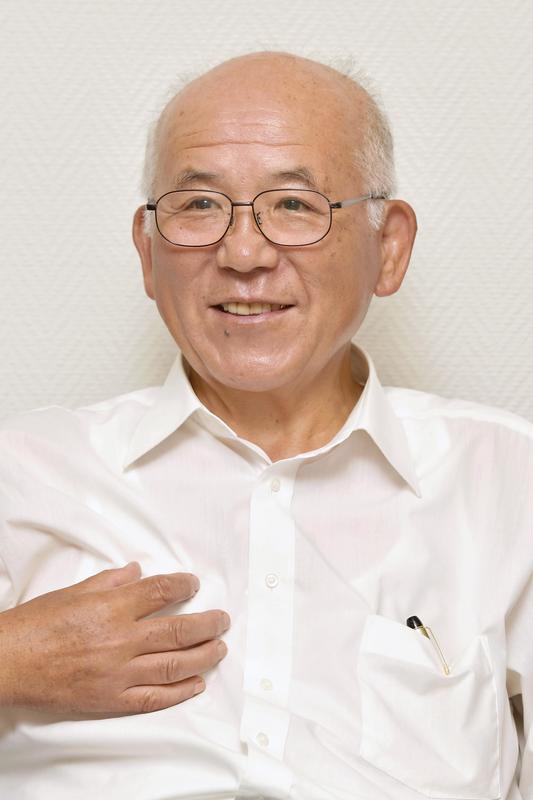
--Shingo Haketa, 76
Director of National Showa Memorial Museum, former grand steward at Imperial Household Agency
Read more from The Japan News at https://japannews.yomiuri.co.jp/