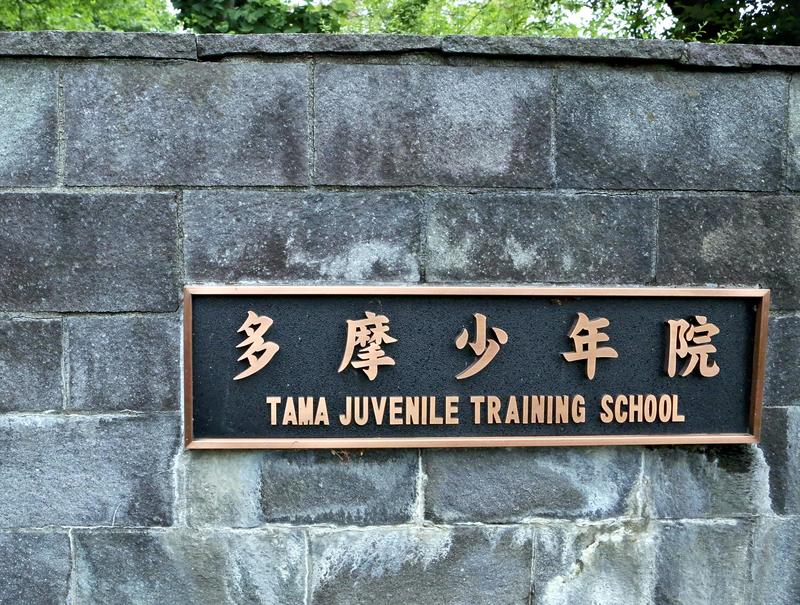
Juvenile training schools (see below), group homes for boys aged 12 to 20 who have committed an act of delinquency, are promoting new initiatives to prevent repeat offenses.
The efforts support the boys' reintegration into society through computer training courses run by nonprofit organizations, and classes taught by professional external instructors for advancing to higher education. The boys live in the training schools for about a year. What exactly are they taught in preparation for their return to society?
The number of boys admitted to juvenile training schools over the past 20 years has declined from a peak of 6,052 in 2000 to 2,147 in 2017.
However, the number of juveniles who were punished for repeat offenses that they committed while temporarily released from the facilities has remained at almost the same level, at 18 percent to 23 percent during the period. For unemployed youths, the percentage approaches 50 percent.
For that reason, the Justice Ministry has in recent years been making efforts to boost skills that will widen employment opportunities, such as getting a qualification equivalent to a high school diploma, and improving personal computer and communication skills.
In fiscal 2015, the Tama Juvenile Training School in Hachioji, Tokyo, which is located on Tamakyuryo hill, set up a course for those wanting to pass a test for a high school equivalency certificate (see below).
The initiative was the first among juvenile training schools nationwide. Since last summer, the school has been inviting professional instructors in mathematics and English to come in once or twice a week to enhance the quality of the education.
Toshio Matsutomi, 51, is a teacher dispatched from the Tokyo-based Educational Network of the Z-Kai group. For his lesson, he stands at the teacher's platform, which has a panel attached stating the number of days left until the certificate exam day, just like a cram school. Matsutomi normally works at cram schools and as an extracurricular supplementary teacher at elementary, junior high and high schools.
On a day at Tama Juvenile Training School, Matsutomi taught quadratic equations, which are taught the first year at a normal high school. He smiled as he started the class, saying, "We'll be learning about algebraic equations today."
Their answers to a question dealing with an algebraic equation varied widely, as the boys made a mistake in calculating the positive and negative numbers.
Matsutomi drew a number line on the whiteboard with a black marker. Then he said: "The right-hand side is positive; the left-hand side is negative. Do you understand how to calculate it now?"
In general, more than half of the youths at juvenile training schools only went as far as junior high school or dropped out midway through high school. Boys who struggled with their studies in junior high school will be stumped by these basic calculations.
Matsutomi said: "They can pass mathematics for the certificate test as long as they can grasp the basics of the mathematics that are taught in the first year at high school. However, many are bad at calculations and algebra equations, so it's not easy to improve their basic ability."
However, there are also boys who teach themselves advanced mathematics of the kind taught in the third year at normal high schools.
"This place is a school on a small island. There's a big difference in academic abilities among the boys, and on top of that, they're leaving the facility in just a year and newcomers will be replaced soon. So it's impossible to teach them uniformly in class," said Daisuke Iino, a dormitory staff who looks after the certification course at Tama Juvenile Training School.
"Getting the certificate is your passport to the future," Iino said when giving guidance to the boys at the start of the class.
First of all, most companies require a high school diploma. With the certificate, the boys can take exams for universities or vocational schools, which gives them a diverse range of options for future employment.
In construction and other industries, having specified national qualifications means large reductions in the length of on-site experience that is required.
For the first time, more than 50 boys took the certificate exam this year. Eight years ago, it was 14. Little by little, the teaching staff's view that they must pass the certificate exam to be able to reach the next level in their lives after being released is working its way into the boys' consciousness.
Aspiring to diverse jobs
Ibaraki Nougei Gakuin, a juvenile training school in Ushiku, Ibaraki Prefecture, near the great statue of Ushiku Buddha, holds a personal computer course on Tuesdays in cooperation with the NPO Sodateage-Net based in Tachikawa, Tokyo.
Sixteen boys put on headphones and struck keys on the keyboard in accordance with voice instructions related to the Japanese writing system.
"Are you all done? Next, you're going to practice writing sentences. So imagine your favorite snack?" said lecturer Keiko Sato, 56, from Sodateage-Net. A well-built youth broke into a smile as if he was thinking of his favorite snack.
"I like dorayaki cake." Another boy said, "I like cream parfaits."
About 10 lines of text with hiragana, katakana and kanji characters swiftly appeared on the screen of one of the boys who was typing on the keyboard with a light touch.
However, another boy's fingers stopped moving after typing the word "I." Many of them were using a personal computer for the first time.
"Even if they're a bit nervous at first, they gradually come to enjoy it. I hope the experience will inspire them to get used to using computers," Sato said.
The course started in 2016. Ibaraki Nougei Gakuin asked for help from Sodateage-Net, which provides job assistance for youths, when juvenile training schools nationwide were obliged to teach their residents about personal computers, as a skill necessary for those in the workforce.
"The scope of their employment opportunities expands when the boys are able to use computers somewhat. Even if it's not directly related to their work, we can assume that computer experience will be useful," said Yoshihide Imura, 43, head of the section handling home room activities at Ibaraki Nougei Gakuin. Imura has been involved with the course since its start.
After completing the course, a 19-year-old boy who wants to work in the construction industry revealed his dream, "I'm going to use what I've learned about computers at the construction site, and I want to have my own company in the future."
Ministry emphasizes certificate
Efforts aimed at increasing the number of successful applicants for the high school certificate exam are increasing nationwide. In fiscal 2015, the Justice Ministry included into its budget expenses mainly for the distribution of specialized teaching materials and the invitation of external lecturers.
The ministry also set up a course for intensive instruction in preparation for the exam at Niigata Shonen Gakuin, a juvenile training school in Nagaoka, Niigata Prefecture, targeting Tama Juvenile Training School as an intensive course last fiscal year. This fiscal year, it went on to support 11 other juvenile training schools for that purpose.
The number of exam applicants from juvenile training schools all over the country increased from 216 in fiscal 2007 to 548 in fiscal 2016.
Two factors lie behind the increasing importance of the certificate: advances in various industries and the changing awareness of the boys. In the past, the boys felt they were not well suited to studying, and their main places of employment were construction and public engineering sites, where they did physical labor. Consequently, the vocational training at the juvenile training schools placed more importance on woodworking and qualifications for welding and heavy machinery.
However, in recent years, the boys are aspiring to a more diverse range of jobs.
According to Sadaaki Koyama, director of the Juvenile Treatment Division of the Correction Bureau of the Justice Ministry, which oversees 51 juvenile training schools nationwide: "The majority of the boys say they want to do physically active work, but we're also seeing an increase in the number who want to work in air-conditioned offices."
Most clerical work requires a high school diploma or higher education. Thus, passing the certificate exam represents the first step toward getting that kind of employment.
Another pillar in supporting the boys' reintegration into society is gaining skills suitable for the workplace.
This was considered the centerpiece of corrective education in the new juvenile training school law that came into effect in 2015. However, just as with personal computer skills, there are subjects that legal instructors at the correctional facilities find it difficult to teach.
Takeshi Aoki, a chief specialist at Ibaraki Nougei Gakuin said: "By having external specialists come in and teach in fields that can't be handled by the staff, we're able to learn the teaching methods. We want to widen the scope of such cooperation with external staff in the future."
In the past, there were many juvenile training schools where local benefactors working in a personal capacity provided vocational counseling and sentiment education. They were said to have a closed-off atmosphere.
In recent years, initiatives at all juvenile training schools have become more active in terms of using external organizations such as NPOs and companies. These initiatives are varied, covering areas such as individual learning programs, training of dogs protected by animal care centers and other facilities, and group work aimed at increasing confidence by having participants discover their own strengths.
With the reintegration of correction facility residents in mind, the main focus is on strengthening their practical skills. The initiatives extend beyond this, however.
"Knowing there is someone else in society who's watching over you is also highly meaningful in terms of preventing repeat offenses," Koyama said.
(From The Yomiuri Shimbun, Oct. 11, 2018)
-- Juvenile training schools
Juvenile training schools are under the jurisdiction of the Justice Ministry. Unlike prisons, juvenile training schools are considered to be correctional facilities that rehabilitate youths for their reintegration into society. In 2017, 35 percent of those released found employment, 4 percent returned to high school, 2 percent returned to junior high school, 42 percent were job hunting and 14 percent were seeking to advance to higher education.
Test for a high school equivalency certificate
Applicants are examined in eight to 10 subjects, such as Japanese and English. If they pass all the subjects, they are recognized as having achieved the same academic level as those who have graduated from high school. The certificate was introduced in fiscal 2005, in place of the university entrance qualification examination. The exams are held twice a year, in August and November. It has been possible to take exams at juvenile training schools since fiscal 2007.
Read more from The Japan News at https://japannews.yomiuri.co.jp/