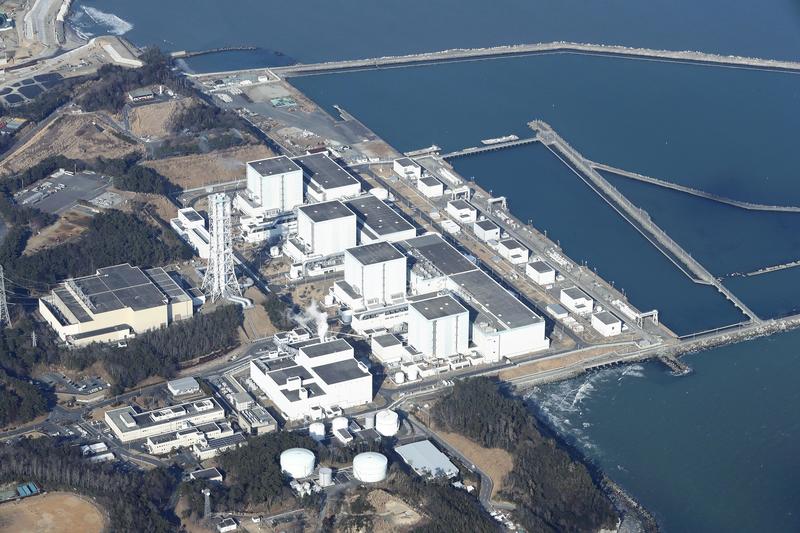
Tokyo Electric Power Company Holdings Inc., which suffered a nuclear accident at its Fukushima No. 1 nuclear power plant, announced that it would also decommission reactors at its Fukushima No. 2 power plant. There has been much criticism of TEPCO's decision to close the No. 2 plant seven years after the disaster. What finally brought TEPCO to decommission the No. 2 plant and how is the company formulating a management strategy for Fukushima's reconstruction?
Delayed decision
The No. 2 power plant's first reactor began operating in 1982. The facility was submerged by tsunami caused by the 2011 Great East Japan Earthquake, losing its reactors' cooling function. The company managed to bring the reactors to a cold shutdown state, but the situation was very serious for some time.
After the accident, resolutions calling for the decommissioning of the reactors were passed one after another at assemblies of the Fukushima prefectural government and other local governments, but TEPCO continued to put off the decision.
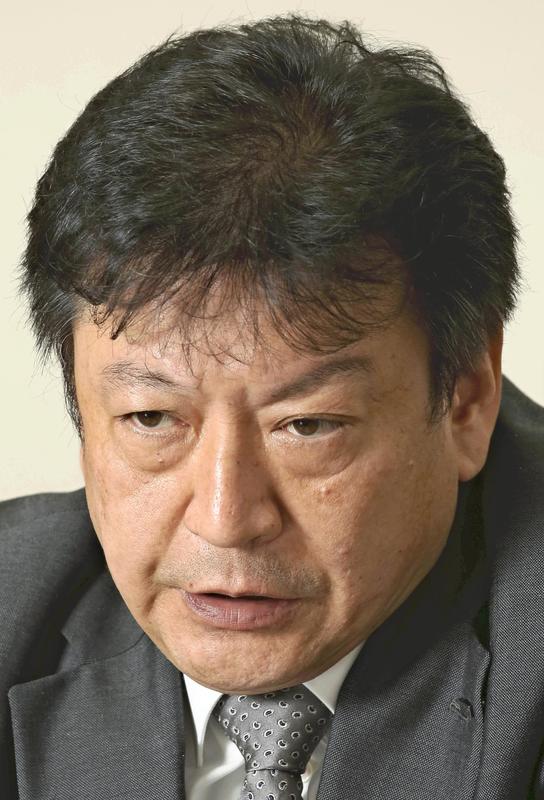
On June 14, TEPCO President Tomoaki Kobayakawa said, when he visited Fukushima Gov. Masao Uchibori, "We're going to start discussions to decommission all reactors [at the No. 2 plant]."
The announcement to close the reactors was made not only to support Fukushima's recovery, but also to back Uchibori in this autumn's gubernatorial election. This is because TEPCO hopes to pave the way to release into the ocean a large amount of treated water -- or water from which most radioactive materials have been removed -- it is now storing in tanks at the No. 1 plant.
Only a few concerned individuals were informed of the announcement in advance. Even Takeo Ishii, the head of the No. 2 power plant, did not know until just before the announcement.
A source related to TEPCO said, "President Kobayakawa has been eager to announce the decommissioning plan since he was appointed to the post last year."
Nevertheless, why was the decision delayed?
A high-level employee said: "The construction of the Higashidori nuclear power plant in Aomori Prefecture has been suspended, and we don't know when it will be finished. Since the time of previous President Naomi Hirose, some people have thought we might eventually be able to reactivate the No. 2 plant. That's why it's taken so long."
TEPCO also had to consider the fact that if it moves forward with the decommissioning, it would be about 80 billion yen short of reserve funds for decommissioning and would have to record an impairment loss for the facility. There is no denying that the company delayed the decision because it prioritized the achievement of its business performance objectives.
Reconstruction plan delayed
Meanwhile, there can be no prospect for the reactivation of TEPCO's mainstay revenue source, the Kashiwazaki-Kariwa nuclear power plant in Niigata Prefecture.
The Niigata prefectural government, which has the virtual right to decide the reactivation of the Nos. 6 and 7 reactors, intends to continue to examine their safety on its own. The Kashiwazaki mayor is also demanding a plan to decommission the Nos. 1 to 5 reactors as a condition for reactivating the other two.
There are voices within TEPCO that if the company seeks understanding for the reactivation of the Nos. 6 and 7 reactors, it would eventually have to announce the decommissioning of the Nos. 1 to 5 reactors.
TEPCO is responsible for 16 trillion yen of the entire 22 trillion yen cost of dealing with the nuclear disaster at the Fukushima No. 1 plant. The scenario for TEPCO's management plan to earn 500 billion yen a year to compensate for this cost is already starting to fall apart due to the reactivation delays.
Kobayakawa hopes to change the direction from the current management relying on nuclear power plants that are unlikely to begin operating any time soon, and thermal power generation that faces growing opposition on environmental grounds, and wants to create new sources of income. The decommissioning announcement seems to reflect such an idea.
Kobayakawa studied urban engineering at the Tokyo Institute of Technology, and dealt with corporate clients at TEPCO for a long time. He sold a power generation system equipped with large storage batteries to corporate clients in the 1990s, and is known within TEPCO for "not having been so keen on nuclear power" since before the accident.
Large storage batteries are gaining attention as a way to minimize fluctuations in solar and wind power generation, which depend on the time of day and weather conditions.
TEPCO plans to start an offshore wind power generation project capable of generating up to 3 million kilowatts, the equivalent of power generated by three nuclear reactors. It is unclear if this will be the starting point of a new management strategy for the company. TEPCO continues to face a steep path on the way to rebuilding itself.
(From The Yomiuri Shimbun, July 28, 2018)
Offshore wind power seen as most promising type of energy
The Yomiuri Shimbun asked TEPCO President Tomoaki Kobayakawa about the company's strategy for renewable energy. The following is excerpted from the interview.
The Yomiuri Shimbun: How will TEPCO grow a new business with earning potential on the 100 billion yen scale to recover from the nuclear disaster?
Kobayakawa: If we stay shut up in our traditional areas of business, we will not be able to fulfill our liability for compensation and responsibility to reconstruct Fukushima. We're now seeing potential to increase our profits by around half with renewable energy in Japan and hydroelectric energy overseas. We want to get a general idea this fiscal year of how and where we're going to earn the rest.
Q: How will you expand renewable energy, which currently makes up only 15 percent of the overall mix of power sources?
A: We will position it as a mainstay power source and take it seriously. The most promising type of energy is offshore wind power. Japan is surrounded by the sea and wind conditions are especially good offshore. This resource has the potential to produce up to about 3 million kilowatts. We expect to start operating wind power generation in a few years.
Q: Won't it be difficult for TEPCO to expand its renewable energy business alone?
A: Japan is behind other countries in terms of renewable energy development in a full-fledged manner. Because the market has not been clearly demonstrated, no manufacturers have cropped up. TEPCO wants to clarify our scale of development and cooperate with other companies to create an integrated system [from equipment production to power generation and transmission]. We want to reach out to companies in Japan and overseas.
Q: Do you intend to build offshore wind power facilities in Fukushima Prefecture?
A: It would definitely be possible to have a manufacturing base in Fukushima. TEPCO can't survive for decades on nuclear power and our decommissioning projects alone. There would be a lot of value in successfully implementing our new projects in Fukushima for the recovery of this disaster-affected area.
Q: Why were you so slow in announcing the decommissioning of the No. 2 power plant?
A: Part of it was that we had to stabilize the Fukushima No. 1 power plant. Amid strong negative misperceptions about nuclear power plants, we thought we had to clearly indicate our direction [toward decommissioning].
Q: Your company is starting many new projects in addition to renewable energy. Are there no problems with profitability?
A: Possibilities for energy-related businesses using telecommunications technology are still unclear. We hope to create a system to observe our new projects by field and level, and then decide whether to keep them going.
Read more from The Japan News at https://japannews.yomiuri.co.jp/


.png?w=600)