OSAKA -- Death records have been discovered in Mongolia for 43 captured Japanese soldiers and others who were sent to Siberia after World War II but died on their way to detention facilities. The Health, Labor and Welfare Ministry will embark on efforts to uncover the overall picture of those who died during transfer, a matter for which almost no records were previously available and that had attracted little attention. The death records were found in an archive previously unknown to the ministry, highlighting the difficulty of collecting detention records.
Blind spots in surveys
A total of 575,000 Japanese, including soldiers and civilians, were captured by the Soviet Union and forced to work after the war, and 55,000 of them died. This is generally known as the "Siberian internment." In actuality, however, internment camps were located throughout the Soviet Union. It is said that in Mongolia, which was then a Soviet satellite country, 14,000 people were handed over in exchange for it having participated in the war against Japan and 1,700 of them died.
Despite its obligation to notify the families of those who were killed in battle or died of illness in the war, the Japanese government was unable to collect information on the deaths of detainees in the distant countries. Moreover, the Cold War made it difficult to ask the Soviet Union to disclose the facts. Finally, in 1991, then Soviet President Mikhail Gorbachev visited Japan, bringing a list of about 38,000 of those who had lost their lives. The provision of data to Japan began, and Mongolia followed suit.
The ministry has been working on comparing the data with other sources, such as records given by returnees through interviews, to determine the identities of individuals on name lists in languages such as Russian and Mongolian. As of this month, 40,111 people had been identified. Information on 15,000 people remains unavailable, either because it has not been provided or for other reasons.
A former detainee, who has since died, once told me that the book on the war cannot truly be closed until the very last person is accounted for.
The majority of people identified are those who died at detention facilities. "The matter of people who died after the disarmament of the Japanese military and before reaching detention facilities was a blind spot in the surveys," said Kiyofumi Kato, an associate professor at the National Institute of Japanese Literature and an expert on internment.
New records found
"Really? Mongolia has those kinds of records?"
When I went to the ministry last October with information about the records of deaths during transfer, ministry staff could not hide their surprise.
Mongolia had previously provided data including a list of 1,597 people who died at detention facilities and individual registration information covering 10,330 people. Japan's welfare ministry believed that these documents, kept at the National Central Archives of Mongolia, were all the material that Mongolia had. Ministry representatives had never even entered the central archives of Mongolia's ministry of defense, where the records of deaths during transfer were found.
In Russia, as well, new records were found in April in an archive previously uncontacted by the ministry. Takeshi Tomita, an internment researcher and professor emeritus at Seikei University, announced that he had found records of 114 Japanese sentenced to be shot to death for crimes such as espionage at the Russian State Archive of Social and Political History, which keeps the records of the Soviet Communist Party.
Meanwhile, the amount of information provided by the Russian State Military Archive, long relied upon by the ministry as a principal data provider, is now dwindling. The information made available last fiscal year was three sheets listing deaths at detention facilities in Georgia that covered a total of only 56 people.
Harsh transport conditions
"There may have been quite a number of detainees who are not included in the existing information routes, such as those who died during transfer or those who were punished for war crimes," said Ken Arimitsu, representative caretaker of the Support and Documentation Center for ex-POWs and Internees by Soviet Russia after WWII, Japan, a group founded by former detainees and others. "It is necessary to expand sources of data provision to archives of military and public security organizations."
The ministry also feels the need to expand the scope of the information provision routes. Last fiscal year, staff were dispatched to three countries in the former Soviet Union, including Kazakhstan, with the aim of uncovering additional materials. In addition, the ministry will soon sign a memorandum with Mongolia's central archives of its ministry of defense, which will make it possible to search the facility's entire collections.
Transport from locations such as Manchuria, current Northeast China, and the Korean Peninsula to detention facilities was a journey of up to more than 10,000 kilometers that took several months. According to testimony of former detainees and others, detainees were forced to ship what had been their own supplies to the Soviet Union before their departure, and older soldiers, as well as younger ones with weaker constitutions, were the first to collapse inside their freight cars or on marches due to insufficient nutrition and infectious disease.
To explain the decrease in the number of detainees delivered to the Soviet Union by transport units, death records are believed to have been created in the presence of Japanese military medical personnel. The causes and circumstances of the deaths are recorded in Japanese, providing surviving family members with valuable information about the ends of their relatives' lives. Although it is believed that additional records still exist within Russia's central archives of the ministry of defense, there is a high barrier of confidentiality.
Can the momentum toward additional disclosure be continued after receiving the records from Mongolia? Effort is needed to ensure that progress does not end with these latest 43 people.
Internments in Mongolia 'should be remembered'
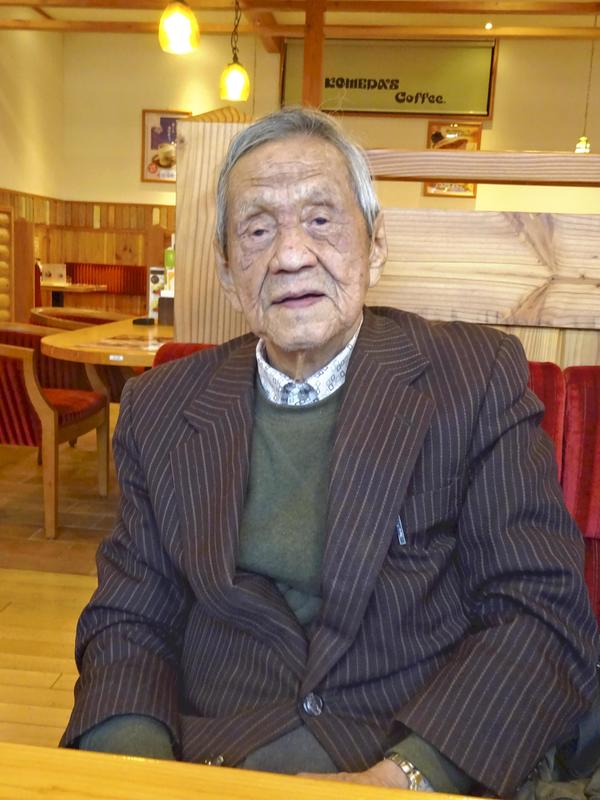
"It was absolutely miserable," recalls Yasuhiro Nagashima of Ota, Gunma Prefecture, who was detained in Mongolia as a trainee officer in Japan's Kwantung Army Intelligence Department.
Immediately after arriving in Ulaanbaatar in October 1945, he was infected with typhus. Marched from Manchuria in the pouring rain and then packed into a cramped freight car, he was then transferred to the bed of a truck, his physical health shattered. He spent two months in a clinic. After recovering, he was assigned to deliver bodies to a graveyard, burying about 20 people in two weeks.
"At an internment camp in the mountains where about 20 people who settled in Manchuria had been put to work cutting trees, when some people from our group went to deliver food, they were shocked to find that everyone there had starved to death," he said.
Most detainees excluding some prisoners returned home from Mongolia in 1947. The period of detention, at roughly two years, was shorter than for detainees in the Soviet Union, where people were detained for up to 11 years. However, the death rate of the detainees in Mongolia was 12.1 percent, which exceeds the 9.6 percent overall death rate for detainees in Siberia.
"The Soviet Union had previously detained Germans and others and was accustomed to handling them, but Mongolia did not have a system to take in detainees," said Kiyofumi Kato, an associate professor at the National Institute of Japanese Literature. Materials such as food and cold weather clothing for the Japanese were supposed to be taken from the supplies captured from Japan by the Soviet Union in the war, but they were insufficient.
The Mongolia-kai (Mongolian association), a group including former detainees and surviving family members, used to visit Tokyo's Yasukuni Shrine to pay respects to the dead on Nov. 23 every year, but last year was its final visit due to the aging of its members. "I hope the [Japanese] government will pass on to future generations the fact that there were also people detained in Mongolia," Nagashima said.
(From The Yomiuri Shimbun, Aug. 18, 2018)
Read more from The Japan News at https://japannews.yomiuri.co.jp/