Combatting websites that offer pirated manga and magazine content has become a pressing task. A government panel of experts recently remained deadlocked over the possible introduction of blocking access to such websites. Given this development, making it illegal to download pirated content has been floated as one countermeasure that could be taken for the time being.
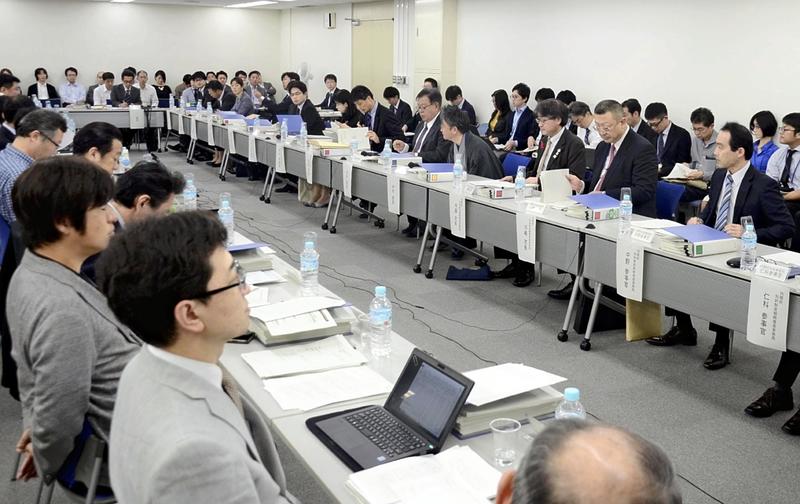
On Oct. 30, Keio University Prof. Ichiya Nakamura, co-chairman of a panel at the government's Intellectual Property Strategy Headquarters, announced that members were unable to reach a conclusion on whether access to certain websites should be blocked. "A lot of attention was focused on our panel, but we were unable to sum up our discussions," Nakamura said.
In April, the government singled out Mangamura and two other pirated content websites that were especially unscrupulous and asked internet service providers to block access to them.
Blocking involves an internet service provider examining the websites that online users attempt to view and denying access to certain sites. Under normal circumstances, this would amount to a violation of communications secrecy, which is prohibited under the Telecommunications Business Law.
Consequently, the government concluded that blocking would not be illegal if it were taken as an "emergency measure" (see below) under the Penal Code to prevent the serious copyright infringements caused by these websites. Such a step has a precedent. Since 2011, domestic access to websites carrying child pornography has been blocked, in line with the government's interpretation that this was an "emergency measure" to prevent violations of the personal rights of the children victimized by porn.
The government attempted to use the step taken in April as grounds for the sweeping implementation of a system for blocking access to pirate websites. Under the intended scenario, the panel would endorse the plan, and, according to Chief Cabinet Secretary Yoshihide Suga, the government "would accelerate considerations" necessary for putting the legal framework in place.
However, sparks started flying from the panel's very first meeting in June. Website blocking advocates, including Kadokawa Dwango Corp. President Nobuo Kawakami, who said, "This problem can't be resolved other than by steps similar to blocking," wrangled with opponents such as University of Tokyo Prof. Joji Shishido, who insisted, "Blocking will lead to the mass surveillance of telecommunications."
The panel held nine meetings in total, but they degenerated, with both sides "mudslinging" and resorting to emotional arguments, according to sources. The rift became so wide that in September, nine of the panel's 20 members submitted a joint statement calling for any legislation on website blocking to be shelved.
The compilation of an interim report also ran into trouble. Blocking opponents would not even allow the creation of a report that spelled out both sides of the debate. The panel was eventually forced to give up writing the report. "This situation is unheard of," an exasperated Nakamura said.
However, the panel members raised no objections to imposing controls on so-called leech sites, which aggregate links leading to websites with pirated content.
In consideration of these developments, the government plans to put off discussions on the appropriateness of blocking for the time being and change tack to quickly implement "steps that can be taken."
In addition to imposing restrictions on leech sites, other measures the government hopes to take in the short term include making it illegal to download still images such as manga when the user knows they are being unlawfully distributed.
The planned controls on leech sites will restrict the activities of these sites' operators. An official of the Cultural Affairs Agency said, "The impact on internet users will be minimal."
The Copyright Law contains criminal penalties for downloading pirated versions of music and videos, which reportedly has had some deterrent effect. The government is preparing to submit a bill to revise this law during next year's ordinary Diet session.
Publishers have welcomed the steps taken by the government.
"We anticipated that the discussions on blocking would end in an unusual manner," an official of a major publisher said. "For now, we should take options other than blocking and see how they pan out. In that regard, moves to enshrine other countermeasures into law mark a step forward."
(From The Yomiuri Shimbun, Nov. 1, 2018)
Legal 'discovery' procedure led to disclosure of website info
By Teiji Osawa / Yomiuri Shimbun Staff Writer
The wheels are turning for moves to stamp out pirated content websites through legal procedures.
Cloudflare Inc., a major content delivery network based in San Francisco that enables stable access to websites, was used by Mangamura. On Oct. 9, the Tokyo District Court decided to issue a temporary injunction that ordered Cloudflare to delete article data and disclose information about who was distributing the material, because it was providing services to a website that violated image and other rights.
The problem was a Japanese-language website that carried photos taken without permission and articles that infringed on people's rights. In July, lawyer Hiroaki Yamaoka filed a complaint, alleging that Cloudflare stored a cache file of the website's data on its own servers and demanded the company delete the data it had allowed to be seen. The district court upheld this complaint. Yamaoka suggested this method could open the way to getting rid of websites offering pirated content.
According to a statement delivered by the panel at the Cabinet Office, Cloudflare was embroiled in another court case in June. Takashi Yamaguchi, a U.S.-qualified lawyer, filed a suit in a U.S. court in which manga artists whose work had been carried by Mangamura, which used Cloudflare, were named as the plaintiffs, and Mangamura's operators, whose names were unknown, were listed as the defendants. The lawsuit sought the payment of damages for copyright violations. An evidence disclosure procedure called "discovery" was used to disclose materials that could help identify the operators, including the names of the server contract holders, addresses, email addresses and mobile phone numbers.
This legal procedure reportedly could also be applied when pirated content websites use other U.S. content delivery networks. However, the first interim proposal by the panel of experts stated that one condition for website-blocking legislation to be considered constitutional would be that "no other effective methods exist, or they are practically impossible to implement." The discovery system and other legal procedures are also having an impact on the panel's discussions.
-- Emergency measure
An action that would, under normal circumstances, be considered unlawful but is unavoidably performed to avert a present danger to the life, body or property of oneself or any other person. The harm produced by such an action must not exceed the harm to be averted. Article 37 of the Penal Code stipulates that if the previous condition is met, such an action is not punishable.
Read more from The Japan News at https://japannews.yomiuri.co.jp/