“We don’t measure ourselves against other Super League clubs. We measure ourselves against the biggest sporting brands in the world.”
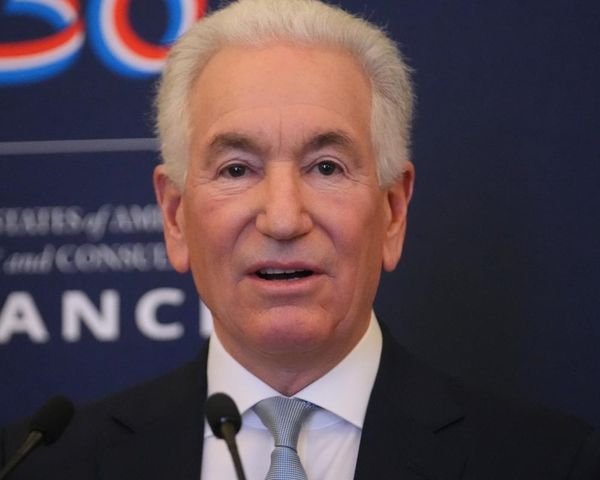
Warrington chief executive Karl Fitzpatrick is addressing the club’s media and marketing team around a conference table at Hotel Football, overlooking Manchester United ’s iconic home.
They’re there to analyse the successes - and failures - of the club’s emboldened approach in 2019, which yielded, among other things, an increase in home attendances of 12.5% in league matches.
“The reason we’ve come to this location is because it’s in the shadows of Old Trafford,” Fitzpatrick continues. “It’s not just because it’s where the Super League Grand Final is played, but Manchester United are an iconic leading sports brand, and that’s what we’ve got to aim for.
"Obviously Manchester United are on a different level to most, but we want to get to a position where we are a leading sports brand.”

Mirror Sport is given exclusive access to the day’s discussions, and what unfolds over the next seven hours is fascinating.
From targeting untapped areas of the town to refusing to use Thursday night matches or poor away support as excuses for low attendances, the Wolves have become proactive in their entire marketing approach.
Much of the day is led by impressive head of marketing and match day sales Paul MacLeod, who previously worked at rivals Wigan. It is split into four main categories - 2020 key fixtures, supporter growth areas, digital and social media content, and community marketing and ticketing.
The assembled team pick out marquee matches to heavily promote in 2020, using exact financial figures that outline how much each fixture made on every front in the 2019 campaign.
Other games, that might be seen as being less attractive, are then earmarked for other innovative schemes that aim to bring large groups of people from the town and beyond to the Halliwell Jones Stadium.
Fitzpatrick’s contributions at this stage provide a telling insight into Warrington’s approach.
“We don’t have the resources to push all the games at the same level, but there has to be a minimum standard for every one. Thursday nights are not excuse. As a club we signed up to that TV agreement and accepted the money that comes from it, plus the figures last year have given us great exposure.”

The away stand at the ground is seen as an opportunity to attract new fans, not a hindrance, when talking about fixtures that traditionally have limited travelling support. “As long as I’m in position, we will never shut that away stand again,” Fitzpatrick notes.
Initiatives with schools, community clubs, scout and girl guide groups are all discussed, with the Wolves having had success along those lines in 2019.
Making the most of Sonny Bill Williams’ move to Toronto at an early home game with the Wolfpack is also raised, and the fact that Warrington lost all three matches to Salford this year, ahead of a crucial home Easter fixture with the Red Devils in 2020.

Some matches have obvious themes, others do not, but Fitzpatrick is always looking for different angles.
“After what happened this year, we know Lee Radford at Hull FC doesn’t like how our social media operates,” he points out, after Radford cited Warrington’s social media activity as motivation for his team winning there in May. “That’s good - we can use that again.”
That controversial social media approach is analysed in depth after lunch, but after a short break, the group then moves onto “Supporter Growth Areas”.
It’s important to point out that all of these talks are held with the aid of print outs containing facts and figures, with this particular section supported by a commissioned report carried out by respected sports administrator Mark Evans, who counts Melbourne Storm and Harlequins among his previous employers.

Its detail is remarkable, highlighting the population of each area of town and how many people are Wolves members or season ticket holders. There is analysis into the number of junior rugby league players in Warrington at each age level compared to other towns, as well as how many football clubs lie in each area.
Its fundamental conclusion is that the Culcheth and Birchwood parts of the town have the most potential for supporter growth, prompting a discussion over how to harness that, which businesses in the area the club already has links with, and which they can approach.
Everything is pro-active, down to targeting specific roads with high volumes of traffic as potential advertising sites.
There is also evidence in the report that some fans support the club not because they play rugby league, but because they are Warrington’s premier professional sporting organisation, reinforcing Fitzpatrick’s belief that the Wolves need to sell an entertainment package rather than just what takes place over 80 minutes on the field.
On the report, Fitzpatrick says: “The research is scientific based - it’s not just anecdotal and going on presumptions or perceptions. The strategy is backed up with hard data to allow us to say this is the population, this is the current penetration levels, let’s have a look at that area.”

After a break for lunch - an impressive spread from the Class of 92’s catering staff - it’s onto social media, the arm of the Wolves’ marketing operation that has gained the most attention in 2019.
Deliberately setting out to be more provocative - starting with the “Bad Blood” promotion of their home game with Wigan early in the season - it has certainly caused a reaction across rugby league, and made an impact figures wise.
Again the staff present are given detailed numbers of what has worked and what hasn’t. The most wide-reaching social media post by some distance was club supporter and former England footballer Stuart Pearce’s challenge against half-time entertainer ‘The Wire Flyer’, which made a staggering 10.1million impressions on Facebook alone.
Tellingly, most of the most impactful posts were non-match related - instead centring around the various antics of mascot Wolfie, or the farewell Haka performed for retiring forward Ben Westwood.

The best performing on-field post was one of forward Sitaleki Akauola’s big hits, backing up a theory that the gladiatorial element of the sport reaches new audiences best.
Overall, Warrington’s social media figures rose markedly in 2019. Facebook video views were up over 400 percent on 2018 to 9.7million, with engagement (likes, comments and shares) going from 90,500 to 388,700. Twitter impressions went from 33.8million to 44million while Instagram followers - largely a younger audience - grew more in terms of percentage than both.
Spearheaded by Fitzpatrick’s ethos, each platform included regular cheeky pop shots at rival clubs - and he wants the club to go even further in 2020.

“To be honest it probably wasn’t edgy enough at times,” he smiles. “I think there might have been some trepidation from the staff when I outlined this vision - they were a little bit concerned about how it would be perceived.
"Does it rub people up the wrong way at times? Yes - and good, because it’s provoking emotion. That’s what sport is all about and what we want to do, we want people talking about the Warrington Wolves brand.
“There was some nervousness there at first but it showed with our attendances for the regular season that it translated to increased gates, and marketing wise it exposed our brand reach.
"I’m not saying it’s the only reason we’ve landed Hoover, which is a global brand, but it certainly helped to show how proactive we are in marketing ourselves and exposing our brand and our sponsors’ to bigger markets.”
Examples of what Warrington see as poor posts at other clubs are highlighted, and plans for 2020 are put together, including using social media-savvy new signing Anthony Gelling, moving into emerging new apps for young fans and refreshing a list of “influencers” that the club uses to push its best content.
There is also a preview of a new club website that is close to being launched.

The afternoon concludes with a look at community marketing and ticketing, including a new scheme that offers free tickets to under-7s players at local clubs, and more input into potential initiatives to help boost traditionally poorer supported fixtures.
At the end, Fitzpatrick is happy with what he’s seen - while maintaining a stance of always looking to improve and push forward.
“The first one of these we had was last year, and again we took them off-site to the SJM office (owner Simon Moran’s business) in Manchester,” he adds.
“It was a real seminal moment in terms of marketing and our positioning. It was at that meeting where I outlined the vision of where we wanted to go, how we wanted to position ourselves and the need to be different. We needed to focus on being a sports entertainment brand and a media entity.
“We set the balls in motion and our execution last year was positive - we saw an increase in average attendance of 12.5 percent, and our social media engagement was much further and wider reaching than any other Super League club. Now we want to raise the bar again.

“I’m really happy in the gains we’ve made and how we positioned ourselves. It’s certainly different to how the club has marketed itself previously, and probably different to any other Super League club. That’s the direction we wanted to go in, and I’m really happy with the traction we got and the media exposure that we earned and gain. But there’s certainly things we can improve on and we’ve addressed that.”
Fitzpatrick also dismisses a notion from some rivals that Warrington simply have more resources than many of their Super League counterparts.
“It’s absolutely not about resources,” he responds. “You’ve sat in the meeting there and not a lot was about resources and spending.
"There’s an element of it, but it’s much more about creativity and having a plan that you can execute, and being bold and different.
“The definition of insanity is doing the same thing and expecting a different outcome. We’ve got to be radically different in how we position the sport.
"At Warrington we are in a really competitive market geographically, slap bang in the middle of giant Premier League clubs in Manchester United, Man City, Everton and Liverpool. We have to be different and we have to stand out.
“We’re in the business of getting attention - how can you sell people something if they don’t know about you, or if you’re irrelevant? One of the worst things you can be is irrelevant - you’ve got to gain attention. How we’ve positioned ourselves and marketed ourselves has done just that.”