Domestic venture companies and companies from different industries are taking steps to enter the space development industry. One standout among them is a new company led by Canon Electronics Inc.
The company has expressed its desire to be involved in all aspects of the space business, including launching small rockets, constructing a launch facility, manufacturing small satellites and selling images taken from satellites. The candidate site for its launch facility is a small town suffering from an aging and shrinking population.
Eyeing launch facility
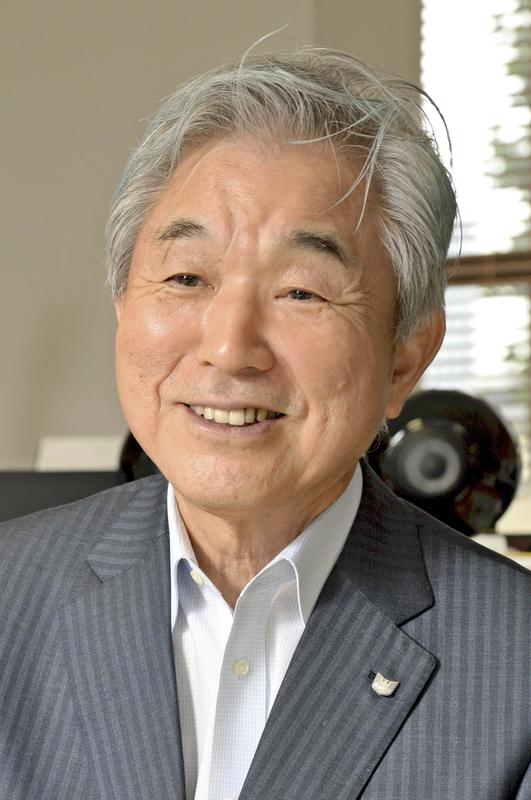
Canon Electronics President Hisashi Sakamaki, 78, described his dream at the company's Tokyo head office near Tokyo Tower.
"I want to launch rockets. I want to build new rockets and our own launch site as well," Sakamaki said. "We've already decided on the site."
I couldn't quite believe my ears. I've covered space development for almost 30 years, and it was quite a surprise to hear a flood of such statements, which are far outside the "common-sense" thinking of the space development industry.
Canon Electronics is a subsidiary of Canon Inc., a major manufacturing company. Its main line of business has been the production of digital cameras and printer parts.
However, the company has also been "quietly developing technologies for rockets and satellites," Sakamaki said.
I visited another room one floor up. When the door was opened it was just a large dark room, but that changed completely when the lights came on. It was like a space factory or exhibition hall, with rocket and satellite parts and models all lined up. On a large piece of paper spread out over the ceiling and the wall were the plans for what appeared to be a rocket.
"We've been thinking about whether we could turn this into our main business," Sakamaki said.
I pointed my camera toward the plans, but Sakamaki stopped me, saying, "Sorry, no photos, because these are corporate secrets."
The name of Canon Electronics has only been heard in space development circles in the last few years. The company was said to have been working on small satellites and small rockets, with the aim of getting into the space industry, but these claims were greeted with incredulity.
Last summer, interest in the company suddenly perked up. Canon Electronics established a planning company to get a foothold in the overall space business.
Four companies joined together to co-found the planning company: IHI Aerospace Co., which manufactured the small Epsilon rocket; Shimizu Corp.; the Development Bank of Japan; and Canon Electronics, which provided 70 percent of the funding.
Significant progress was made on July 2 with the upgrade of the planning company to an operating company called Space One Co. The company then announced it would start rocket launching services in fiscal 2021, with the goal of achieving 20 launches per year by the mid-2020s.
Not relying on parent firm
There are certain fixed ideas about the space industry: "It's not profitable" and "It's high risk." Why would anyone want to move into such an industry, particularly going so far as building a launching facility?
Is he really serious? Asked if he really intends to build a launch site, Sakamaki replied: "Yes, You can't make money by just working one by one, like just satellites or just rockets. You have to do all those things comprehensively."
Regarding profitability, he said: "It's called space time and space prices. If you look at it from the perspective of an office equipment business like us, it takes 10 to 20 times the amount of time, and it costs 20 to 100 times the price."
Is he counting on the parent company to fund it? "Not at all. I'm here because I was "demoted" to this company from being a Canon director," Sakamaki said. "We're going to do it with money we've made ourselves. We're not relying on the parent company."
Committed to goal
Sakamaki was first intrigued by outer space as a child watching movies and TV shows. He joined Canon in 1967 as an engineer, thinking that one day he'd be in the space business.
After all, the Canon group has a lot of technology that seems applicable. Couldn't that be put to use for the space industry as a new business? Sakamaki proposed the idea to his boss during his younger days. "What kind of idiot are you?" was the thunderous reply.
In 1999, Sakamaki was shifted from a role as a Canon director to president of Canon Electronics, a move he described as being "demoted." His old dreams reemerged.
How much does it take to start a space business? He did some calculations to find out: It was roughly 20 billion yen.
However, Canon Electronics was in the red at that point. That's what made Sakamaki decide to turn Canon Electronics into "one of the most profitable companies in the world." To achieve that, he directed the company to "halve all expenses."
It was an extremely simple management philosophy, and the company plunged into it.
Chairs disappeared from the meeting rooms so meetings would be conducted standing up. If people sit down, discussions drag on. The company ultimately shaved up to 75 percent off the time spent on meetings.
Checking emails right after arriving at the office was also banned. Sakamaki believed the first part of the morning should be used for actual business activities. Important matters could be communicated on the phone or through direct contact.
It was a thorough campaign for eliminating wastefulness.
During my visit for my interview, Sakamaki asked me not to use the elevator, in order to save on electricity costs.
These persistent efforts brought results, and the company secured a profit of about 20 billion yen over a five-year period. Sakamaki could turn his mind to the space business.
He reported his idea to Canon Chairman Fujio Mitarai. The chairman said, "Can you really do it?"
Sakamaki promptly replied: "I've always been able to do what I said I'd do. Though there have been many cases where I wasn't able to sell the product."
"You'll do it even if I try to stop you," Mitarai said, effectively giving Sakamaki the green light. The move to enter the space business was decided.
In 2012, Canon Electronics set up a space technology laboratory. The lab started with three people and has grown into a team of 100.
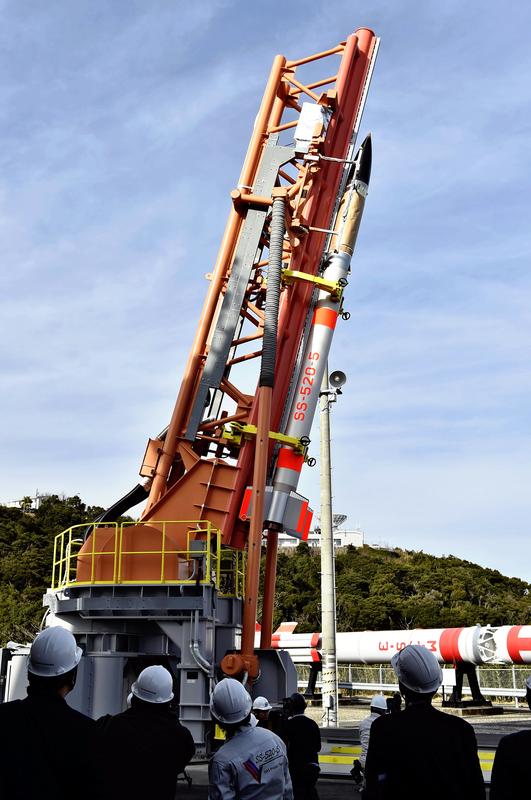
The company has made a number of achievements. In June last year, it launched a small satellite it produced on an Indian rocket. In February, it launched a small rocket the size of a telephone pole that was jointly developed with the Japan Aerospace Exploration Agency.
JAXA has two launch sites, but "we can't use them freely. So we thought we should make our own," Sakamaki said. "If we can launch rockets any time we want, we'll get customers."
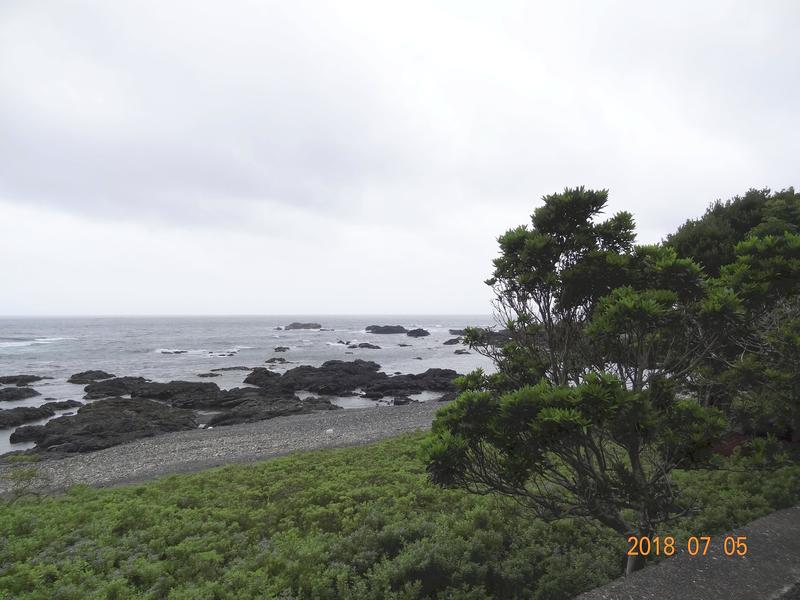
The town of Kushimoto, Wakayama Prefecture, emerged as the most promising candidate -- the south side of the site is open, and residences are not densely packed in the area.
Govt backs new entrants
Due to the vast amounts of money required, the development of rockets and satellites has been undertaken on a national-government level for many years. However, with advances in technology, it has become possible to manufacture small, inexpensive rockets and satellites, and this has created room for new entrants into the industry.
In the United States, venture companies have been active in the space business since the 2000s. The U.S. National Aeronautics and Space Administration has placed orders with venture companies and is effectively nurturing them.
The Japanese government is also backing new entrants, based on the U.S. model. In 2016, it enacted the space activities law, which enables launches by the private sector. It is also moving forward with policies to promote investments by government-affiliated financial institutions or public-private funds and is bringing together investors and venture companies. JAXA has also started to support newcomers to the business.
The government is aiming for success stories and the creation of new industries. In response, venture companies and other players are coming on board one after the other. However, with a few exceptions, it seems that an overoptimistic mood and statements merely expressing dreams and determination are prominent. An absence of actual achievements, insufficient technology and a dependence on the national government are all hard to ignore.
Different thinking needed
The Space One project is led by Canon Electronics, but one of its member companies has manufactured rockets for many years, making Space One somewhat superior to other similar companies in terms of technological strength and its achievements.
However, since the company has relied on public demand, which does not involve much competition, it has problems such as its high pricing. Space One says it will develop new rockets as part of a comprehensive package of its multifaceted business, but it will need to radically change its way of thinking compared to when it was working for the public sector. Customer service and working in cooperation with local residents will also be required.
Former Economy, Trade and Industry Ministry officials have now joined Space One. The Development Bank of Japan, which is a government-affiliated financial institution, is also involved as an investment entity. This means one of its challenges will be how to get away from government-style thinking. Government funds are also included in the financing from the development bank. If the venture does not go well, the bill will be passed on to the public.
(From The Yomiuri Shimbun, Aug. 10, 2018)
Town hopes launch site sparks renewal
Kushimoto is a small town located on the tip of the Kii Peninsula in Wakayama Prefecture, at the southernmost point of the Honshu main island. It has no big industry, and its young people leave town in search of work. The town's population is aging and the number of residents continues to decline.
Even within the prefecture, Kushimoto is referred to as a "remote countryside area." This is the place that has emerged as the major contender for the rocket launch facility.
Space One is guarded about the selection of a location. "The site has not yet been officially decided. We're also unable to tell you which part of Kushimoto is the candidate site," a Space One official said. However, residents in Kushimoto are completely into the idea.
"I want to go here," I asked a taxi driver, showing him the map of the place that has been pegged as the candidate site. "Ah, the rocket place," the taxi driver replied.
The candidate site is about 20 minutes' drive from Kushimoto Station. The town owns 70 percent of the site's land, with the remaining 30 percent split among more than 70 landowners. Ownership of some parts of the land cannot be identified. In April, the town set up a promotional office to invite the establishment of a commercial rocket launch facility. The office will assist Space One by looking for the owners of the unidentified sections of the land.
Some townsfolk appear to have concerns and others are advocating a more cautious approach, but most of the people I met in Kushimoto expressed positive expectations, saying there will be places to work, resident and tourist numbers will increase, and the shopping streets will liven up once they have the rocket site.
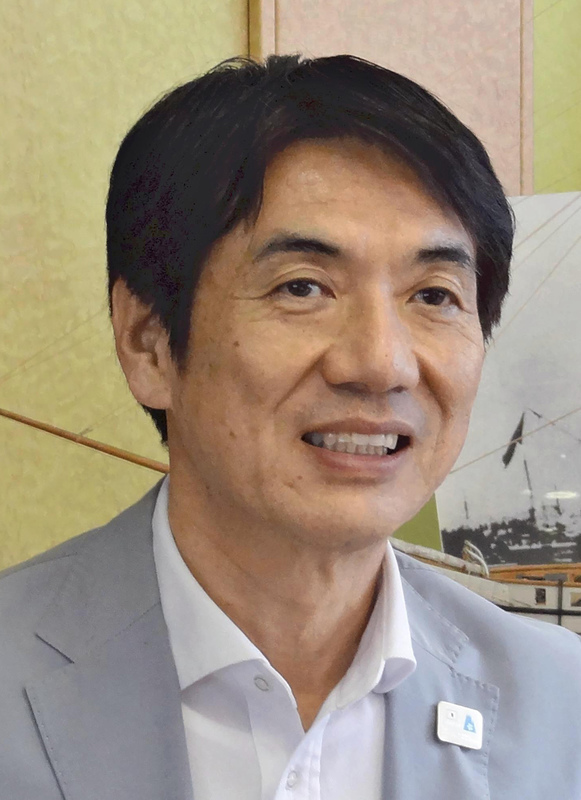
Kushimoto Mayor Katsumasa Tashima, 59, is backing the idea. "You don't find rocket ranges all over the place. This is a venture that works with the unique location advantages offered by Kushimoto. I feel it's a once-in-a-lifetime business opportunity, a first for this town."
Read more from The Japan News at https://japannews.yomiuri.co.jp/