Associated Press photographers talk about their 2022 assignments, and share some of the stories behind the images.
___
THE PLACE: Bisbee, Arizona, United States
THE STORY: Seven years of sex abuse: How Mormon officials let it happen
THE PHOTOGRAPHER: Dario Lopez-Mills
___
ON HOW TO PHOTOGRAPH SOMETHING FROM THE PAST WITHOUT VISUALS REALLY AVAILABLE:
This was a story that had happened many years ago. And we were going to go to a little town in Arizona, where nothing was really there to photograph that related to this. The father of these kids had already taken his life in prison. And this is basically a legal case that was coming up. Mike Rezendes had obtained more than 12,000 court documents, and his intent was to show that the church had known about the abuse for many, many years and did nothing. That led to a lot of ideas of how we would shoot this.
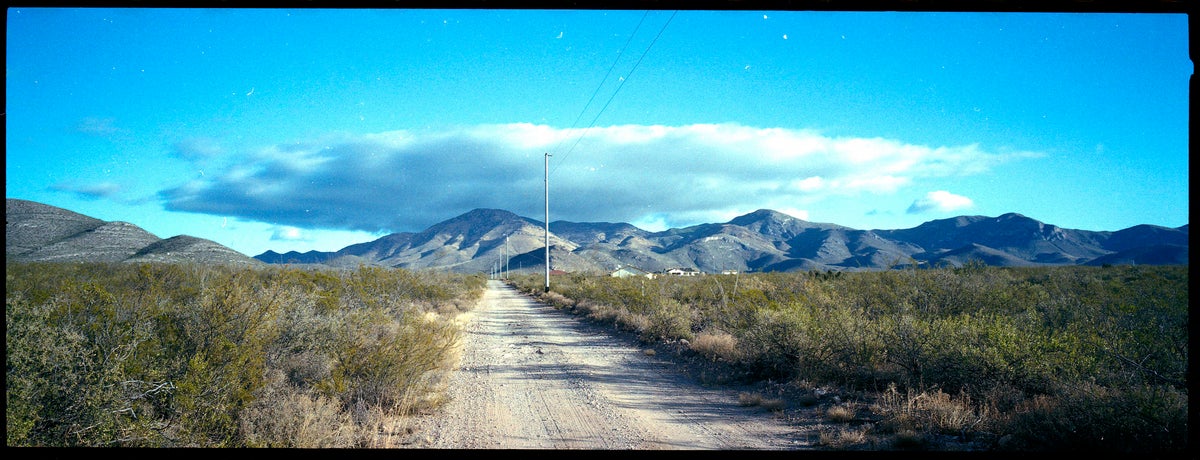
I suggested at one point that, that we try to photograph it with a panoramic film camera. It was suitable for the landscape that we were going to encounter. This is a place that is in the middle of the desert, and there’s not very much. There’s these wide-open spaces, and the home where these people lived is not exactly in Bisbee itself. It’s kind of on the outskirts. We wanted to suggest that these horrible things were happening in a little house that was surrounded by nothing. And at the same time, we quickly realized that we wanted to never show the faces of those involved. We wanted to be very careful.
ON PHOTOGRAPHING WITH A PANORAMIC CAMERA:
I wanted to convey that sense of space of the town and the surrounding areas. And using an analog film camera was suggestive of photographing something that had happened in the past. It suggested that archival look to it. When I suggested this, there was a lot of hesitancy from a lot of people about it. My commitment to them was that while I would buy the film and get it developed and get it scanned, I would shoot everything I shot in the panoramic camera with a digital camera, too. So in case the panoramics did not work out, we could always go back to the digital format. And that was really important because that gave me the OK to continue working that way.
ON CAPTURING THE STORY'S NUANCED THEMES:
A lot of the story had to do with innocence lost. That’s why I found myself going to abandoned and empty children’s playgrounds in this town. That was kind of a way for me to visualize that lost innocence. The landscape is a town that has perhaps has seen better times because it was a mining town that was very a booming town. And now it’s a place where a lot of retirees live. It doesn’t have a lot of children. There’s this old part of town that's how it looked in the 1950s. That kind of suggested a little bit of an eeriness, too.
ON HOW THIS STORY WASN'T QUITE WHAT HE EXPECTED:
It’s also a huge story about love, in the sense that these two children are recovering from something really traumatic, and a lot of it has to do with how these children were fortunately adopted by very loving parents, adoptive parents, who have really nurtured them and tried to give them as normal a life as possible. That was something that we really tried to convey — that this was a story of resilience and of recovery.
— Interview by Leslie Mazoch