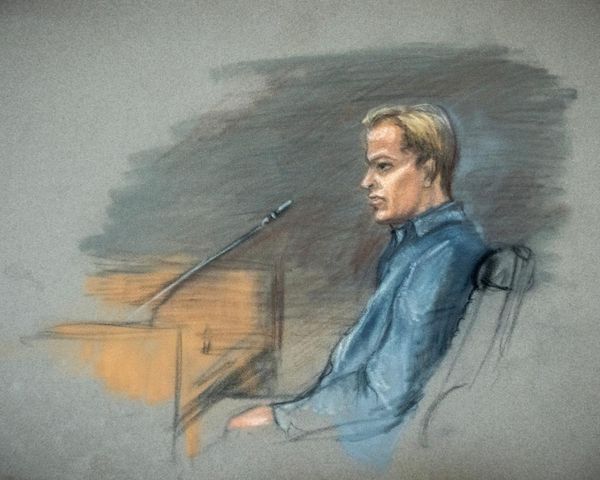
The former Metropolitan police marksman Anthony Long, charged after shooting dead a suspect, had a crucial decision to make as his Old Bailey murder trial got under way.
He faced being the first police firearms officer to be convicted of murder – and a life sentence. He had to choose whether to stick by his formal statement detailing why he felt it was necessary to shoot Azelle Rodney six times, including four times in the head, or change it.
Since he made his statement, key parts had been challenged by expert evidence to such an extent that it was demonstrably untrue, argued the prosecution. Their argument to the jury was that if Long’s justification for opening fire was false, he had no lawful reason to use deadly force and thus was guilty of murder.
What increased the pressure on Long and his legal team was that a 2013 inquiry into the shooting did not accept his account. It concluded that Long had no lawful reason to open fire on Rodney in a north London street in April 2005. The jury in the murder trial was never told this.

The inquiry’s finding had led to prosecutors reassessing the case. They reversed their initial decision not to prosecute and charged Long, who found himself in the dock a decade after the shooting.
On 30 April 2005, intelligence led police to suspect Rodney and at least two other men were going to carry out an armed robbery to steal drugs from a Columbian drug gang.
Police chiefs put an armed team on standby to intercept Rodney and his colleagues, with surveillance officers following the suspects across London.
Long and the armed officers were receiving intelligence updates. He told the jury that the intelligence said the suspects had two fully automatic weapons and may have acquired a third. The Guardian understands this intelligence came from intercepts.
Long, a firearms veteran and instructor, said the weapons were Mac 10s, capable of firing 1,000 rounds a minute. One of the suspects was overheard by a surveillance officer as saying they had “two Big Macs and a little one”.
Long told the jury of his state of mind: “I believe they had very dangerous, very compact weapons. I was very conscious of the danger involved in this situation.”
As the VW Golf containing Rodney drove through north London, police decided to box it in and force it to a halt, known as a “hard stop”. One unmarked police car closed the Golf off from the front, another from the rear, and the third, containing Long, pulled up alongside.
Long was to “cover” the suspects with his police issue Heckler & Koch G36C carbine weapon as his armed colleagues rushed from their cars to arrest the suspects at gunpoint. Rodney was sitting in the rear of the Golf, Long was in the front passenger seat of his unmarked vehicle.
Long said that as he pulled up alongside he saw Rodney making a series of movements that could only have meant he had realised the police were surrounding him. He had allegedly looked around, slid across a seat or bent down, and then sprung up. The suspect must have being going for a weapon to open fire, Long said.
He told the jury: “All I had was seconds to make the decision whether I was going to let my colleagues be shot by someone with a submachine gun or whether I was going to take life. I chose to take his life. That was the decision I made and I stand by it.”
Long pulled the trigger eight times while no more than two metres from Rodney, shooting the suspect in the arm, body, twice around his right ear and then, after a pause of three-quarters of a second, twice through the top of his head. Long’s first two shots had missed. He said: “I remember thinking if I could give him more time. I decided I could not.”
It is time that presented Long with a problem. The audio track of a video recording of the incident, by an officer in another car, as well as other data, showed that for Long’s statement to be correct, within two seconds he saw Rodney, witnessed all the movements he said the suspect made, assessed the suspect was about to shoot, decided himself to open fire, and fired eight times.
Max Hill QC, prosecuting, alleged Long had shot the suspect on sight: “Was there time for Azelle Rodney to look left, then look right, then duck down, then come back up with shoulders hunched?” he asked. “Four actions, none of them requiring many seconds to perform, but bear in mind the time available is 0.2 seconds at the most, for all of those movements.
“We say that the movement of the vehicles during the hard stop, the restricted visibility and the rapid timing of events mean that Mr Long cannot have seen what he claimed. This must mean that he has tried to explain his decision to open fire, to justify his action after the event.”

Rodney died quickly from his wounds. Weapons were recovered from the silver Golf, but there were no machine guns. One weapon, covered by yellow plastic on the rear seat, could not fire.
A pistol was recovered from the rear footwell, wrapped inside a scarf in a rucksack containing four rounds. In the same bag was a gun that looked like a key fob, which contained two rounds of ammunition.
During the trial, the judge, Mr Justice Saunders, ruled that Long was entitled to rely on intelligence, whether it was right or wrong.
Long stuck by his 2005 version of events. He said his written statement was his honest belief, saying any contradictions with the scientific evidence were the result of having seconds to make what he felt was a life or death decision.
Forensic and ballistic tests suggest several bullets hit Rodney as he was falling down, apparently contradicting the marksman’s account that he continued to fire because the suspect remained upright and posed a threat.
In the witness box, Long was irritated that two seconds a decade ago – as he put his life at risk to serve the public – were being looked at in microscopic detail in the calm of a court room, and with the benefit of hindsight.
Long was not the first police marksman to have his account challenged after killing. The two officers who shot Jean Charles de Menezes in 2005, after mistaking him for a suicide bomber, claimed his movements convinced them he was going to detonate a device on a tube train. They were not charged.
The marksman who shot dead Mark Duggan in 2011, an incident that triggered riots across England, was found by an inquest jury to have imagined Duggan had a gun in his hand. But because of his honest belief the suspect was preparing to open fire, the officer was found to have acted lawfully.
The officers were protected from a murder charge by arguing they had an honest belief their life or those of others were in imminent danger. In all three cases, police marksmen went into situations with intelligence and briefings from senior officers that they should expect to face mortal danger.
One police chief, speaking privately, has described the process for officers who kill during their duties, as “the impossible and the unacceptable”.
It is impossible to accurately recall every decision made at speed and under fear of one’s life to satisfy the scrutiny after a shooting. Yet, the police chief added, it would be unacceptable if rigorous questions were not asked after a police force in a democracy takes a life, especially when the victim was unarmed.

In an interview with the Independent Police Complaints Commission (IPCC), which first investigated the shooting of Rodney, Long had refused to answer 149 questions.
He had more than two decades of experience as a firearms expert, but he had been recommended for disciplinary action once for leaving his vehicle while on duty. He was also disciplined after getting into a fracas while off duty at a nightclub.
In the 1980s, he shot dead two men in an operation and wounded two other suspects. In 2006, Long won compensation from Scotland Yard after he met then deputy assistant commissioner Sue Akers at a police leaving drinks.
As the pair were introduced, Akers joked: “I’ve always wanted to meet the Met’s very own serial killer.”
The firearms officer threatened to sue for defamation. Scotland Yard settled out of court and he was paid £5,000 for what the force admitted were “inappropriate remarks”.
Rodney’s family fought a 10-year battle, first for a full and public inquiry and then for a murder prosecution. The authorities previously had tried to block an inquiry, claiming the intelligence used by law enforcement came from intercepts, disclosure of which they said was unlawful.
The two other men in the car 10 years ago, Wesley Lovell and Frank Graham, were later convicted of firearms offences. They have since been released from jail. For Azelle Rodney there were no second chances.