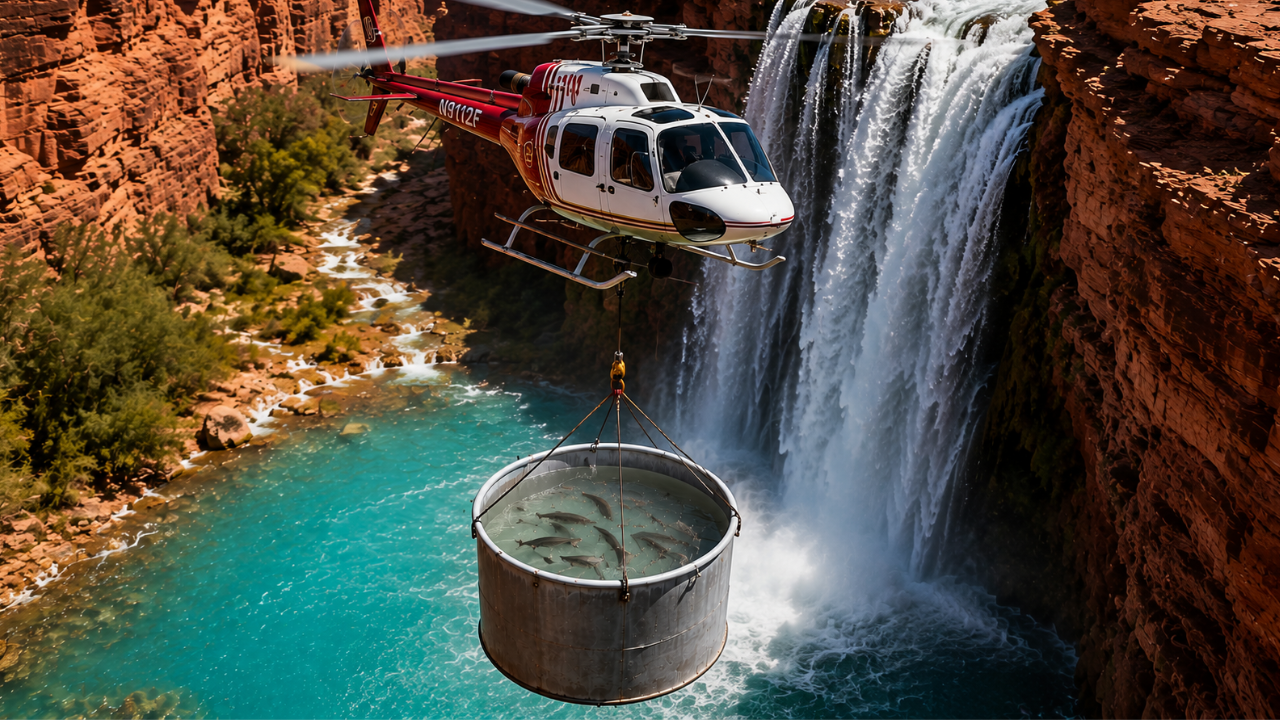
Imagine a helicopter flying low over the red rocks of the Grand Canyon. Hanging underneath it by a rope is a 55-gallon barrel drum, sloshing with river water. Inside are roughly 300 baby humpback chub, a fish found almost nowhere else on Earth. This isn’t just a fancy stunt, but rather a practice that has been conducted almost annually since 2003, according to a field account from the Arizona Fish and Wildlife Conservation Office .
Get breaking news anytime, anywhere. Download the TOI app now!
Why this odd little fish needed rescuing
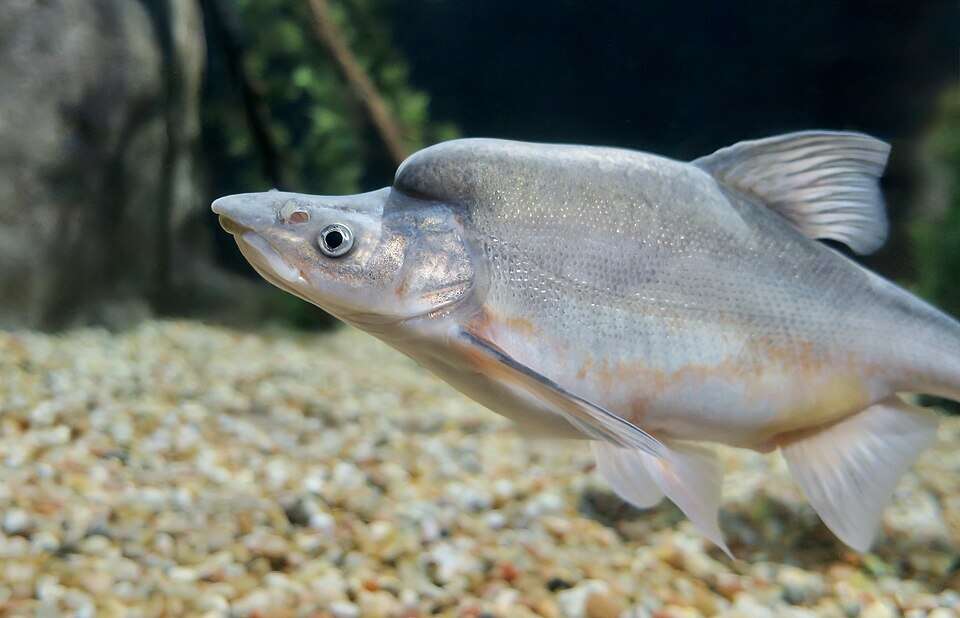
The humpback chub has an unusual fleshy hump behind its head, which gives the fish its name. That hump likely evolved to help the chub to avoid getting eaten by predators in turbulent rivers. This fish species only inhabits the Colorado River Basin and has had quite a bumpy ride. The fish was listed as endangered in the United States in 1967. A 2021 federal regulatory review explains why: large dams like Glen Canyon Dam changed the river's natural flow and temperature, and non-native fish, including trout, were introduced for sport fishing and began preying on young chub. The same review notes that water released from Glen Canyon Dam runs colder than the river's natural summer temperature, which slows chub growth and makes life easier for cold-tolerant predators like trout.
The Little Colorado River is one tributary that still supports an independent wild population. However, all its sections do not share the same conditions. At the point where it joins the Colorado River, the temperature is low, and the food supply is sparse. Just nine miles above, there is a natural barrier called Chute Falls. While above the falls, the water is warmer and food is more abundant, but almost no fish were found there until 2003.
So biologists asked a simple question: what if young fish were moved above that barrier?
Inside the rescue mission
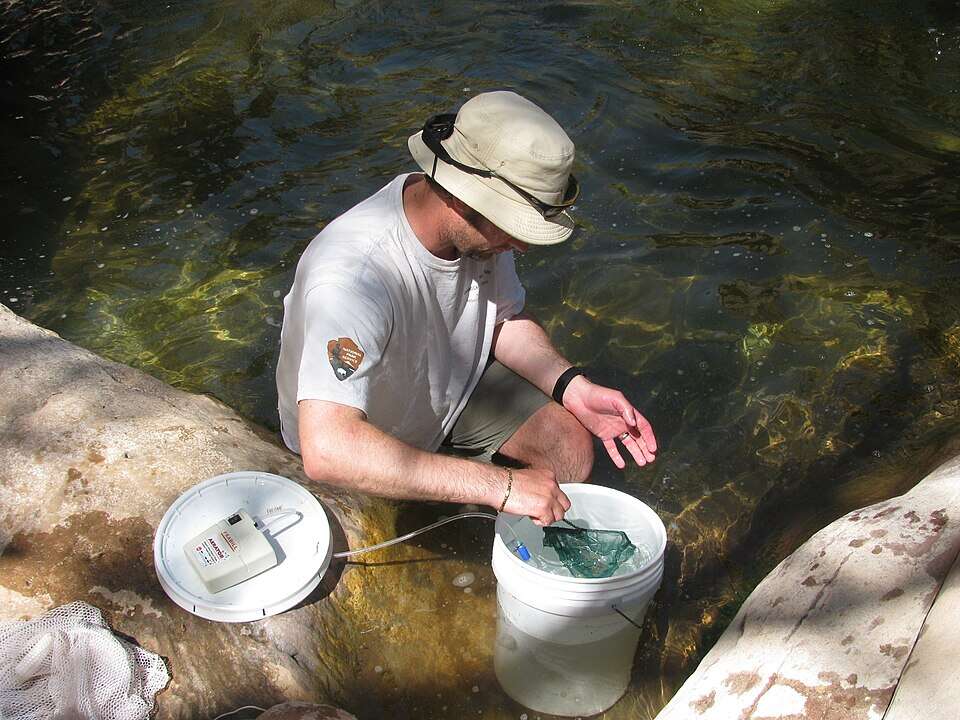
Once a year, a small crew goes down to the river and spends about ten days there. During that time, they place baited hoop nets that capture baby chubs measuring 80 to 130 millimetres; in addition, they use hand nets if the water is muddy. Each qualifying fish is measured and fitted with a PIT tag, allowing scientists to track it for years. The fish are held in floating, water-permeable barrels before being loaded into the larger 55-gallon drum for the short helicopter flight over the falls, to water they have never called home.
What the data actually shows
The key question is whether the effort makes a difference. A study in the North American Journal of Fisheries Management , by Stone et al., tracked chub recaptured above and below Chute Falls between 2003 and 2019 and found that fish above the falls grew much faster and reached adult size, about 200 millimetres, one to two years earlier than fish below the falls. The study linked the faster growth to warmer base-flow water and more food; captures of speckled dace, a prey species chub can eat even at juvenile size, were 60 times higher above the falls than below them. The researchers noted that very small chub could in theory be limited by mouth size, but concluded dace-sized prey were still within reach for the translocated juveniles. Faster growth matters because larger fish are more likely to survive.
From 2003 until 2019, the office translocated 3,776 juveniles above Chute Falls in this manner. By 2018, more than 1,163 of them had been recaptured, some as spawning-condition adults, suggesting the transplanted fish are now reproducing on their own.
A hopeful, if fragile, turning point
In October 2021, the United States Fish and Wildlife Service issued a statement saying that the humpback chub would be moved from the list of endangered species to the list of threatened species, which is indeed an improvement in the status of this species under the Endangered Species Act. The agency credited years of collaboration among agencies, tribes, states and federal organisations, as well as habitat improvements and transplant programs like this one. The fish remains protected, and still faces real threats from dam-altered water temperatures and non-native predators, but its situation has measurably improved.
Why this story is worth your attention
This story shows how persistent work in the field, catching fish in muddy water, labelling them one by one and then putting them in barrels actually changes the destiny of the whole species. There was no miracle involved, but only two decades of biologists’ consistent labour every fall season. The humpback chub is still a threatened species and still faces real pressures, but it is no longer classified as endangered. However, for the species that was considered doomed to extinction, a short flight in the helicopter to some new habitat becomes quite a second chance.