Welcome to Signal Boost, our weekly roundup of blog posts on the science network over the past week.
Who owns the moon? Clue: It’s probably not Gru. Saskia Vermeylen looks at some of the complex legalities involved in galactic geopolitics.
Can you tell the difference between the noises that crows and ravens make? Grrlscientist highlights a fascinating video about corvids - a corvideo, if you will. Plus, new books received this week.
Recently, Lockheed Martin announced that they had made a breakthrough in nuclear fusion energy. Jon Butterworth provides an excellent primer on a key element of this breakthrough, known as quantum tunnelling.
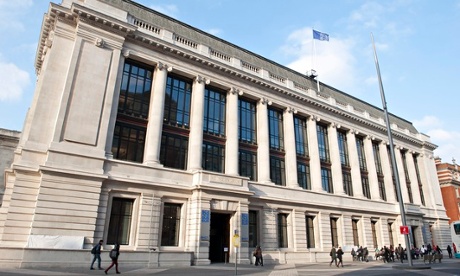
Last week, the Science Museum unveiled its largest ever gallery, celebrating the Information Age. In a five-part series, Ian Sample looks at some of the greatest inventions in the history of communication: the cable that changed the world, the birth of British broadcasting, a very tasty computer, a submarine repater, and geostationary satellites.
Monday’s Google Doodle celebrate the life and work of famed architect Christopher Wren. Well, not all of his work. As Becky Higgitt points out, Wren was also helped in founding two venerable British scientific institutions: the Royal Society and the Royal Observatory.
Tuesday saw the 100th anniversary of famed mathematician and puzzle inventor Martin Gardner. Alex Bellos highlights eight of his most celebrated puzzles.
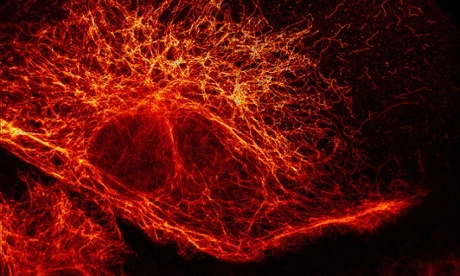
Steve Caplan wasn’t always a fan of microscopy, but new developments in the area still evoke a sense of a giddy excitement about the potential of the technique. Here he explains why a super-resolution image may be worth a thousand gigabytes.
On a trip to Manchester recently, Jon Butterworth got to take a look around the Museum of Science and Industry. Read on to find out what the link between bears and Bez is.
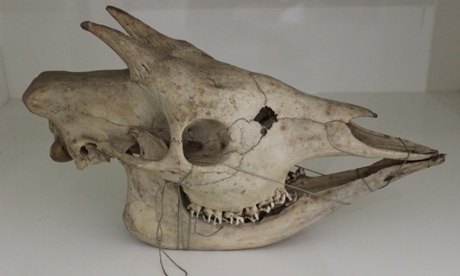
In 1904, the British explorer Percy Powell-Cotton managed to find a rare Okapi specimen. The skull is still on display, but where’s the rest of the body? Henry Nicholls investigates.
A new European Commission is about to take office, and in the next few weeks we’re expecting an updated UK strategy for science and innovation. As Johan Schot argues, this is an important moment to debate the future of innovation policy.
Richard Dawkins has called for a ‘cosmic tombstone’ to be sent out in to space, detailing humanity’s greatest achievements. If it was up to you though, what would you put on this galactic gravestone? James Randerson puts forward a few suggestions.