

A bear call spread is a type of vertical spread, meaning that two options within the same expiry month are being traded.
One call option is being sold, which generates a credit for the trader. Another call option is bought to provide protection against an adverse move.
The sold call is always closer to the stock price than the bought call.
As the name suggests, this trade does best when the stock declines after the trade is opened.
However, there can be many cases where this trade can make a profit if the stock stays flat and even if it rises slightly.
Bear call spreads are risk defined trades, there are no naked options here, so they can be traded in retirement accounts such as an IRA.
Traders should have a bearish outlook on the stock and ideally look to enter when the stock has a high implied volatility rank.
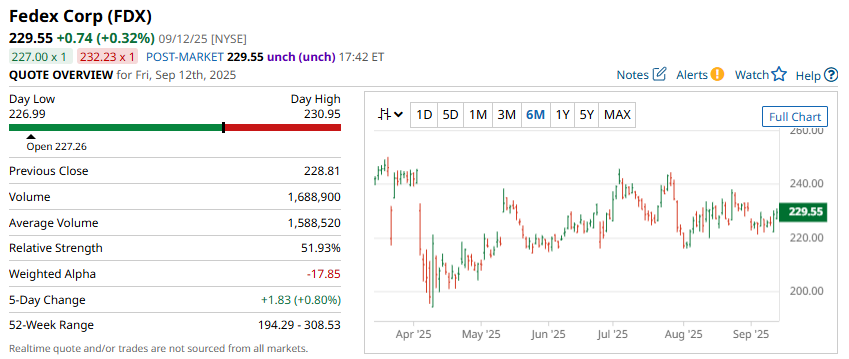
FedEx (FDX) is showing an IV Percentile of 90% in advance of their earnings announcement on September 18th.
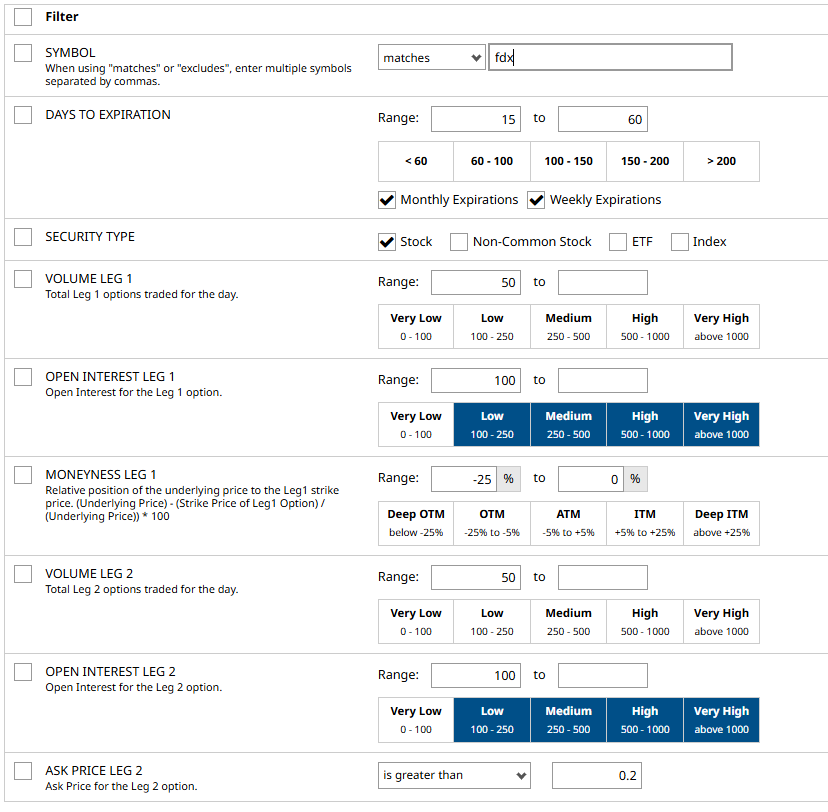
Assuming we have a bearish outlook on FDX stock, we can run the Barchart’s Bear Call Spread Screener and find the following results:

Below are the full parameters for this scan:
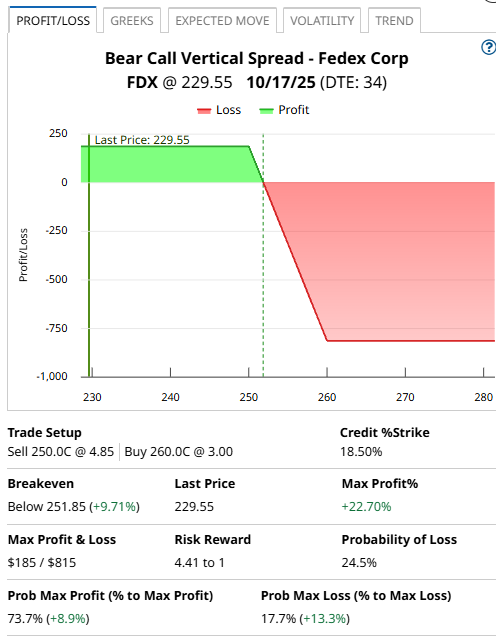
Let’s analyze the first result which has the lowest lowest loss probability at 24.5%.
This Bear Call Spread on FDX stock involves selling the $250-strike October 17th call and buying the $260-strike call.
That spread could be sold for around $1.85 which means the trader would receive $185 into their account. The maximum risk is $815 for a total profit potential of 22.70% with a loss probability of 24.5%.
The breakeven price is $251.85, which is 9.71% above the current stock price. This can be calculated by taking the short call strike and adding the premium received.
As the spread is $10 wide, the maximum risk in the trade is 10 – 1.85 x 100 = $815.
The Barchart Technical Opinion rating is a 32% Sell with a Weakest short term outlook on maintaining the current direction.
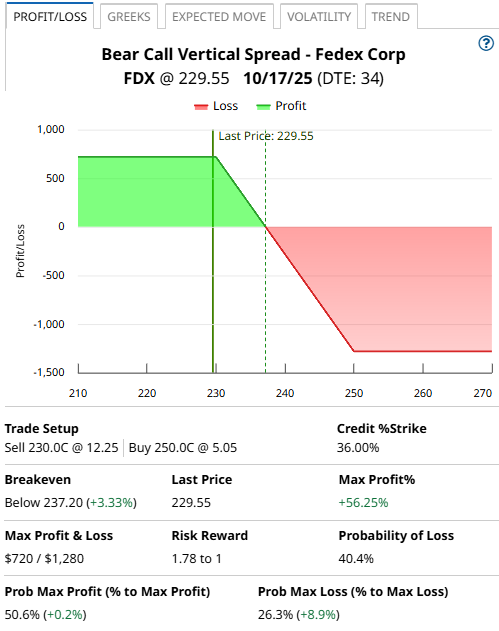
Let’s analyze another result from the screener, this time the one with a higher Max Profit Percentage.
The last line in the table involves selling the $230-strike October 17th call and buying the $250-strike call.
That spread could be sold for around $7.20 which means the trader would receive $720 into their account. The maximum risk is $1,280 , for a total profit potential of 56.25% with a loss probability of 40.4%.
The breakeven price is $237.20, which is 3.33% above the current stock price.
Mitigating Risk
Thankfully, Bear Call Spreads are risk defined trades, so they have some built in risk management.
The most the first example can lose is $815 and the second example could lose a maximum of $1,280.
Position sizing is important so that a 100% loss does not cause more than a 1-2% loss in total portfolio value.
Bear Call Spreads can also contain early assignment risk, so be mindful of that if the stock breaks through the short strike and it’s getting close to expiry.
Trades held over earnings can be risky as they leave little room for adjustments if the stock makes a large, adverse move.
Please remember that options are risky, and investors can lose 100% of their investment.
This article is for education purposes only and not a trade recommendation. Remember to always do your own due diligence and consult your financial advisor before making any investment decisions.