Dear Danny,
Thank you for your response to our proposal and for setting out your perceived obstacles to a sale of BBC3. We are confident that with your help these obstacles can be overcome.
As you know the original motivation for the bid was our utter dismay, shared by all independent producers and many BBC in-house producers and executives who have contacted us in the past few months, at the decision to close the linear channel and move BBC3 online. This represents a major change of BBC policy whereby spend on younger viewers is reduced by £30m per annum while at the same time it is increased for older viewers. This vitally important investment in younger viewers will not be replaced elsewhere in the sector. In fact it is fair to say that it is likely other broadcasters will feel emboldened to reduce their spend on their youth channels without the healthy competition from BBC3’s crucial creative and financial lead. The other terrifying thought which drives our proposal to rescue the channel is that the current management’s plan is irreversible; once BBC3 has disappeared as a television service no future BBC management could afford to revive it, even if they wanted to.
Your alternative suggestion that we start a new channel is impossible. It has taken more than £1 billion to establish BBC3 and start-up funding at this level is simply not available nor necessary; this money has already been spent on behalf of the licence payer. Consider how relieved the current senior executives at the BBC, not to mention a grateful audience, are that BBC Radio 6 was not destroyed. We believe that a linear BBC3 which is widely accessible has an even greater creative value and should continue to exist. If it does not there will be massive damage to the development of future television audiences and of new talent, both on- and off- screen.
We firmly believe that continuing the success of the channel through a sale would realise value for the licence payer and allow the future to be safeguarded. The hurdles you perceive are not barriers to a sale for the following reasons:
1. The brand name
Notwithstanding the fact that the BBC has only recently sold 50% of BBC America to an American studio which will run the channel under the BBC brand name, we are prepared to acquire BBC3 without the BBC brand name. Rebranding products, including TV channels, is a very straightforward and well-established practice. There is a clear and recent precedent; one of the BBC’s own commercial channels was very successfully rebranded to DAVE. We have not found anyone who can remember what it was called prior to this.
2. The EPG slot
We understand that the allocation of spectrum is not within the gift of the BBC and indeed BBC management will be negotiating their own spectrum allocation with the government as part of charter renewal. We believe, again with your co-operation, that a rebranded BBC3 would be much better use of the spectrum than the BBC One plus One catch up channel which BBC management is currently proposing, especially as under our plan there will be an increase in original UK production spend of £30m. Given the fact that the BBC already has a very successful catch-up service with iPlayer, surely maintaining a thriving and innovative channel would be the preferred option of suppliers and audience alike.
This week Tony Hall outlined the proposal to free up BBC in-house production to compete with the rest of the production sector, requiring a change in the charter which must be approved by government. Our position is that allocation of the EPG slot to a rebranded BBC3 channel would be no greater a hurdle than the one you face in achieving your goal for in-house production and is quite a simple request to make of the government.
3. Split rights
Again with your collaboration and lead in allowing the assignment of the BBC in-house supply we are confident that other third parties will not have a problem with this, particularly as they would all benefit. Our bid will involve a consortium of UK independents many of whom are already suppliers to BBC3.
You have indicated that reassignment of contracts between BBC and its independent content providers would be a stumbling block. Again we assert that with the collaboration of BBC management, this is very achievable. We are confident that our fellow independent producers would welcome the opportunity to continue to provide programming for a linear television channel rather than see their work struggle for viewers on a much-diminished online platform. We are pleased to report that Steve Coogan and Henry Normal, whose company Baby Cow, produced Gavin and Stacey and The Mighty Boosh, two of BBC3’s biggest hits, have agreed to support the project. With regard to contracting in-house BBC content we would have thought that as the in-house producer base is about to be transformed into a commercial studio, it would be highly beneficial for them to have this outlet maintained and grown.
We realise that you completely disagree with our position and have made it clear that BBC3 has little value and is not for sale. However we consider this issue to be so important that we are not going to give up. We do not believe that other avenues have been properly explored and we will be writing to the Trust accordingly in the hope that they will see things differently and persuade you to change your mind.
As your position depends entirely upon the correctness of your belief that BBC3 online is sufficient to fill the huge gap that will be left on the closure of the linear channel then this should be a matter for urgent open debate. At the very least we invite you to agree to participate in a public debate between the two of us on the one hand and you and Tony Hall on the other. We propose the subject should be “Is a reduced spend on younger viewers by the BBC avoidable and will BBC3 online succeed?” We suggest this be broadcast live on BBC3.
We reiterate that with your help and collaboration BBC3 can be saved.
Best wishes
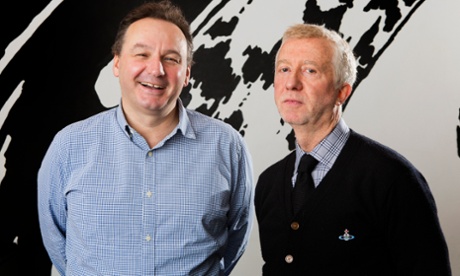
Jimmy Mulville and Jon Thoday