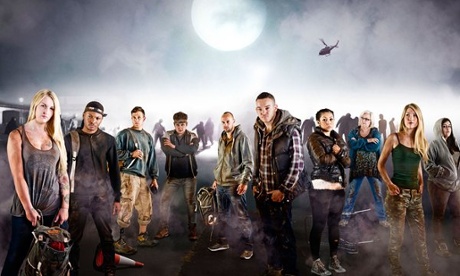
BBC3 has become a zombie TV channel stuck in limbo between management plans to take it online only and its scrutiny by the BBC Trust, according to a senior industry executive.
David Elstein said the fate of the 11-year-old youth channel, earmarked for closure by BBC director general Tony Hall last year, was another example of why the government needed to reform the way the BBC is governed and regulated.
“The BBC Trust is going to adjudicate on BBC3 but by the time they get round to it, if they get round to it, it will be too late, it’s a done deal … Talk about the living dead,” Elstein told a City University event about the future of the BBC on Thursday.
Elstein, a former executive at BSkyB and Channel 5, said a unitary BBC board with a director general and non-executive chairman, the preferred option of the BBC Trust chair Rona Fairhead, would have studied the proposal – and approved or rejected it – much quicker.
“In a unitary board it would be argued out and they would come to a decision and it would be implemented,” he said. “The daftest thing about the whole process is the delay in the implementation.”
Tony Hall announced plans to close the BBC3 TV channel, to save £50m a year, £30m of which would be spent on BBC1 drama, in March last year.
But it was not until 10 months later, in January this year, that the trust was able to open a public consultation into the proposals, with a decision expected in the summer, months before the planned closure of the TV channel in October.
The two independent producers bidding to buy BBC3 and save it from closure, Jimmy Mulville and Jon Thoday, have argued that the BBC is already dismantling BBC3, switching its best programmes to other channels. It also lost the rights to one of its most popular shows, US animated comedy Family Guy, which were bought by ITV earlier this week.
Elstein said he thought the best way to run the BBC was with a unitary board and executive chairman, with the role of ruling on issues such as impartiality handed over to media regulator Ofcom.
Former BBC chairman Sir Christopher Bland also backed the trust’s replacement by a unitary board of governors.
“It should be absolutely clear that in the first instance the chairman is ultimately responsible for everything that happens in the BBC,” he said. “You don’t want to let a banker near the remuneration committee. I don’t think you want a banker near the board.”
But the first chair of the BBC Trust, Sir Michael Lyons, warned against viewing a unitary board as a “panacea” to the BBC’s ills.
“How did executive pay get out of line? That wasn’t the trust, that was the former model of the BBC, the unitary board that some people suggest we go back to, with much too much cosiness between those representing the licence fee payers and the executive board,” said Lyons.
“One of the trust’s successes was challenging how much was being paid not only to managers but to talent. Is the BBC any weaker [as a result]? No it’s not.”
Lyons said: “For too many people parade the notion of a unitary board as if it is by itself a solution. It isn’t. Did the unitary boards of our large banks help to ensure either their customers or their shareholders or least of all the public were served well over the last 10 years?
“Did the unitary board avoid the BBC becoming unduly enamoured of Jimmy Savile and not asking enough questions of his behaviour? No it didn’t. A unitary board may be a helpful contribution but it isn’t a panacea.”
Lyons said the trust was not perfect but said the BBC was much more transparent as a result of the body, which replaced the board of governors in 2007. “The trust immeasurably improved the transparency of the BBC, an extraordinary amount of information in terms of how decisions are made,” he said.