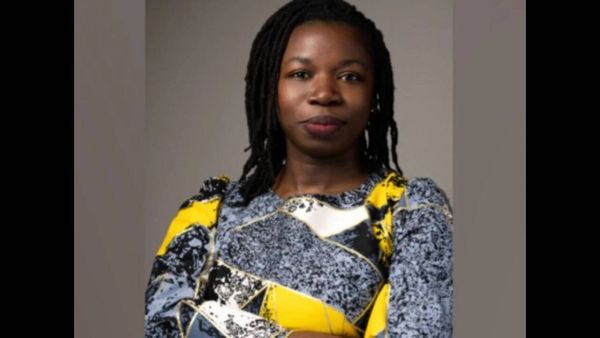
Sara Cox has been confirmed as the replacement for Scott Mills during this year’s Eurovision Song Contest, hosting coverage for the BBC with Rylan and also as a solo presenter.
Mills was fired from the BBC – including his popular Radio 2 breakfast slot – last month following allegations about his personal conduct. Cox is also taking over the Radio 2 breakfast show.
This year’s Eurovision Song Contest, the 70th edition of the annual competition, is taking place in Vienna, Austria, between 12 and 16 May.
The BBC will be airing its usual coverage across TV, radio and digital, with Cox hosting the semi-finals on Radio 2 and BBC Sounds, and Rylan presenting the semi-finals on TV and iPlayer with Irish presenter Angela Scanlon.
“It’s the 70th Eurovision Song Contest and the biggest show on the planet,” Rylan said in a statement. “Being part of anything this big is something younger me could never have imagined.”
Scanlon added: “It feels like joining the greatest party on earth – equal parts thrilling and terrifying! I grew up watching the Eurovision Song Contest with my three sisters, making very serious (and wildly biased) scorecards from the couch, so to now be part of it – especially in its 70th year – is genuinely surreal.”
Fan-favourite Graham Norton will return to his regular BBC One stint for the grand final on Saturday 16 May, while former Drag Race UK winner Tia Kofi will be sharing gossip and updates from backstage and across Vienna for the BBC’s digital channels.
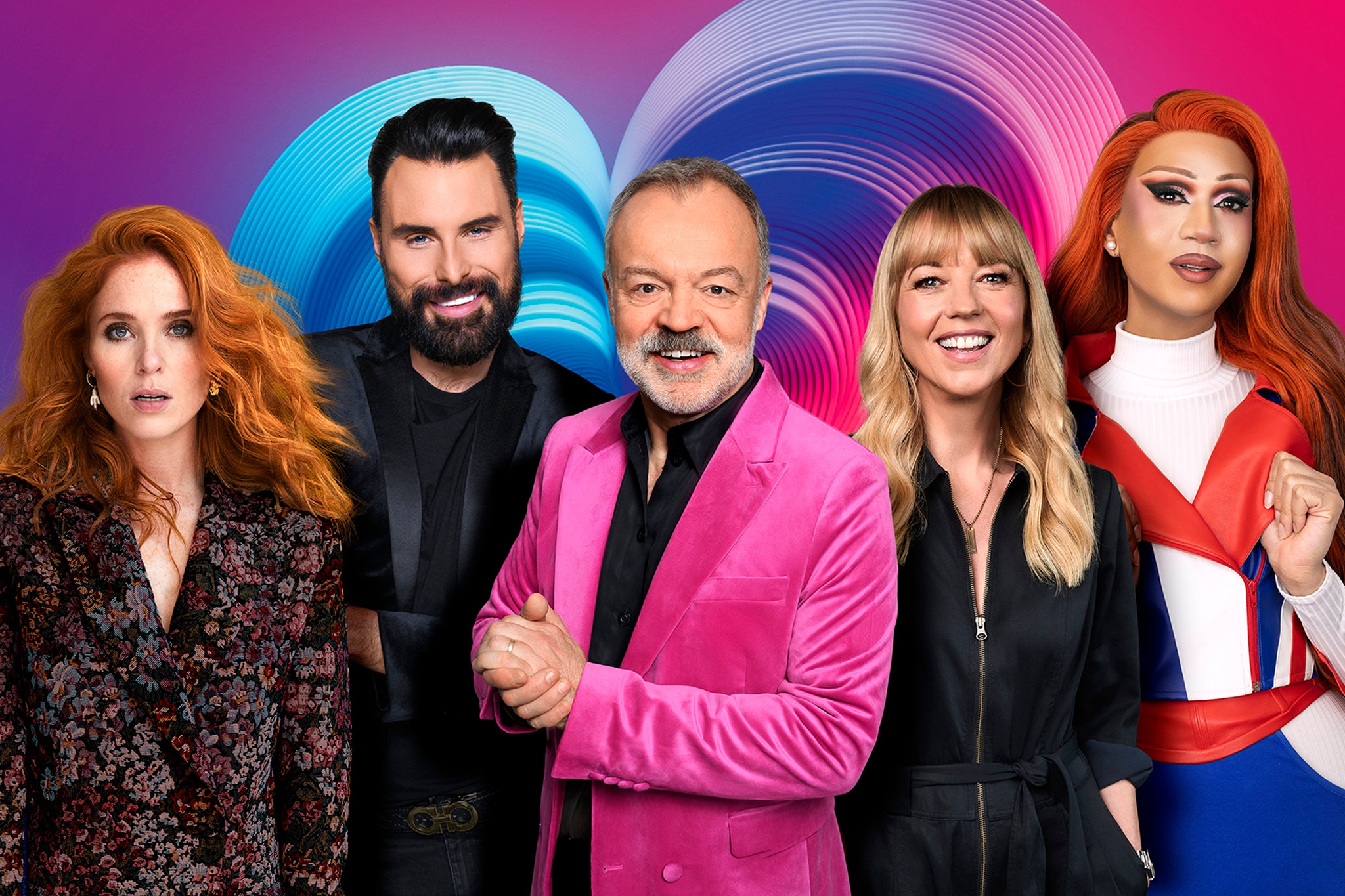
Norton said: “It feels really special to be back, gently guiding viewers through the Grand Final in this very momentous 70th anniversary year.”
The first semi-final will take place on Tuesday 12 May, while the second will be held on Thursday 14 May. The top 10 countries from each will make it through to Saturday’s grand final.
During the second semi-final, UK viewers will be able to vote for their favourites and also see the first performance on the Eurovision stage from the UK entry Look Mum No Computer, singing “Eins, Zwei, Drei”.
As one of the pre-qualified “Big Four” countries (the United Kingdom, Germany, France and Italy) – whittled down to five after Spain withdrew in protest over Israel being allowed to compete – the UK is guaranteed a spot in the grand final, along with Austria as the reigning Eurovision champions and this year’s host country.
Eurovision is one of the most-watched TV events of the year, with last year’s final in Basel, Switzerland, drawing an average audience of 7.1 million in the UK.