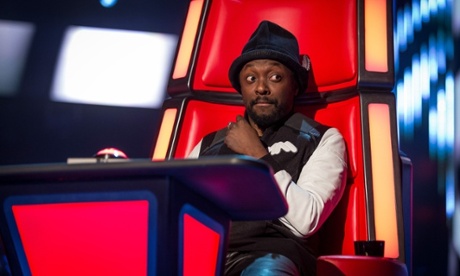
ITV has said the BBC should be banned from buying overseas formats such as its Saturday night talent show The Voice, which has been criticised by the government for its cost.
The commercial broadcaster said there should be a blanket ban on the BBC running any acquired content or formats on either BBC1 or BBC2 and should not buy US films or shows “in any circumstances”.
ITV made the comments in its written submission to the House of Commons culture, media and sport select committee’s review of the BBC charter.
It criticised the BBC for a lack of ambition said it was sidelining its more distinctive offerings, such as BBC3, while pumping more money into “highly popular and often derivative and indistinct” programmes on BBC1.
It said BBC1 had “chased viewing share at all costs” and any shows that did not “maximise audience share has been marginalised or removed altogether”.
ITV said large parts of the BBC’s regulation, including regular audits of the performance of its channels and services, should be handed over to media regulator Ofcom and not a bespoke, new body.
It also signalled its “outright opposition” to the way the government and the BBC proposed to close the so-called “iPlayer loophole” saying it would effectively turn its own on-demand service, the ITV Player, into a subscription service.
BBC’s £20m deal
ITV’s criticism of acquired formats comes four years after it lost out to the BBC to buy Dutch show The Voice in a reported £20m deal.
“The BBC should not be permitted to acquire content that is already made (or a format that already exists in another territory) where another commercial rival is prepared to purchase that content or format,” ITV said in its submission.
“In other words, the BBC should be the buyer of last resort for pre-existing content or formats in the UK market.”
The corporation’s acquired formats also include BBC1’s The Apprentice and BBC2’s Dragons’ Den and University Challenge. Bought-in shows from the US are rarer on the BBC than they once were – it showed Mad Men and 24 before being outbid by Sky.
The BBC’s current deal to broadcast The Voice will expire after its fifth series next year with the future of the show uncertain.
The BBC is thought favourite to retain the show but it has said it will not get into a bidding war with ITV. The situation was further complicated after ITV bought the UK show’s co-producer, Talpa Media.
It echoes comments by culture secretary John Whittingdale who is currently overseeing a wholesale review of the BBC’s future size and funding as part of the renewal of its royal charter.
He questioned whether it was a good use of licence fee payers’ money to buy the show and described it as “way outside the definition of what I call public service broadcasting”.
Former BBC chairman Michael Grade has also been critical of the programme, describing it as a “clone”.
But BBC director general Tony Hall has defended the show, telling MPs last month it was “done in a particularly BBC way” after Tory MP Damian Collins claimed it was “not original and not particularly distinctive”.
When the BBC last renewed its deal for The Voice, thought to be two years ago, a senior executive with the programme-makers said they chose to go with the BBC rather than ITV for “creative reasons”.
BBC1 criticised
Focusing its criticism on BBC1, its most popular and best-funded channel, ITV said it was the “BBC’s least distinctive TV service” and had become “less and less distinguishable from its rivals”.
“It is hard to see the case to spend the licence fee on a 42nd series of Bargain Hunt, the 19th series of Homes Under the Hammer, the 16th series of Escape to the Country, or the 11th series of Antiques Roadtrip,” it said.
It said the extra money being spent on BBC1 drama, including £30m of savings from the closure of the BBC3 TV channel, due to go online only in the new year, “substantially reduced” returns on even successful ITV dramas.
It said comedy and specialist factual programming had declined and the amount of hours of arts and music on BBC1 had fallen 20% over the last year at a time when the BBC’s annual report promised a “breakthrough” in its arts coverage.
ITV’s criticism follows a big drop in its ratings this year, with its main channel down 7% in the first six months of 2015 and a 4% drop across its portfolio of channels.
ITV said Ofcom should take over the role, currently carried out by the BBC Trust, of making sure each BBC channel and service was meeting its licence requirements.
Failure to do so, it suggested, should result in a portion of the licence fee being taken away from the service, effectively top-sliced, to be used to commission distinctive public service content for the same channel or another service.
ITV said there was “some merit” to the licence fee in the short to medium term but it had “serious issues ... in an internet era”.
It said “serious work” should be undertaken to look at replacing it with a household levy for core BBC services supplemented by payments from pay-TV platforms for access to BBC services.
It criticised plans to extend the licence fee to anyone who accesses any public service broadcaster’s on-demand service, including the ITV Player.
“The proposed approach would effectively turn ITV Player into a subscription service in which all of the revenue will go to the BBC but all of the financial and strategic downside will sit with ITV,” it said.
In response to the submission, a BBC spokesperson said: “BBC services are more distinctive than they have ever been and we show a wider, more unique range of programmes than any other channel.
“BBC1 is the UK’s most watched channel offering an unrivalled breadth of world-class programmes that inform, educate and entertain from peak-time documentaries and drama to news, science, history and arts coverage. While 30 years ago a fifth of BBC1’s peak-time schedule consisted of acquired American series today that’s zero.”