The BBC has announced that it won’t be moving forward with Doctor Who’s 2026 Christmas special despite it being announced last year – while Russell T Davies is leaving as showrunner.
The broadcaster revealed that “after careful consideration”, showrunner Russell T Davies and production company Bad Wolf “collectively decided not to go ahead” with the episode.
“This decision was not taken lightly, and we know it will be disappointing for fans, but in order to set the show up for future series, it was decided that rather than bridge the gap with a one off special, we are choosing to push forward to invest in the long-term future of the show which ensures that when the Tardis lands once more, it does so in all its glory,” the BBC said in a statement.
It was also announced that the BBC would be putting Doctor Who out to competitive tender – where production companies pitch to make the show – later this year.
“Doctor Who remains an important part of the BBC and this tender underpins the BBC’s continued commitment to Doctor Who, ensuring audiences will enjoy the show for years to come,” the BBC added.
The same was done with Casualty last year – with the BBC retaining the rights for the programme and continuing to air it, but finding a new producer to make it.
Davies took to Instagram shortly afterwards to announce that he was leaving as Doctor Who’s showrunner, writing: “And so GOODBYE from me to Doctor Who but HELLO to a big new future for the show, as the BBC announces it’s putting the show out to tender.
“As a result, there won’t be a Christmas Special - we only cooked that up to guarantee a future when no one knew what would happen, but now we do know, there’s no need for it. You’ll have to wait a bit longer for new Doctor Who… but you’ll be waiting for MORE Doctor Who than a one-off. So it’s worth it!”
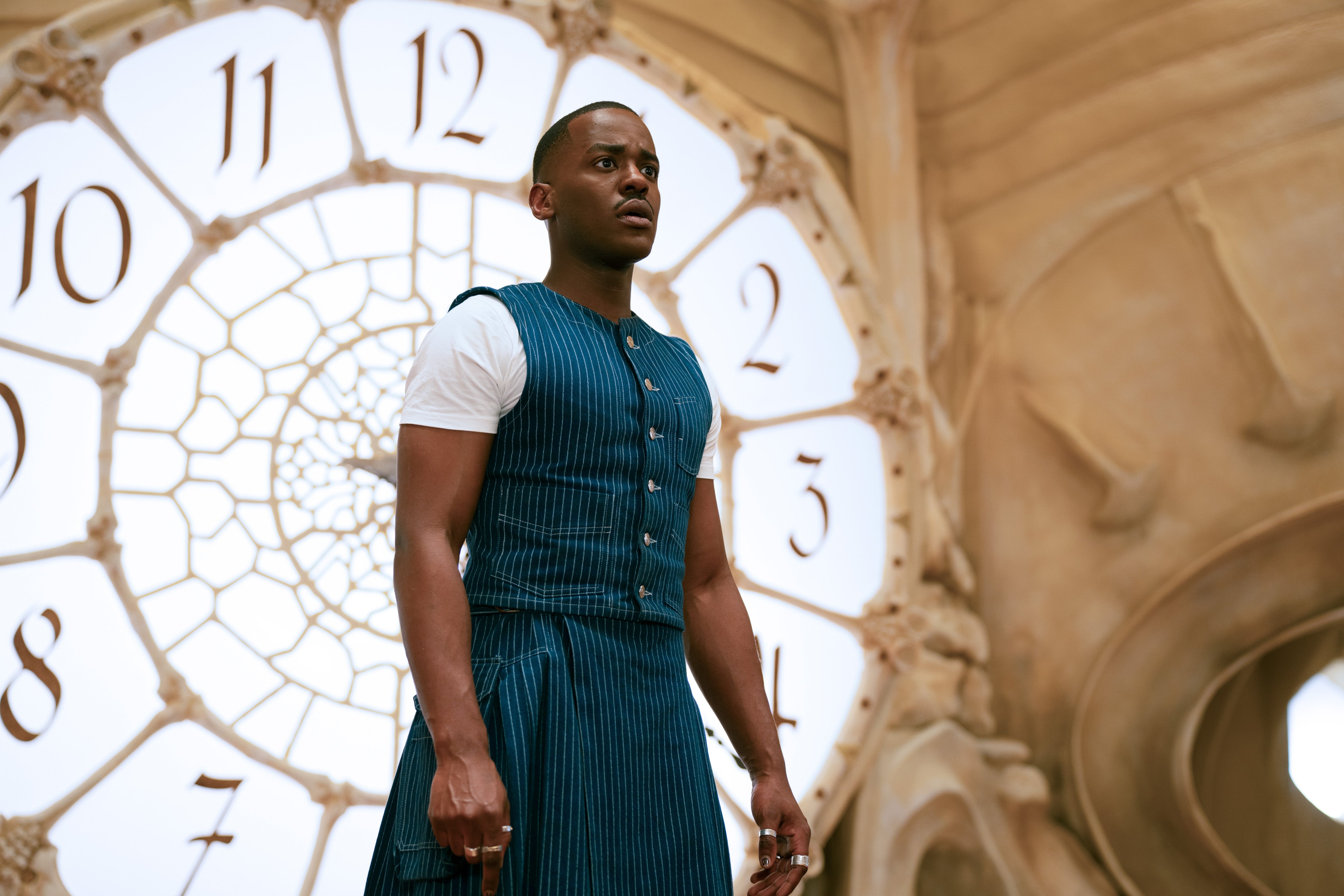
He added that there was never a script for the Christmas Special and hadn’t started finding the next actor to play The Doctor. “I never wrote it, and no actor was ever approached to play the next Doctor. You may disagree; fine, sit in that chair and wait to be proved right. You’ll wait a lonnng time,” he wrote.
“Now I’m as excited as anyone to see what comes next! Will they keep the theme tune? Will they lose the blue box? Will they bring back the Drahvin?! It’s all up for grabs, which is so Doctor Who, exciting and unpredictable and new! Here comes the future, vworp vworp.”
Doctor Who’s latest update comes after the show hit a number of hurdles over the last year – with Ncuti Gatwa suddenly leaving the role as The Doctor and Disney dropping out as a production partner with the BBC.
In May, reports claimed that the show was struggling to move forwards as producers had “found it difficult to find anyone who’ll take on the part of the 16th Time Lord” following Ncuti Gatwa’s departure last year, in part because of the “baggage of the most recent series”.
The idea that Doctor Who had become a poisoned chalice for actors would have felt unbelievable when the show was rebooted by TV writer Russell T Davies in 2005. Even as recently as 2023, there was a huge amount of hope around the long-running sci-fi franchise.
In an “unprecedented” deal, Disney had joined as co-producers and international distributors (via Disney+), with a large cash injection and significant marketing campaign around Ncuti Gatwa’s first season as the regenerating Time Lord.
The mega-corporation clearly had aims of turning Doctor Who into a Marvel-esque franchise, but was reportedly left unimpressed by the lack of buzz around the show.
After two seasons, it was announced in December that the Disney deal had unceremoniously come to an end, with a “former Disney executive” telling Deadline: “It was pretty apparent from early on that this wasn’t for the long term. Everyone got the impression that it wasn’t doing what it needed to do [on Disney+] to be sustained.”
Disney’s exit came on the tail of Gatwa’s own departure, as his second season had ended with the Doctor regenerating into former companion Rose Tyler, played by Billie Piper. Gatwa, 33, said that he had left the show after two seasons because he was “getting old”, saying: “It takes a lot out of you: physically, emotionally, mentally. So it was time.”
Yet previously, Gatwa had seemed keen to do another season. While recording an episode of The Graham Norton Show in October 2024, the actor said that season three was due to film in 2025, despite the BBC and Disney insisting at the time that a potential third season would be decided upon only after season two was broadcast.
With season three facing delays, last minute reshoots took place on the season two finale to accomodate Gatwa’s then-reported exit. This was confirmed by the episode’s stars Bonnie Langford and Carole Ann Ford, with Langford telling the Radio Times: “It was quite different to how we had filmed it. We’d filmed it the year before, and I had to pop back and do some extra filming.”
For Gatwa, Doctor Who had made him more than just the star of a major franchise, but the focal point of major online hate. While he was flying the Tardis, the negative noise and trolling surrounding the show, having initially bubbled up with the casting of Jodie Whittaker as the show’s first female Doctor, reached a fever pitch.
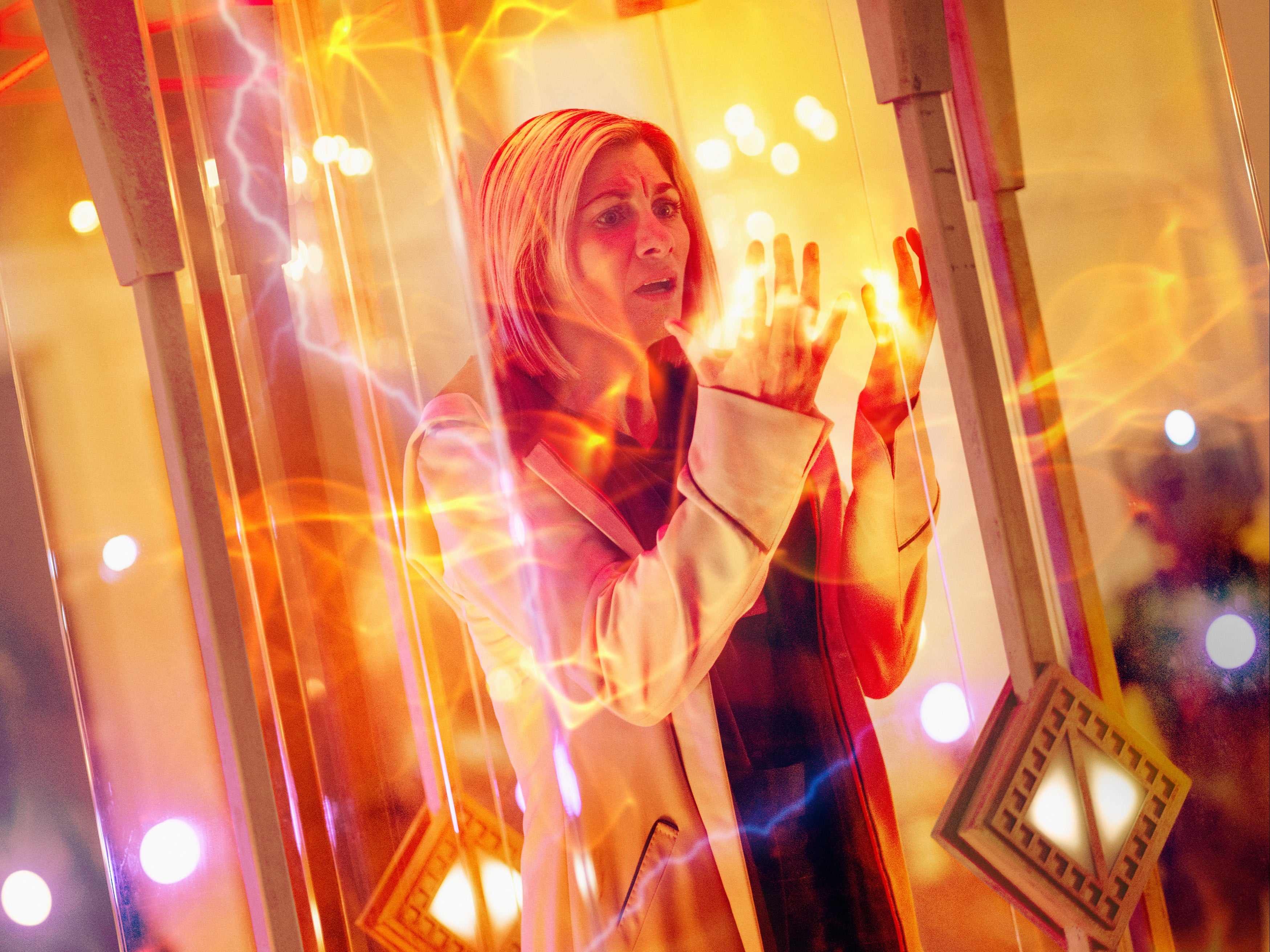
There were the critics who claimed that the alien adventure series had been let down by ”wokery”, whether through having a Black gay actor like Gatwa as the Doctor or the inclusive casting and subplots that featured throughout the show.
Gatwa addressed this himself, saying that he was “quite good at shutting the noise out” when it came to the backlash. “It’s loud. But it’s very cool and exciting to be in the middle of this huge thing – there’s haters, there’s lovers, it’s all going on,” he told The Guardian last year.
Generally a progressive fandom, Doctor Who’s loyal supporters (like former Doctor Peter Capaldi) batted down this line of criticism. But even they struggled to defend the show from bad-faith trolls, while many believed themselves that the show had significantly diminished in quality under returning showrunner Davies the second time around.
The viewing figures reflected this – and didn’t help the argument. Once considered Saturday night appointment television, Doctor Who’s viewership had fallen even further than it had during Whittaker’s tenure, when the show aired on Sundays and poor writing was once again blamed.
Gatwa cheekily nodded to the decline in viewer numbers while hosting the season finale of SNL UK last month, addressing the audience with the words: “Millions of you watched me as Eric in Sex Education, and then about 12 of you watched me in Doctor Who.”
With the show a shadow of its former self and the actor manning the Tardis the focal point of so much trolling, fans could understand how the 16th Doctor would become, as The Independent’s Louis Chilton put it, a role ”nobody in their right mind would want”.