Blue Planet 2 fans have vented anger and disbe lief after receiving show-themed posters warning about the dangers of ocean plastic that were themselves covered in plastic packaging.
The “Oceans” poster, an accompaniment to the hugely popular nature documentary series, warns readers about the “fatal” effects of plastics and the “global challenge” it has triggered.
Jennifer Burgess, from Cambridgeshire, told The Independent she ordered the poster online for her seven-year-old daughter, Izzy, and was dismayed to find it delivered wrapped in clear plastic.
“It just made me roll my eyes. If there’s one thing you’d think would come in a paper envelope it would be that, given how heavily the Blue Planet series focused on the plastic problem,” she said.
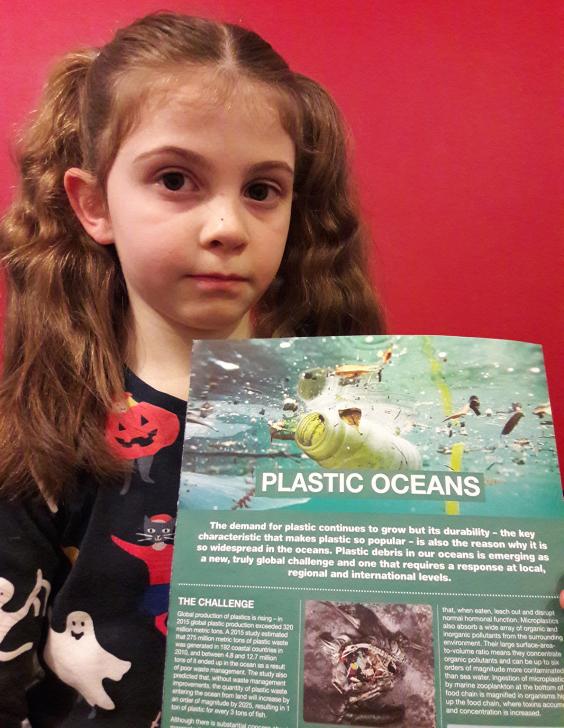
In 2015, global plastic production exceeded 320 million metric tons, something the poster highlighted.
By mid-century, if nothing is done to check its production it is estimated there will be more plastic in our oceans than fish .
Much of the growth comes from the increased use of plastic packaging, which now accounts for 40 per cent of non-fibre plastic, according to a study in the journal Science Advances .
David Smith, Ms Burgess’ father and a former science teacher, branded the move an “own goal” by the BBC and the Open University, which produced and distributed the poster.
“I think the BBC and Open University missed an opportunity to reinforce the main message that Sir David Attenborough and the programme producers wanted to get over to world audiences for this series,” he said.
He added: “I wonder if he knows that the posters are being sent out in plastic envelopes?”
People who received the poster took to social media to express their frustration over its plastic packaging, including one user who branded the decision “unbelievable”.
Dr Chris Tuckett, a director at Marine Conservation Society, said although Blue Planet had done a “huge amount” to raise awareness, plastic use had “become so omnipresent we are using it as the default almost without noticing”.
Up to 12 million tons of plastic goes into the oceans every year, and it is estimated our seas now contain around 51 trillion microplastic particles – 500 times more than all the stars in our galaxy.
This pollution is harming more than 600 species worldwide amid what many now regard as the sixth mass extinction of life on Earth.
A spokesperson for The Open University told The Independent: “We use 100 per cent FSC-approved paper for our print offerings, and recyclable plastic envelopes for distribution.”
The BBC declined to comment.