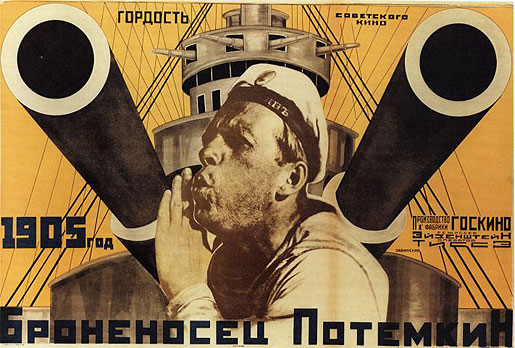
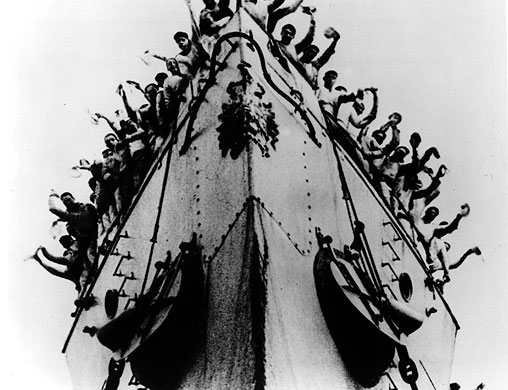
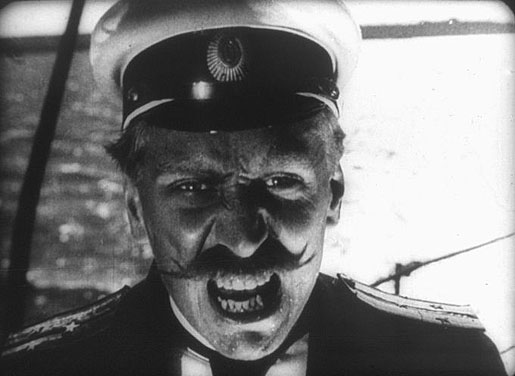
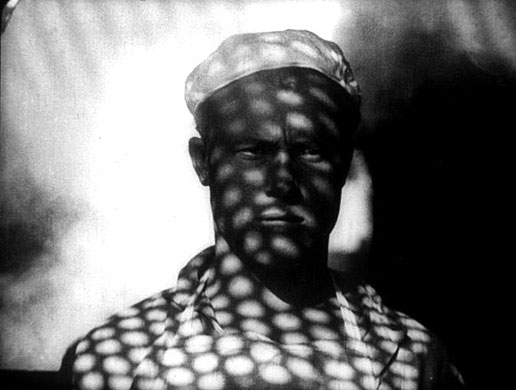
The original poster for Sergei Eisenstein's Battleship Potemkin; a classic of Soviet artPhotograph: Ronald Grant ArchiveThe true-life Potemkin was an imperial Russian battleship and the subject of a 1905 mutiny. This mutiny served as the flashpoint for a wider, abortive uprising that foreshadowed the eventual revolution of 1917Photograph: Ronald Grant ArchiveIn the film's first section, Men and Maggots, the sailors rise up against their masters after refusing to eat their rations of rotten meat. Eisenstein conceived the film as a piece of revolutionary propaganda, but it was also his chance to explore the embryonic art of cinematic montagePhotograph: Ronald Grant Archive
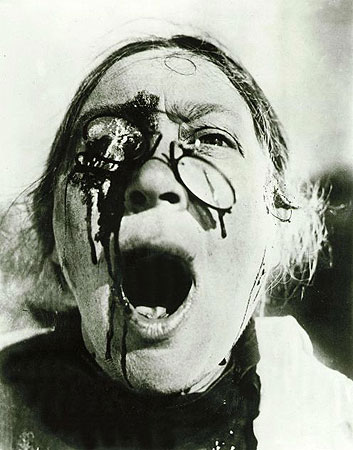
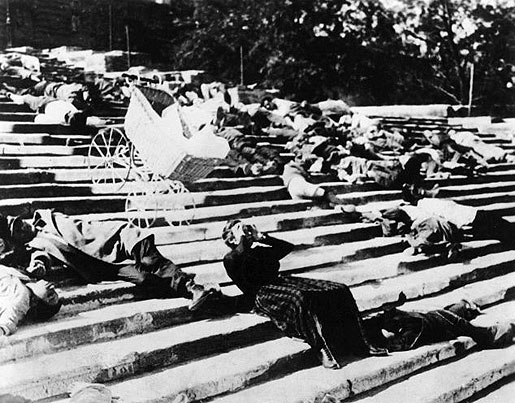
Eisenstein's montage techniques found full fruition in the legendary Odessa Steps sequence, a devastating scene that details the massacre of civilians by the Tsar's cossacks. The massacre, incidentally, was largely a figment of the director's imaginationPhotograph: Ronald Grant ArchiveRapid editing ushers the viewer through a bravura sequence on the Odessa Steps, from wide shots of the surging crowds to indelible close-ups of the victimsPhotograph: Kobal CollectionAt the height of the struggle, Eisenstein throws in a brilliant human element in the form of a baby carriage. It slips from the grasp of a murdered mother and comes barrelling down the steps, racing the fleeing civilians to safetyPhotograph: Kobal CollectionEight decades after its debut, Battleship Potemkin remains a revolutionary piece of cinema and one of the greatest propaganda pictures ever made (a fact that was not lost on Joseph Goebbels, who hailed it as "a marvellous film without equal in the cinema"). Yet British audiences had to wait until 1954 before they first clapped eyes on it: Eisenstein's masterpiece was promptly banned in the UK for fears that it would spark working-class insurrectionPhotograph: Ronald Grant Archive
Sign up to read this article
Read news from 100’s of titles, curated specifically for you.