When asked to select a picture to sum up how they feel about the election, most undecided voters in our election panel have chosen images of someone shrieking with frustration, tearing their hair out or weeping, head in hands.
They feel frustrated, angry and excluded from the debate. As Jon from Taunton Deane, a marginal constituency in Somerset, puts it: “It’s like the parties are talking to each other, not to us.”
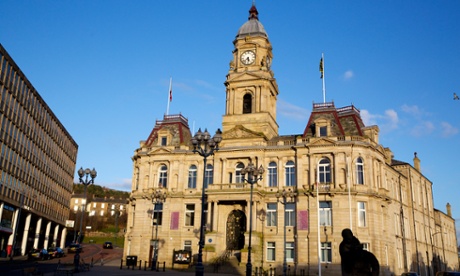
The polls remain stubbornly neck and neck. At BritainThinks we believe that it’s no longer one battleground but many. We’ve set up a qualitative panel of 50 voters drawn from five marginal seats that typify the distinctive stories being played out: Glasgow East, South Thanet, Ealing Central and Acton, Taunton Deane and Dewsbury. They will help us to understand what’s really going on, and to interpret those polls as the campaign unfolds.
So far we have conducted focus groups in each location and armed our panellists with a mobile app specially designed to capture their reactions. It’s early days but we’re seeing some consistent themes emerge.
Disillusionment with politics and politicians is widespread. Mags, from South Thanet, expressed her exasperation: “They’re all out for themselves. It’s a choice between scoundrels.” Many voters, especially younger ones, feel ill-equipped to make that choice.
Suspicion about politicians’ motives is compounded by the strong view that the media seek to obfuscate rather than clarify. Dennis from Glasgow East observed: “I think there’s a lot of scare tactics going on – the media are at it again … trying to put the frighteners on people.”
We asked our voters to take part in a “personification” exercise, imagining each party coming to life as a person. The aim was to understand the deeply held attitudes that lie behind that standoff in the polls.
At first sight Conservatives and Labour were remarkably similar: both posh mansion-dwellers, living the good life. The main difference in perception is that the Conservatives no longer attempt to conceal this, or try to show voters that they understand their lives.
A panellist said: “They’re almost shamelessly like this now – before, at least, they used to try to hide it.”
We then asked people to create each character’s Come Dine With Me menu. The Tory character chose caviar, a three-bird roast and gilded meringue or Eton Mess, washed down by the inevitable champers.
Labour might go for a pub meal, but tarted up beyond recognition, highlighting a deeper concern amongst many voters that the party has forgotten its roots. “Labour would go for poncified pub food. Something like sausage en croute,” said a participant.
A typical Ukipper proved much harder to pin down, even in South Thanet, where Farage is standing. Some felt they were just as “out of touch” as the other parties, while others imagined them more down to earth – someone you might meet down the pub, watching the football.
Neil, from Thanet, put this down to a disjuncture between party and leader: “There’s a dislocation between people who support Ukip and Nigel, who is of a different class. It’s more of a working-class party, but with an upper-class leader.”
Meanwhile, former Lib Dems in Taunton Deane told us the party has lost its way. Now firmly middle-of-the-road, the Lib Dem character would live in a three-bed semi, work in middle management, and heat up a £10 Marks & Spencer meal for dinner.
They feel Taunton Deane is a Lib Dem area – but cannot remember why (although the outgoing MP, Jeremy Browne, remains respected). For voters in our other locations, the party no longer represents a distinctive alternative.
The only party brand to generate real enthusiasm was the SNP, which was seen by almost all Scottish panellists as modern, fresh and optimistic. This was partly down to its policy offer – more focused on ordinary people – and partly about its leadership, with Alex Salmond and Nicola Sturgeon both singled out for praise as “honest”, “brave” and “in touch”.
Our battleground voters vary in how aware they are of their own leading role in this election. London voters in Ealing seem more engaged. Likewise, people in South Thanet understand their position – perhaps due to the exposure created by Farage’s candidacy.
Glaswegian voters, too, are clear how much their vote counts, although resent that, to avoid the “nightmare” of a Conservative government, they may have to vote against their true preference for the SNP.
However, people in Dewsbury and Taunton Deane are simply not feeling the buzz. Dewsbury voters in particular feel forgotten by government and politicians. At best, they’re expecting a few paltry leaflets and they’re doubtful that anyone will knock on their door any time soon.
Over the weeks ahead, our voters will become citizen reporters, using their mobile app to tell us what really matters to them. And we’ll use extended focus groups to gain a deep understanding of their views. As polling day draws nearer we are determined that their voice will be heard.