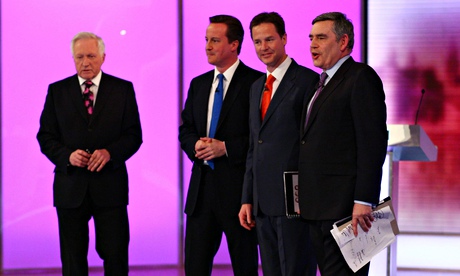
Negotiations are under way for round two of the general election leaders’ debates. Much has changed since the inaugural ones in 2010 – the format and most of the faces this time are different. Details are still being worked out and the political parties have yet to agree. But the proposal unveiled by broadcasters is for a 2:3:4 formation.
Sky News and Channel 4 plan to feature Conservative leader David Cameron and Labour’s Ed Milliband. The BBC would also have Cameron and Miliband plus Liberal Democrat leader Nick Clegg, while ITV would have the three main party leaders plus Ukip’s Nigel Farage.
In 2010, the first debate (on ITV) drew 9.4 million viewers, the second 4.1 million and the last – which was on the BBC – 8.4 million.
The ITV and BBC debates are expected to come from the regions and Channel 4 and Sky’s from London and all will air online as well as on their respective channels. It has still not been agreed in which order the broadcasters will transmit their debates.
The only thing known for sure so far is which presenters will be fronting the debates. But who will be the Cameron and who the Farage in the battle of the broadcasters?
BBC: David Dimbleby
Dimbleby is the veteran – the only survivor from the first set of debates in 2010. 2015 is his last general election. His gravitas and Question Time experience give the 75-year-old an edge. Experience can count. It was Dimbleby who last time pointed out the BBC should have its logo discreetly on each of the leaders’ lecterns – ensuring a marketing coup. Despite this the BBC would not commit until it worked out a deal that paves the way for the succession of a new generation – on election night viewers will go to bed with Dimbleby and wake up with Huw Edwards. Expect some poignant moments amid the unflappable questioning during his swansong debate.
Highs: Hosting every general election since 1979 and most of the BBC’s coverage of big state occasions.
Lows: His US election interview with Gore Vidal. His scorpion tattoo.
ITV: Julie Etchingham
Assured and calm, Etchingham was the first woman to co-host a UK election programme and is now the first to host a leaders’ debate. Unlike ITV’s last debate, which focused on domestic issues, this ground-breaking one will cover a range of subjects but it is expected to follow the same format and have a studio audience. The News at Ten co-anchor takes over from Alastair Stewart. She has interviewed the past four prime ministers plus figures such as Hillary Clinton and Condoleezza Rice so is used to the big occasion. Known for her eye for detail, forensic research and sense of humour.
Highs: Scooping the first TV interview with Pope Francis in April. Securing an exclusive with Paul and Rachel Chandler after their release from Somalia. Co-hosting ITV’s coverage of the Queen’s diamond jubilee and Prince William’s wedding.
Lows: In 2007 she thought she was off-air when she joked (during coverage of a David Cameron speech) that the Tories’ immigration policy was “extermination”. She wasn’t. Cameron later sent her a Dalek to bury the hatchet.
Channel 4: Jeremy Paxman
The new signing from the BBC needs little introduction. After years of playing second fiddle to Dimbleby during general elections, this is Paxo’s own gig. Penetrating questions – probably repeated until he gets an answer – quickfire debate and incredulous facial expressions are likely to be the order of the day. What the combination of Sky News and Channel 4’s commissioning team comes up with to accommodate the lively pairing of Paxo and Kay Burley remains to be seen but Paxman’s grilling will be eagerly anticipated. His recent foray into live theatre, which included a Q & A with the audience may serve him well. Don’t expect him to embrace contributions from Twitter, though.
Highs: His interview with Michael Howard in which he pressed Howard to answer a question 11 times. Attracting Newsnight’s biggest audience for three years for his final episode.
Lows: Being reprimanded by the BBC’s director of news over critical comments he made about the corporation. Saying Twitter was for people with “nothing going on between their ears, or nothing going on in their lives”.
Sky News: Kay Burley
Straight-talking Sky News presenter Burley will introduce the Channel 4/Sky debate before throwing to Paxman and then chairing the post-debate analysis. Her infamous on-air gaffes may have producers on tenterhooks but Burley will pursue a story like a terrier, as she showed earlier this year while pursuing relatives of missing passengers from Malaysian airlines flight 370 through a Kuala Lumpur hotel, when she ran up a down escalator to keep up.
Highs: Presenting Sky News’ live coverage of the LBC debate between Nick Clegg and Nigel Farage.
Lows: Calling a campaigner during the Scottish referendum “a bit of a knob”. In 2008 she reportedly grabbed a female photographer by the throat after being hit in the face with a camera. Being called “dim” by Chris Bryant MP. On September 11, 2001 she announced to viewers that the entire eastern seaboard of America had been destroyed.