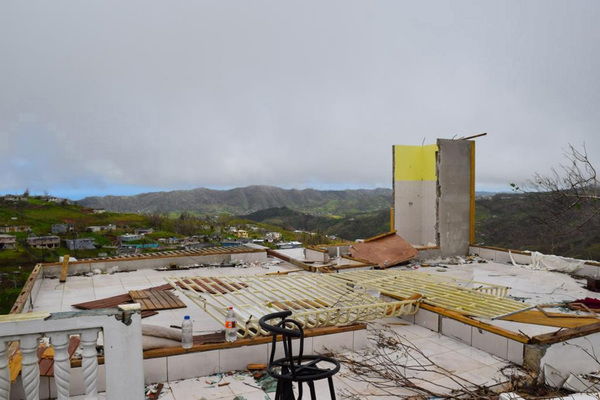
Regions still recovering from 2017's devastating hurricanes are scrambling to prepare for the new hurricane season, which is just two months away and expected to be busier than average.
Houston has changed building regulations, Florida is seeking federal assistance and Federal Emergency Management Agency Administrator Brock Long said Puerto Rico needs an estimated $50 billion to rebuild its infrastructure and electrical grid after Hurricane Maria devastated the island.
In a visit to Puerto Rico late last week, he told The Associated Press that the U.S. territory is not prepared for the upcoming hurricane season, which starts June 1.
"We're running out of time," Long said.
A June 14 planning and training exercise is scheduled with the island's government to coordinate delivering supplies to Puerto Rico's 78 municipalities for improved response and recovery times.
Puerto Rico must restructure its own emergency management system to have better coordination for future storms, Long said. Puerto Rico's phone system was rendered useless after the storm landed Sept. 20.
Long also said it was "completely false" that FEMA's response to Hurricane Maria was slow and inadequate, citing the $10 billion the agency provided to the island.
Vast portions of the island were left without electricity for months, but now about 96 percent of customers have had power restored, said Walter Higgins, chief executive officer of the Puerto Rico Electric Power Authority.
In a video posted by the power authority, Higgins said there are still about 50,000 people without power six months after the Category 5 storm ravaged the island. The remaining customers are in tough-to-reach locations because of the natural terrain or hurricane-related damage, Higgins said.
The coming hurricane season isn't expected to equal last year's. The 2017 season brought 17 named storms, 10 hurricanes and six major storms at Category 3 or higher. The estimated damage of the storms rose to more than $200 billion.
Still, early forecasts for the 2018 season suggest the potential for disastrous storms.
The Tropical Meteorology Project at Colorado State University released its annual forecast Thursday and predicts that 2018 will bring seven hurricanes and 14 named storms _ slight increases from the medians of six and 12.
"Certainly, we can expect some major hurricanes. At least three major hurricanes have been predicted for this year," said Michael Bell, an associate professor of atmospheric science who co-authored the forecast.
AccuWeather Atlantic hurricane expert Dan Kottlowski said that while experts can only make predictions on the severity and paths of the hurricanes, previous data indicate which localities should expect the storms.
"They need to prepare to get hit this year," Kottlowski said of states from Texas to the Carolinas. "Historically, the probability of getting hit again is smaller but not impossible."
Kottlowski said that Key West, Fla., "has the highest probability of being impacted by a hurricane ... they're sticking out like a sore thumb."
The island and city in the Florida Keys offers an example of how municipalities in Florida, Texas and elsewhere are still trying to secure aid from federal and state government. Hurricane Irma hit Key West on Aug. 30.
Monroe County, which includes Key West, on Feb. 28 submitted its application to FEMA's Public Assistance Grant for reimbursement of $17 million. In March, county representatives went to Washington to meet with FEMA officials and discuss reimbursement for hurricane-related expenses.
Under the application process, FEMA reviews the paperwork, and then submits it to the Florida Department of Emergency Management for approval. Monroe County has been approved for about $3 million, but has yet to receive any of the money.
Monroe County took out a $40 million line of credit to cover Hurricane Irma-related expenses, according to a news release.
In Houston, the City Council voted last week to create a regulation that would require new commercial buildings and homes to be elevated higher in areas prone to flooding.
Hurricane Harvey hit the city Aug. 17 as a Category 4 storm and lingered over the region. In February, Houston Mayor Sylvester Turner said more than 50 inches of rain hit the area in a few days, damaging more than 345,000 housing units. More than 10,000 people lived in shelters until the water receded, Turner said.