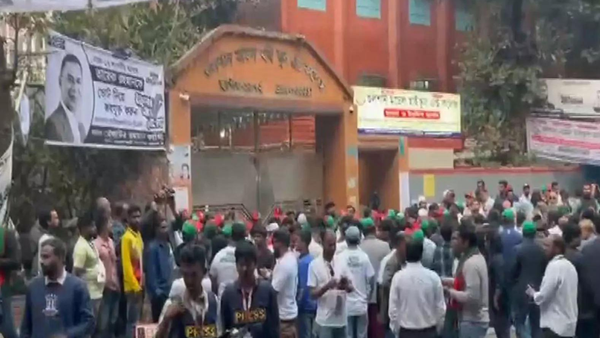
The State government launched its annual distribution of saris to poor women for Bathukamma festival, beginning on October 17, with fanfare on Friday.
Just as last year, one crore saris will be distributed but what makes the programme different this time was introduction of an additional 187 varieties. Ministers, MLAs and other leaders formally inaugurated the programme taken up at a cost of ₹318 crore.
The cost went up this year from ₹295 crore last year as the government introduced gold and silver colours in the zari of the saris. Only gold colour was added to zari last year.
According to Mr. V. Ashok Rao, Assistant Director of Handlooms and Textiles at Sircilla where the entire production of saris in huge bundles began six months ago, women of below-the-poverty-line families will get saris in 287 varieties as against 100 last year. The saris were produced in 20 colours.
About 15,000 workers were employed day and night on 25,000 powerlooms in the town.
They were assured of an income of ₹16,000 to ₹25,000 per month.
The government had launched the programme in 2017 but it was only from the following year that the bundles of 15 to 16 saris each were produced in toto in Sircilla. Since only four months were available for production in the first year, 50% of saris were outsourced from manufacturing facilities in Surat.
The programme was taken up by government with the twin objectives of gifting saris to poor women and providing employment to powerloom workers at hundreds of `sanchas', as sheds in Sircilla housing the looms are called.
Mr. Ashok Rao said seven crore metres of cloth was produced locally from which 90 lakh saris of 6.3-metre length and 10 lakh saris of 9-metre length were made. Each sari will have a blouse piece of 80 centimetres.
The 9-metre saris were meant for women adopting Maharashtrian culture in border areas of the State.
The programme was handled by Telangana State Handlooms Cooperative Society right from placing orders, selecting varieties and designs, procurement from looms and supply to districts.
The cost of 6.3-metre sari worked out to ₹300 while it was ₹330 for 9-metre saris.
The society began dispatch of cloth from Sircilla to processing units in Hyderabad in July.
The cloth underwent heating in water, cutting and packing at Hyderabad.
After the formal launch on Friday, distribution committees comprising panchayat secretaries, fair price shop dealers and representatives of women groups will either take up door delivery or distribute with COVID-19 precautions at gram panchayat buildings.