PT Batam Aero Technic (BAT) believes it has an attractive business proposition for the fledgling airlines of Southeast Asia, especially in Thailand.
The aircraft maintenance, repair and overhaul (MRO) subsidiary of Indonesia's Lion Group said it can render the same internationally recognised quality services for at least 30% less than what is charged in Thailand, and 50-60% cheaper than Singapore.
The company said it benefits from lower wages in Indonesia, a lower-cost operating environment and a sufficient supply of qualified personnel, enabling it to appeal to non-Indonesian airlines.
While BAT has begun to solicit interest from airlines in the region, it is not rushing to win MRO contracts until the major expansion phase of its existing facility on Batam, in Indonesia's Riau Islands, about 20 kilometres from Singapore, is up and running in 2019.
The expansion is expected to turn Indonesia into a regional aviation hub when completed, and BAT reckons it will have 20% capacity to spare to serve third-party airlines in the region.
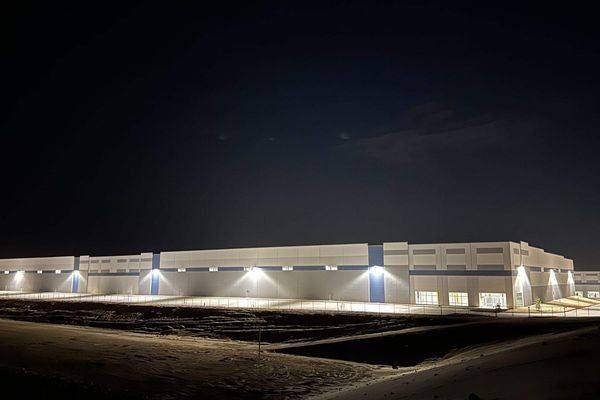
The expansion will cover an area of 120,000 square metres, up from 40,000 sq m.
The entire capacity of BAT's existing facility -- a hangar that can accommodate 12 single-aisle jetliners like the Boeing B737-800/900ER series and four wide-body planes at once -- is consumed by Lion Group's aircraft, including those of Thai Lion Air.
The majority of capacity from its new hangar, which can put 30 single-aisle jets under one roof all at the same time, will be dedicated to Lion's current extensive fleet and the massive deliveries of new aircraft to the group over the years to come.
"We currently do not have any capacity left to spare to third-party airlines, but we will have some when the second hangar is put in place," Riki Supriadi Suparman, production manager at BAT, told the Bangkok Post.
Lion Group currently has more than 260 aircraft in its fleet and has planned to take delivery of 226 additional aircraft ordered over the next five years.
BAT's current facility is capable of servicing several serial types of Boeing 737 -- 300, 400, 500, 600, 700, 800 and 900ER -- as well as ATR 72-500 and 72-600 turboprops and DHC-8 aircraft.
Later, BAT will also be able to service Airbus A320neo and A320ceo, the A330, the latest Boeing 737 MAX and the Eurocopter E3135.
The company is building its indigenous workforce to support the next-phase expansion, which will boost the combined manpower pool to 3,200 from 1,000, all Indonesians.
BAT officials did not specify the capital outlay for expanding the MRO facility. Lion Group founder Rusdi Kirana said earlier that the current facility cost about US$250 million.
The officials did, however, acknowledge that there may be doubts cast over Indonesia's overall aviation safety credentials, which could affect perceptions of its MRO standards.
The company is confident that it has addressed these issues.
In July this year, BAT's Batam facility, which began operation in 2014, passed a safety and security audit by the US Federal Aviation Administration (FAA).
Specifically, it has been certified for FAA 145, a global standard for providing maintenance and repair of Boeing 737 family aircraft.
FAA certification is a sign of global recognition that an MRO can qualify to perform maintenance, repair and overhaul of civilian aircraft.
BAT has also been certified by the civil aviation authorities of Indonesia, Malaysia and Thailand, and is capable of providing heavy maintenance work, including the so-called C and D checks.