Indigenous Australians would be most disadvantaged by proposed voter ID laws due to the “social and economic barriers” they face obtaining official documentation, advocates warn.
The National Aboriginal and Torres Strait Islander Legal Services executive officer, Jamie McConnachie, said obtaining accurate birth records was a “logistical and practical nightmare” for her clients due to the legacies of colonisation and the stolen generation, leaving them at risk of disfranchisement.
The Coalition’s voter ID bill was introduced in October and could be pushed through federal parliament in the final sitting fortnight of the year in November before the 2022 election.
If passed, prospective voters would be asked to produce ID such as photo ID, Medicare or pensioners cards, bank cards, or recent documents from financial institutions, utility companies or Aboriginal and Torres Strait Islander land councils.
A voter unable to produce ID would still be able to vote if their identity could be verified by another voter, or by casting a declaration vote, which requires further details such as date of birth and a signature.
The Australian Human Rights Commission has warned this could create a barrier to voting for groups including “Aboriginal and Torres Strait Islander peoples who often do not possess a birth certificate and face difficulties obtaining subsequent formal identification”.
McConnachie said Aboriginal and Torres Strait Islander births were “often not registered” with central authorities due to removal policies and, if they were registered, a generic birthday such as 1 January or an approximate year was often used.
In remote and regional areas such as pastoral stations, records may have been kept by private landowners but were now be lost, she said.
“Getting documents like a birth certificate is a logistical and practical nightmare for my former clients,” she said.
“For some of them it was like they never existed – their records were mystifying and discombobulated, they took years to assemble. The process of obtaining a licence may seem like a simple advancement in the life of an individual.
“But there are some social and economic barriers that exist for Aboriginal people that have impeded their opportunity to have access to their identity documents.”
Aunty Naomi Wilfred, an Alawa native title-holder from Hodgson River about 300km east of Katherine, said Indigenous voters in remote areas already faced difficulties such as poor disability access and waiting “a long time” in temperatures above 40C.
“This will make it really hard,” she said of the voter ID proposal. “We don’t understand why the law keeps changing. It’s confusing.”
Neralle Arnold, the chief executive of the Alawa Aboriginal Corporation, said “you rarely get anyone who is walking around in community or going into town with all those documents on them”.
“They may have their [bank] keycard and drivers licence, but [it’s] very rare you would have your birth certificate or all those other documents,” she said.
“A lot of our mob don’t have passports anyway. I don’t think they would carry that on election day. A lot of people will just turn up, they won’t turn up with identification, they’ll just turn up to vote.”
Wilfred and Arnold noted the requirements pose a barrier to people who had lost ID. A declaration vote “would need to be explained, what they’re signing”, Arnold said.
The joint committee on human rights has warned the bill may discourage people from voting and “no evidence” has been provided regarding how it could prevent fraud. The Australian Electoral Commission has found instances of voter fraud were “vanishingly small”.
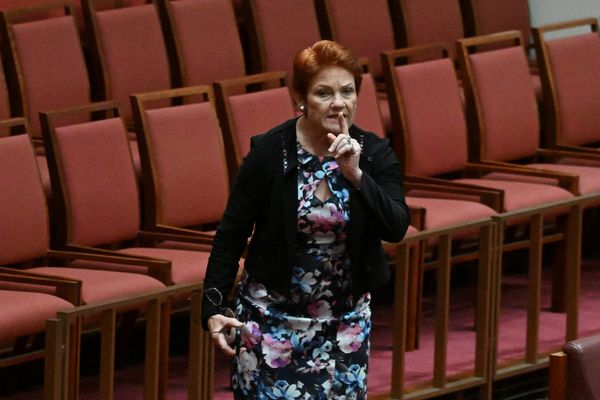
Labor and the Greens are opposed to the bill. One Nation supports the voter ID bill and has claimed credit for it, meaning the government is just one vote short of passing it in the Senate.
Centre Alliance senator Stirling Griff has said he was “generally supportive” of an ID requirement but his party hadn’t finalised its position.
In October, Griff said he “understands the need for ID” but may seek some accommodation for Indigenous Australians and other groups for whom the bill could impose a hurdle to voting.