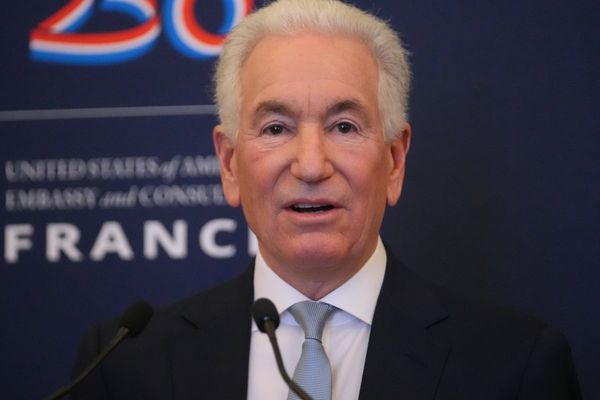
Jes Staley, the chief executive of Barclays under fire for his attempts to unmask a whistleblower, has admitted to hundreds of shareholders that he made a mistake and has issued a personal apology for his behaviour.
The American banker told 460 investors at Barclays’ AGM that he had made an error in trying to reveal the identity of the individual making allegations about the previous conduct of a newly hired executive in the US.
Staley said: “I feel it is important that I acknowledge to you – our shareholders – that I made a mistake in becoming involved in an issue which I should have left to the business to deal with. I apologised to the board, and I would today like to apologise to you as well for that error.”
However, about 17% of investors failed to back his re-election to the board, after ISS, an influential adviser to institutional investors, issued an “abstain” recommendation on the vote. The protest was largely through deliberate abstentions: only 3% voted against his continued boardroom role at the bank he joined in December 2015.
Even so, the abstentions are an embarrassment to Staley, who was hired in 2015 after John McFarlane, the bank’s chairman, ousted the previous chief executive, Antony Jenkins. Chief executives usually aim for resounding endorsements of their boardroom roles.
At the AGM in the Royal Festival Hall, London, one private investor called on Staley to quit over the events, which were revealed last month when Barclays admitted that its chief executive had twice attempted to unmask a whistleblower.
The whistleblower’s allegations concerned Tim Main, who worked with Staley at JP Morgan and who was recruited to Barclays in a senior role last June.
Another private investor asked what action Staley intended to take if he had uncovered the whistleblower. “What was he going to do? Presumably not put him into a suitcase [and put] him into the river,” the shareholder asked, saying McFarlane must feel as if he had “wandered on to the stage of a Carry On film”.
McFarlane – who has a reputation for firing chief executives – has repeatedly backed Staley. “You know me,” McFarlane said, “if I believe the CEO should go … [he would].”
The chairman likened the matter to a driving offence. McFarlane said the chief executive “thought he had a green light. He went through the light and actually it was red”.
“The action for going through a red light ... is you don’t lose your licence.”
Providing more details about the situation, McFarlane said the bank thought the allegations had been raised in a external letter from the US, rather than from an employee. Even so, he said, the bank had treated the matter as a whistleblowing incident – although McFarlane said many issues raised by whistleblowers are not found to be valid.
Both the Financial Conduct Authority and the Bank of England’s Prudential Regulation Authority are investigating the matter. Barclays has formally reprimanded Staley and insisted that his bonus, which was £1.4m last year, will be cut.
The incident took place around July last year when the rules covered only internal whistleblowing incidents, not external ones, McFarlane said. The rules changed three months later to cover external whistleblowing, too.
At an annual meeting that also heard concerns about climate change and the automation of banking sevices, McFarlane admitted that executive pay was too high. Asked about remarks by Labour leader Jeremy Corbyn describing bankers as “greedy”, McFarlane retorted that it “was well known that politicians have impeccable judgment on all matters”.
Two votes on the bank’s remuneration report and policy were easily passed, although changes to the long-term incentive plan failed to secure the support of 15% of investors.
There was also a protest against the election of Sir Ian Cheshire, former boss of Kingfisher, which owns B&Q. About 12% of investors voted against his appointment because of concerns about his time commitment. Cheshire also chairs retailer Debenhams, French furniture company Maisons du Monde and investment company Menhaden Capital, and is senior independent director at Costa Coffee owner Whitbread.