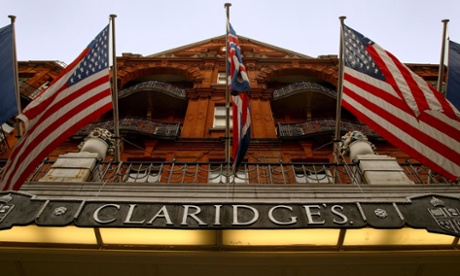
The Barclay brothers have abandoned their four-year battle to seize control of three of London’s most prestigious five-star hotels, including Claridges, selling out to a business controlled by Qatari sovereign funds.
The sale of their 64% interest in the hotel company Coroin to Qatar’s Constellation Hotels for an undisclosed sum marks an end to one of the most expensive shareholder feuds in recent British corporate history, generating millions of pounds in bills for legal advice and corporate investigators.
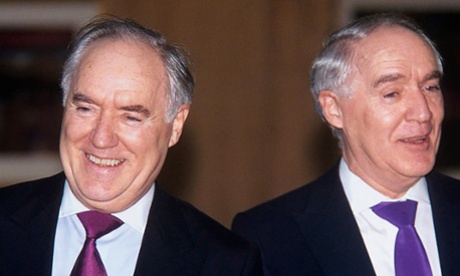
Sir Frederick and Sir David Barclay, best known as the owners of the Telegraph newspaper titles, launched an audacious corporate raid in January 2011 on Coroin, believing a number of the group’s owners were too financially weakened to fend them off.
One of their calculations was that Irish property investor Paddy McKillen, with a stake of more than a third, would offer little resistance because other parts of his indebted business empire appeared to be under intense strain.
Through two quick deals in early 2011, the brothers managed to acquire one stake in Coroin of close to a third controlled by property tycoon Peter Green, and a further complex deal was struck with distressed investor Derek Quinlan, giving effective control over a second similar-sized holding.
The two deals delivered control of the three hotels in and around Mayfair – Claridges, the Berkeley and the Connaught. The Barclays appeared to have outflanked a rival offer McKillen had been hoping to secure from Qatar’s Al-Thani family after an introduction from Tony Blair.
But the brothers’ hopes of squeezing out McKillen were premature – not least because the Qataris decided to remain supportive.
There followed a string of lawsuits around the world, challenging the legality of the Barclays raid on Coroin. Lawyers for McKillen argued that the brothers’ actions had breached the terms of an agreement committing Coroin investors not to sell to outside interests without first offering the shares to fellow investors.
Barclay lawyers were able to argue they had not breached the agreement. In the case of the stake purchased from Peter Green, they had bought the Cyprus investment vehicle owning the shares, not the shares themselves. The Barclays’ deal with Quinlan, meanwhile, had been crafted so that the brothers took effective control but not ownership of his shares.
During legal proceedings, it emerged that the Barclays had channelled funds to Quinlan’s family, though both Quinlan and the brothers told the court this had been an act of charity unconnected to the battle for control of Coroin.
“The Barclay brothers would not seek to profit from a friend’s distress … Sir David has never made his support for myself or … [my wife] Siobhan conditional on anything in return,” Quinlan said.
In a statement to the courts, Sir Frederick said: “Helping the Quinlan family in their time of need was something that I will never regret and I would not hesitate to do it again if necessary, regardless of anything to do with Coroin [the disputed hotel group], which is irrelevant to how I feel on this issue.”
In 2012, the Barclays used their control of Coroin to demand all shareholders inject more capital into the business through a rights issue. Hopes that McKillen would be unable to find the necessary £50m were disappointed as his Qatari friends were there to provide finance.
And a year ago lingering concerns over the stretched finances of McKillen’s broader interests were wiped away after he won refinancing from Los Angeles investment firm Colony Capital. The surprise move allowed McKillen to restore more than €250m (£180m) of overdue borrowings within his property empire to financial health.
McKillen has repeatedly vowed he would never sell his shares in Coroin to the Barclays.
The Irish investor, best known before his spat with the Barclays for some shared investments with U2’s Bono, was unavailable for comment on Thursday.
Last year, he told the Guardian: “From day one it’s been certain: if it wasn’t an illegal attempt to get me out of the hotels, it was an immoral attempt. It’s very disappointing what tactics and behaviour they’ve used. But they’ve got the lesson, certainly now, that I ain’t for moving. I’m here to develop the hotels.”
Last month, reports emerged that Coroin had been approached by the Abu Dhabi Investment Authority, wanting to buy the company for £1.6bn. McKillen said he would not sell.
Under the terms of Thursday’s deal, McKillen is keeping his 36% stake in Coroin and will remain a minority investor alongside Qatar’s Constellation Hotels.
Richard Faber, Sir Frederick’s former son-in-law who remains a senior executive in the Barclays business empire, said: “We are pleased to have concluded this transaction and that [the hotels are] now majority controlled by Constellation Hotels Group.”


.jpg?w=600)