In the era of George W, taking a taxi in Turkey could be a bit of a bore: the driver would go on and on, angrily. There was some public rage over Israel's doing in Gaza, and the invasion of Iraq was very unpopular. The Turks have a good idea about the complications of that country and they were especially suspicious that the US and Israel were encouraging the Kurds, specifically the PKK, which for the last 30 years has been causing mayhem as a terrorist movement.
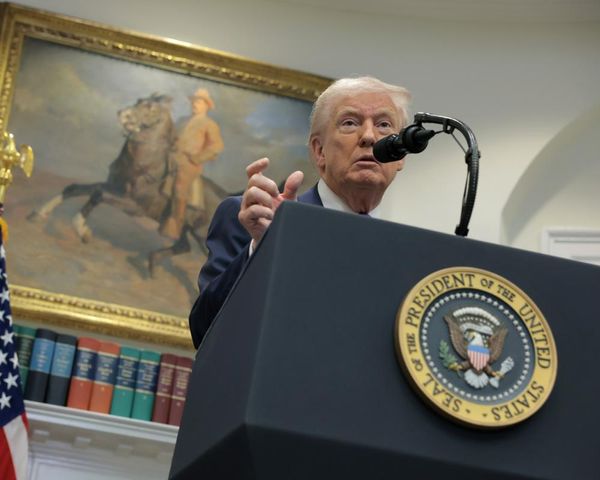
Were the Americans really sympathetic to their Turkish ally? And was it not true that, since 9/11, they were turning hostile to Islam in general? Anecdotal evidence from Turkish students in the US suggested as much. Then again, why was Congress prepared to pass a resolution that the fate of Turkey's Armenians in the first world war amounted to genocide? President Barack Obama, visiting Turkey today, has some repair work to do. He handled it, in a speech to the parliament, rather well.
It began with some hints: the speaker, no doubt with some Islamic pride, announced the president as Barrack Hussein Obama; Obama, early on, praised Mustafa Kemal Atatürk, maker of the Turkish state, and singled out the words "secular democracy".
This is contentious. The present government, regionally popular, is political-Islamic, and the country is very divided; on the Golden Horn the division is even very audible, because the techno-music from the nightclub boat stops at 2.30am and then, an hour later, 10 megaphoned calls to prayer succeed each other.
Obama assured his listeners at the end that the US is not anti-Islamic, in fact needs Muslim allies – which is perfectly true, though he will not be universally believed. He said straight out that the war against terror – in Pakistan and Afghanistan – had to be fought, and compared it with the war against the PKK, on which he promised support.
He developed another parallel. There should, he said, be a two-state solution in Palestine, where the Turks have been semi-mediating; but that might also mean in effect a two-state solution for Cyprus as well, or at any rate some sort of confederation – a good way of silencing the anti-Israeli element in the governing party, which the prime minister had stirred up when, at Davos, he insulted Shimon Peres.
But slightly oddly, he also threw a bone to the Greek nationalists. There is an old Orthodox seminary on the island of Heybeliada, near Istanbul; for decades it has been closed. He said it should be reopened. This is a good cause, of course: Orthodoxy is at the centre of Anatolian history.
It is also obvious that the US wants some sort of stability in the Caucasus. It has been co-operating with Turkey as far as Georgia is concerned: the Georgian police even wear Turkish uniforms. There is a a main pipeline, and, soon, an important railway link to the Caspian, going via Georgia, and the Turks were alarmed at what they saw as Georgian adventurism last year.
However, stability in the Caucasus does mean the Armenian border must be opened. That landlocked little place has a quarter of the GDP per head of Estonia, and has lost a third of its population through migration since 1931 (in part to Istanbul). The Turks closed the border because of what they saw as Armenian aggression against Azerbaijan, but also out of general pique at the antics of the Armenian diaspora in the US and France.
Almost no Turks accept that, back in 1915, there was a "genocide" in the classic sense: ends of empire are murderous affairs, often enough, and a great many Turks were also massacred. Historians are divided. Obama said that there were black spots in nations' histories, and mentioned American slavery. But he then added that Turkey's problems with Armenia should be settled between them, and he had earlier agreed with the Turkish prime minister's suggestion that the matter should indeed be handed over to a commission of historians. All in all, constructive stuff, and a good start.
Norman Stone is head of the department of International Relations at Bilkent University, Ankara