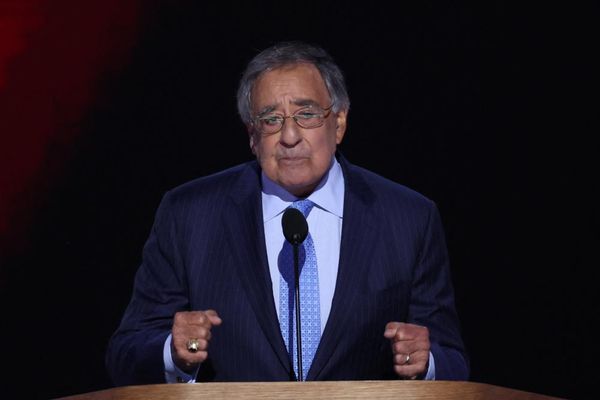
That was a heavy-going day.
However, it will provide a lot of fodder for Commissioner Hayne’s final report.
Do you think it’s safe to say Asic will cop another blasting when the report comes out?
James Shipton made several apologies for the regulator’s poor performance in recent years (did he tell you he joined Asic only recently?) He also painted a picture of a regulator that has been too soft on the banks (but you know Asic’s not very well funded and resourced, right?)
- We started the day hearing about Asic’s poor handling of Commonwealth Bank’s mis-selling of consumer credit insurance to tens of thousands of customers.
- The regulator was then criticised for accepting a community benefit payment without an enforceable undertaking from CommInsure. CBA feared that would make it look like the bank had paid off Asic.
- Shipton says Asic will now be looking very seriously at the “utility” of community benefit payments.
- Asic was forced to explain why it runs its media releases past the banks before releasing them.
- Shipton agreed that Asic had been over-reliant on enforceable undertakings when dealing with bank misconduct.
- He conceded that in the last decade, Asic had taken action against an entity for breaching an enforceable undertaking only twice.
- Shipton agreed that Asic had not pursued enough civil penalty proceedings against the banks since 2011.
- The royal commission is very interested in Asic’s organisational structure. It may make recommendations for an overhaul.
Thank you for joining us today. And thanks to my Guardian team for helping behind the scenes.
Please join me on Monday.
And if any of you surf, enjoy the southerly this weekend. It’s a cracker.
Updated
OK, so that concludes Shipton as a witness.
Actually, it concludes the witnesses for today, which means the royal commission has finished for the week.
That felt quite abrupt.
The hearings will pick up again on Monday in Melbourne.
I’ll gather my thoughts for a wrap of the day’s proceedings. Please stay with me.
Updated
Shipton says that since taking over as chair of Asic, he has made several changes to the regulator arising from the capability review
Shipton: “They have been my first order of priority in the nine months that I’ve been here.”
Orr: “And they include a very recent step of creating a new level of senior management known as executive directors?”
Shipton: “That’s correct, yes.”
Asic decided on 5 November that from 1 January, its commissioners would cease having day-to-day operational and executive responsibilities and they would adopt a strategic oversight review and external engagement role with the 10 executive director roles established to sit between the commission and the senior executive leaders.
Orr: “And this resulted from a reconsideration of the recommendations of the capability review?”
Shipton: “Well, at least in my part, yes and by my fellow commissioners as well, yes.”
Updated
Well, blow me down.
The panel believed its proposed changes would benefit Asic and the public – by providing clearer lines of accountability and oversight– but Asic did not embrace its proposals.
Orr: “Asic expressed the view that the new model would tend to undermine rather than enhance its strategic focus and accountability. Have you seen that?
“What observations do you make about that response by Asic?”
Shipton: “I would take a different view to that response at that particular point in time.”
Orr: “You’ve spoken publicly about the capability review?”
Shipton: “Yes, I think I’ve spoken very publicly about how I wish to embrace it.”
Updated
Orr notes that in 2015 a capability review of Asic was conducted by an expert panel.
It provided a report to the government in December 2015, making several recommendations.
It said Asic should realign its internal governance arrangements by elevating the current commissioner’s role to that of a full-time non-executive function with a commensurate strategic focus and external accountability free from executive line management responsibilities. (Sorry, I know that was a mouthful).
It also recommended that a new role of head office be established with delegated responsibility and accountability for executive line management functions.
Both those recommendations flowed from the expert panel’s view of the problematic dual role of a current Asic commissioner.
Orr: “The panel said that it believed that a dual governance and executive line management role inherently undermined accountability?”
Shipton: “I believe that was words to that effect, yes.”
Updated
Orr turns to Asic’s organisational structure.
Note - Orr will want commissioner Hayne to listen intently to this line of questioning. Is there a problem with Asic’s organisational structure? Will the royal commission recommend an overhaul of Asic?
Orr: “Asic’s current members are you as the chair, two deputy chairs, and four commissioners?”
Shipton: “Yes, that’s right.”
Orr: “So Asic’s governing body is comprised entirely of executive members?”
Shipton: “We currently are structured as executive commissioners or commissioners with executive responsibilities, is probably the best way of putting it.”
Orr: “Well, there are no non-executive members of your governing body, is there?”
Shipton: “Sorry, that’s exactly right. We do not have non-executive members of our commission.”
Orr points out that that is in contrast to the Financial Conduct Authority and the Securities and Futures Commission in Hong Kong, and the ACCC, and the Competition and Markets Authority in the UK, and the Reserve Bank.
Orr: “So do you think there are risks in Asic having a governing body, unlike all of those organisations, that is comprised entirely of executive members?
“It would be regarded as poor governance practice for a large listed entity to have a board comprised entirely of executive directors, wouldn’t it?”
Shipton: “It would be, yes.”
Updated
This is interesting.
Does it mean we may – one day – be able to determine who exactly in Asic is responsible for some regulatory mishaps?
Orr: “[Do] you propose to apply the principles of BEAR to your senior staff?”
Shipton: “Yes, as I said, I am minded to it. I would like to have more – I would like to get into this more – into this in more detail.
“I would like to share this idea more broadly with my commissioners. But I am going to propose it to my fellow commissioners. And we are, at the moment, embarking upon a transition of our structure whereby we are delineating roles – new roles and responsibilities, and I think the model that is provided by this document is an excellent model.”
Updated
Orr wants to know if the BEAR regime will help regulators.
Shipton says: “These types of structures provide a direct linkage and a direct responsibility so that it can be clearly established in the event of a failure to adhere this, that person X was responsible for the oversight of that particular area, and if there’s a failure in that particular area, then enforcement actions could ensue. So I think these types of regimes and models are very important for enforcement accountability.”
Updated
And we’re back.
Rowena Orr is asking Asic chairman James Shipton about “BEAR”, the Banking Executive Accountability Regime.
[It was introduced this year by Scott Morrison, when he was treasurer].
BEAR applies to the largest banks in Australia.
It imposes a series of obligations on those banks, and requires them to register their senior executives and directors with APRA and provide greater clarity regarding their responsibilities.
The government designed the measures to incentivise good behaviour and ensure that banks and individuals are held to account where they fail to meet the standards expected of them.
Updated
So what have we learned from the morning session?
One thing’s for certain – if you’re the chair of a board, a board member, a chief executive of a major bank or a chair of a regulator, and the government of the day has announced a royal commission into your industry, you should take a pay cheque and run.
Everyone will win. You won’t have to answer any questions, and your replacement will be able to avoid responsibility by blaming you.
James Shipton is shovelling a lot of proverbial onto the head of his predecessor Greg Medcraft (without actually naming him).
He agreed that Asic: has relied too much on enforceable undertakings, has not had a robust enough relationship with the banks it’s regulating, should not have run so many press releases past the banks before releasing them, and is reviewing its use of community benefits payments.
Anyway, see you back here at 2pm.
Updated
Hayne says that’s a good time to break for lunch
When Shipton took over Asic this year he requested extra funding from the government.
In August of this year, Asic was given about $8 million in funding for the CCM program, over two years.
The first onsite supervision began at the end of October when a team of Asic staff went to CBA’s offices in Sydney.
Orr: “Asic had about three months between finding out that this program would be funded and deploying its staff to the first entity?”
Shitpon: “Correct. Not only deploying staff to the first entity but … securing senior staff members to lead these teams. We’re calling these senior staff members senior supervisory officers, because we needed to have senior people who could have direct, robust and frank conversations and provide feedback to the senior-most officers of a financial institution. So part of the difficulty in getting the rapid response is to take two people, two very fine professionals, out of existing important roles and transition them across to the SSO role, the senior supervisory officer roles.
Orr: “So Asic didn’t hire new staff with experience in supervising financial services entities for the program?”
Shipton: “In my observation as being a regulator over different jurisdictions, it is very difficult to find people with direct demonstrable regulatory and supervisory experience. … I thought about the possibility of bringing in people from overseas, particularly the United States or Hong Kong, who I knew, but that was impractical. And I have faith in the team that we have now sort of assigned to these roles.
Orr: “So, instead, you redeployed existing staff at Asic. And do they have experience in onsite supervision of financial services entities?”
Shipton: “One of them has, I believe – yes, one of them certainly does. And both of them have many years – many, many years – of what I think are very important leadership roles in regulation and supervisory type functionality. And I have every faith and confidence in the two leaders of this project and the men and women who work with them.”
Updated
Orr: “Did you think when you got to Asic that Asic was doing enough to proactively address the causes or drivers of misconduct, as opposed to responding to misconduct that had occurred?”
Shipton: “I think we could have done better.
“And the sequencing of my thinking was after a number of months in the role and after a number of months of returning back to Australia I realised, essentially, two things that we needed to do very quickly, and that was accelerate our enforcement outcomes, and embark upon new supervisory approaches, including but not limited to the CCM, and that is a conversation that I had with the government and then resulted in August for funding for those two programs, amongst others.”
Updated
Orr: “When you arrived back in Australia earlier this year to take up your position at Asic, were you surprised that Asic didn’t already have a similar program?”
Shipton: “Yes I was. And I understand that one of the reasons being was resource constraints.”
Updated
Shipton is very defensive about this, because it was his idea.
He says in his experience in Hong Kong he saw how extended onsite supervision at individual institutions helped to identify and address the risk of harm from misconduct.
Updated
Orr is asking Shipton about a recent announcement from Asic that it will begin putting Asic staff onsite at five financial institutions – ANZ, CBA, NAB, Westpac and AMP.
It’s called the close and continuous monitoring program, or the CCM program.
Updated
I could be wrong about that obviously, so please be mindful I was assuming what the man was protesting about.
Anyway, let’s get back to it.
Updated
Here are some pars from the Guardian’s story when Michael Hodge made his announcement to the royal commission about the Bankwest matter, back in May:
The commission also saw the Commonwealth Bank secure a significant public relations victory.
Senior counsel assisting the commission Michael Hodge told the commission he had investigated claims CBA had deliberately defaulted loans of Bankwest customers after it bought Bankwest in late 2008, and he had found no evidence for the claims.
CBA has been dogged by claims for years that it was motivated to impair the loans of some Bankwest SME customers in 2009 and 2010 after it acquired the smaller bank from HBOS.
Former Bankwest customers have claimed CBA unnecessarily defaulted their loans for its own financial gain and their claims eventually led to a parliamentary inquiry in 2015. The inquiry failed to produce a unanimous view on the events.
Hodge told the commission he had investigated the “clawback ulterior motive theory” – the claim that CBA deliberately impaired Bankwest loans so it could “clawback” the amount of the impairment from HBOS under the price adjustment mechanism in the sale contract between CBA and HBOS – but he found no evidence for the theory.
“This ulterior motive theory is not supported by either the facts or the operation of the contractual mechanism,” Hodge said.
Updated
I assume the man was protesting the royal commission’s ruling about the Bankwest controversy.
Earlier in the year senior counsel assisting Michael Hodge told the commission that his legal team had looked at length at the Bankwest issue but had decided there was nothing in it.
It was a hammerblow to former Bankwest customers who believed they were victims of a fraud perpetrated by Commonwealth Bank when it took over Bankwest, around the time of the global financial crisis.
They have been angry with Hodge and the commission for not spending more time looking into it.
Updated
The man has left.
Updated
Hayne asks the man, who is still yelling, to quieten down.
Hayne: “Would you be good enough sir to sit down?”
The man is still yelling.
“Conspiring to the banks to conceal this ...”
Hayne: “I’m sorry, sir, I think you are interfering with the work of the commission.”
“... to this commission which include a transcript of the high court showing the corruption of the judiciary in concealing this fraud! Variable interest rates render a contract void. I will get my bag. Void for uncertainty. You are concealing this. This is a corrupt commission. You are concealing fraud!”
Hayne is wearing an annoyed expression.
Updated
He’s still yelling.
“Why are you concealing the greatest fraud in this country which is variable interest rate loans?!
Updated
OK.
Someone in the public gallery is yelling out at Commissioner Hayne.
He’s calling the royal commission corrupt and says Hayne is “concealing fraud!”
Updated
Orr: “And what’s the purpose of a civil penalty proceeding commenced by Asic?”
Shipton: “The purpose of a civil penalty proceeding is to punish and deter, both [in] general and specifically, the wrongdoing. And it should be applied in serious cases. And also to get redress in relation to the wrongdoing.”
Updated
Since 1 January 2008, Asic has commenced 10 proceedings against the major banks, the Bank of Queensland, and Suncorp.
Updated
Orr asks Shipton what sort of civil proceedings Asic uses against financial services entities.
Shipton says there’s a range of them – misconduct, 912A, investor protection, consumer protection.
The commission hears that since 1 July 2011, Asic has begun civil proceedings on 169 occasions following formal investigations by enforcement teams.
Orr: “How many of those civil proceedings were commenced against the major banks?”
Shipton: “Let me respond by saying not enough. Not a high enough proportion.”
Updated
Orr moves on to civil proceedings.
Updated
And here we are.
This is where Orr was leading us.
Orr: “In your statement, Mr Shipton, you tell us that the use of enforceable undertakings for larger financial institutions is going to decrease going forward?”
Shipton: “It is, yes.”
Orr: “And do you accept that in recent years Asic has over-used enforceable undertakings in response to misconduct by larger financial institutions?”
Shipton: “May I respond by saying I think there has been an undue reliance, yes, and one of the reasons why there has been a reliance in the past and why there will be less of reliance in the future is that we will have a more effective penalty regime for that fundamentally important provision 912A.
“That is also part of the forward projection here, and also, I think, an important consideration when one looks back in time over the usage of an EU.”
Orr: “And enforceable undertakings have tended to proceed on the basis not of an admission of contravention – and we see this from the one I just took you to, the NAB one – not on the basis of an admission of contravention, but on the basis that the entity acknowledges that Asic holds particular concerns. Are you changing that practice moving forward?
Shipton: “Yes. I believe I’ve referred to that change of practice and my desire to change that practice moving forward. I believe I mentioned, maybe yesterday, that the starting presumption should be a stronger, forthright and robust admission of wrongdoing and responsibility.”
Updated
Orr: “How many times has Asic taken action against an entity for breaching an enforceable undertaking in the last 10 years, Mr Shipton?”
Shipton: “A handful of times.”
Orr: “Twice. Is that right?”
Shipton: “I believe twice, yes.”
Updated
Orr has set the trap.
After she establishes that Asic uses enforceable undertakings to settle scandals which it considers to be in the middle of the “spectrum of seriousness”, she takes Shipton to a recent study.
According to the study, which Orr puts up on the screen, about 58% of enforceable undertakings obtained by Asic have related to conduct in financial services.
Roughly 15% related to conduct in consumer credit, bringing the combined figure of financial services and consumer credit enforceable undertakings to about 73% of all enforceable undertakings.
Orr: “I want to put to you that [it] shows us that many [are] related to serious conduct.”
“We see from this table that about 36% related to providing inappropriate advice and/or deficiencies in an organisation’s systems to train or supervise representatives. Serious matters?
“You would not suggest, would you, that providing inappropriate advice or having deficient training or supervision systems of representatives was a not serious matter?”
Shipton: “No, of course I would not say it is a not serious matter.”
Orr: “And we see about 16% of enforceable undertakings related to breaches of section 912A of the Corporations Act, excluding the supervision deficiencies?
Shipton: “Yes, that’s right. And if I may make an observation in relation to 912A – the utilisation of enforceable undertakings is utilised to a great deal in relation to 912A matters because 912A currently does not have a penalty that attaches to it.
“And so, therefore, there is great utility in applying an enforceable undertaking approach to provide some form of better redress that the current penalty regime does not have, but soon will have, and because there soon will be meaningful penalties to 912A, I suspect that there will be a decline in the utilisation of enforceable undertakings in relation to 912A matters.
Orr: “But you accept that a breach of 912A is a serious matter?”
Shipton: “As a starting point, I agree with that, yes.”
Orr: And 8% related to providing consumer credit without a licence. Another serious matter?”
Shipton: “Correct.”
Orr: “And about 10% related to not making reasonable inquiries when entering into consumer credit contracts and deficiencies in training or supervision systems. Do you see that?”
Shipton: “Yes, they’re all – they’re all serious matters.
Orr: “Well, about 7% related to misleading or deceptive conduct. Another serious matter?”
Shipton: “Yes.”
Updated
Since 1 July 2011, Asic has negotiated 121 enforceable undertakings after formal investigations were conducted by its enforcement people.
Rowena Orr: “Do you enter into enforceable undertakings other than following a formal investigation by an enforcement team?”
James Shipton: “Yes.”
Orr: “In your statement you refer to enforceable undertakings as representing relatively timely and proportionate regulatory outcomes in respect of less serious conduct?
Shipton: “Yes.”
Orr: “So do you – which is it? Is it less serious end of the spectrum or middle to serious end of the spectrum?”
Shipton: “Middle to serious. Middle to serious. As I said, there is a qualification to the generalisation. As I said, the – in relation to my first response, the spectrum is very wide.”
Updated
Rowena Orr has moved on to “enforceable undertakings” – a type of negotiated outcome that Asic uses against financial entities for poor behaviour.
The regulator been accused of overusing these things, so we can already predict where this is going.
Orr asks James Shipton to explain what the purpose of an enforceable undertaking is.
Shipton:
The purpose of an enforceable undertaking is an alternative to court-based enforcement actions to – I use the expression package up a range of different possible resolutions, remediation, compliance improvement programs.
We’ve discussed community benefit payments before. Package it up into – into an undertaking in the interests of timeliness, swiftness, and efficiency in trying to get all of those aspects and other aspects and behavioural change in one document, in one fell swoop, as it were.
[Ed: ‘One fell swoop’ is a phrase that originated with Shakespeare. It is now a cliche.]
Orr: “What sort of misconduct do you say is appropriately dealt with by an enforceable undertaking?”
Shipton: “Well, it’s difficult, again, to generalise because an enforceable undertaking, like other aspects, is case-specific.
Orr: “At what end of the spectrum from very serious to not very serious is it appropriate to use an enforceable undertaking?”
Shipton: “Well, to generalise, and of course it’s always dangerous to generalise, it would be somewhere in the middle.”
Updated
Regulator asks companies to vet its media releases 'for accuracy', Shipton says
Look out.
The commissioner, Kenneth Hayne, has jumped in here.
He wants to know why CBA or NAB or any other bank would need to see Asic’s press release before it’s released to the public.
Hayne:
When you’re making a media release about the outcome of a resolution of a regulatory matter, do you not begin from what it is that Asic alleged?
Is there anything more than two or three things that are going to form the basis of a media release recording the final resolution of a regulatory matter?
“What Asic alleges, what the entity admits, and what the outcome is?
[Good questions, captain].
James Shipton:
There’s also background to – there’s background in – a note. There’s often a background to the note of the media release that talks about dates and times of what happened, when it happened. We’re also checking, for instance, making sure that we’ve got the legal names right, and that sort of factual accuracy. There is not – there is not – for the avoidance of any doubt, there is not checking of the factual accuracy of the misconduct, the contravention or the denunciation. What I’m talking about is dates, names, and times.
Hayne: “Exactly. And those are matters which are at the core of what Asic alleges?”
Shipton: “Correct.”
Hayne: “And Asic should know what it alleges. Is that right?
Shipton: “Correct.”
Hayne: “And it should know what the entity admits. Is that right?”
Shipton: “Yes.”
Hayne: “And there should be no controversy about either what is alleged or what is admitted. Is that right?”
Shipton: “Correct.”
Hayne: “But there should be no controversy, therefore, about what you describe as ‘background’. Would you agree with that?”
Shipton:
There shouldn’t be but we want to make sure that we are applying a final check, as it were, as to that accuracy.
And, again, I want to just emphasise, commissioner, if I may, that this is all about ensuring the factual accuracy about what we’re saying, and in my observation, in my time, there has not been any amendments made – and you’re absolutely right, we have been accurate about what we do.
The background to this, if I may, is an unfortunate story coming out of the United Kingdom involving the FCA where there was, as I understand it, factual inaccuracies. And as a consequence of that, many regulators, Asic included – and I remember when I was in Hong Kong – was having a look at that case study to just put robust procedures in place to ensure that accuracy.
Updated
Asic boss admits mistakes in handling of CommInsure scandal
Orr: “So that’s a change in practice?”
Shipton: “If I may, when you speak about change in practice, it highlights the point that this is an important time in Asic’s existence to have a rigorous look at not just the procedures but the practice to make sure that our practices are first class.”
Orr: “And this was not a first-class practice. Do you agree, Mr Shipton?
Shipton: “As I’ve said, this was a mistake. This was not first class. And I believe, and the team believes, that there are valuable lessons to be learned from this case study, and the NAB case study, and no doubt other case studies that you will bring me to, and I am very motivated, very committed and dedicated to learning those lessons.”
Updated
Orr: “You tell us in your statement that Asic generally communicates with the affected party, its intention to issue a media release in relation to the outcome of an investigation before issuing the release?”
Shipton: “Correct.”
Orr: “Why do you do that?
Shipton: “We do that now because we want to ensure that anything in the media release is factually correct. Please do not conflate the case study that you’ve just referred to with current practice. Current practice is very different, radically different to that unfortunate case study. All we do now is check for factual accuracy. Oftentimes, that is motivated, again, by just fairness and being a model litigant, as it were, or a model agency, but also in relation to listed corporations, factual inaccuracies of media releases relating to enforcement outcomes or enforceable undertaking could have market consequences, market movement consequences. So it is very important that we be factually correct.”
Orr: “So since when has it been the practice to only discuss the content of the media release for the purposes of confirming factual accuracy? When did that start, Mr Shipton?”
Shipton: “Well, that should have started, from what I understand, the guidance a number of years ago, but that is a very clear instruction that I have had throughout my nine months at Asic that we do not negotiate the terms of a media release.
“We do not negotiate the terms of media release. We will check the factual accuracy of a media release. Nothing more than that.”
Updated
Orr:
Well, what do you say to the proposition that the message that is being sent is that if another entity engages in that sort of conduct, they too will be able to negotiate an outcome with Asic?
Shipton:
Well, that’s not the message that we want to send and, again, that is why we are applying procedures that now, in effect, that we hope will arrest that problem.
Yelp.
Updated
Regulation by press release?
We hear that since 1 July 2011 Asic has issued 1,222 media releases in the course of, or as a result of, a formal investigation conducted by an enforcement team.
It means the number of media releases has tended to be between about 140 and 180 a year.
Orr asks: “When the media release is announcing that Asic has negotiated a resolution which the entity has agreed to, do you say that that achieves denunciation of the conduct?”
Shipton: “I believe that in some occasions it does. But we need more robust procedures around enforceable undertakings to ensure that we are clearer and more forthright in our denunciation of the wrongdoing because there are, from my understanding of the processes, there – and the history that the denunciation hasn’t been strong enough and has not been forthright enough.”
Updated
Rowena Orr: “Does that action mean, Mr Shipton, that you don’t know if you are going to continue to try and resolve matters on the basis of a community benefit payment?”
Shipton: “That means that it is under review right now.”
Updated
James Shipton says he has asked his team to look very seriously at the “utility” of community benefit payments.
He’s also asked them to look at the utility and appropriateness of enforceable undertaking and similar arrangements, “given the fact that it’s very clear to me that we need to be more agile, willing and faster in applying court-based enforcement actions”.
Updated
Can I just say here that these problems occurred within the last few years. It’s not as though they’re ancient history.
Like the scandals involving CBA’s board, details of which we heard earlier this week.
We can all remember the press releases and back-slapping speeches from these organisations in the last three years, telling us how professional and civic-minded they are, right?
Yet here we are, being asked to accept that – oops, sorry – they’ll definitely do things differently from *now*
Updated
CommInsure scandal required 'robust public denunciation', regulator says
Shipton reminds Orr that he wasn’t working for Asic at the time.
He says it’s “demonstrably clear” that the case required “a more robust public denunciation of the overarching conduct”.
OK.
So Orr asks Shipton what he would do if CommInsure refused to give Asic a public admission of wrongdoing, as the evidence suggested it was not at that time prepared to do.
Shipton says he’d act differently:
Well, let me answer that question as of today. If this situation came to us today, I would be asking the team why are we not just going to court with very robust responses in relation to this. And if we decide not to, then we need to have very strong, very clear admissions of wrongdoing and responsibility in relation to these matters.
Updated
We see an email from Mr Mullaly to Penny Beck at Asic a few weeks later, on 16 October 2017.
At the top of the page Mr Mullaly refers to an earlier conversation that he had had with James Myerscough.
Email: “As you will recall, James Myerscough was concerned that by just paying a community benefit payment and not having any regulatory outcome, it looks like they are paying off Asic to avoid action. He was hoping to see something from us about how this would be messaged. I intend to send him the following tomorrow morning to advance the matter.”
Orr looks at Shipton.
Orr: “How do you respond to that concern expressed by one of your regulated population, that by making a community benefit payment, CBA would look as though it was paying off Asic to avoid action?
Shipton: “Extremely concerning.”
Updated
CBA feared it could be accused of paying off Asic, royal commission hears
Orr makes an interesting point.
She says it seems from email that CommInsure was concerned that there would be no infringement notice to accompany their community benefit payment because it would look like they were paying the regulator to make the problem disappear.
Orr: “Because CommInsure was uncomfortable with just making a community benefit payment without a hook, without an infringement notice or some form of action. They were concerned about the perception of just making a payment to ASIC to make this go away?
Shipton: “I understand.
“I do not have the level of detail as to what was in the mind of CommInsure. But I do understand that they were trying to ascertain the jurisdictional hook in the absence of both an enforce - sorry, absence of both an infringement notice and, as I understand from a telephone conversation, the absence of an enforceable undertaking, what would be the foundation or the hook, which is the term used for that payment. That’s what I understand to be the context of this exchange.”
Updated
Rowena Orr wants to make it clear she has understood James Shipton.
She says the statutory consequence for a bank that refuses to pay an infringement notice is that Asic can litigate the contravention.
Shipton agrees.
Orr uses that exchange as the springboard for her next question.
Orr: “So coming back to the CommInsure case, after you worked out that you couldn’t use an infringement notice because you were out of time, Asic then had to reconsider its approach to dealing with that misconduct, and it decided to negotiate a resolution with CommInsure. And that resolution involved the payment of a community benefit payment?”
Shipton: “That’s correct.”
Orr takes Shipton to some internal emails between Asic and CommInsure.
Orr: “We see that in an email dated 21 September 2017, partway down the page, after it had become clear that you were out of time to use an infringement notice, Mr Mullaly, your senior executive leader of financial services enforcement, said to Mr Saadat – you may have seen that from the email chain above – Mr Saadat being the senior executive leader of deposit takers credit and insurers, Mr Mullaly said: ‘We either resolve by way of an enforceable agreement with a community benefit payment of 250,000 or we push for a community benefit payment of 300,000.’ Do you see that?”
Shipton: “Yes, I do.”
Orr: “And further up the page we see Mr Saadat’s response – do you see in the middle of the page: ‘Yes, I think we start with 300,000.’
Shipton: “Yes, I do.”
Orr: “And then above that, up the top of the page, Mr Mullaly said: ‘Dear all, I spoke with James Myerscough yesterday and advised that we were generally in agreement with the proposed resolution. However, we could not issue infringement notices as we do not consider it is legally possible. I suggested that they should consider increasing the community benefit payment to take into account the lack of infringement notices. He was concerned that there was no “hook” upon which to found any agreement or resolution if there were no infringement notices. I advised that the hook would be potential civil penalty action.’
“So we see from that email that CommInsure was concerned that there would be no infringement notice?”
Shipton: “That would, on the face of it, appear to be the case. That would, yes.”
Orr: “But they agreed to consider whether to pay a higher community benefit payment to take into account that there was no infringement notice?”
Shipton: “I was not part of this conversation but that is what is said on this email.”
Updated
Orr: “What would you do if you wanted to issue an infringement notice and you said that to the entity and they said, ‘We won’t accept it and we won’t pay it’?
Shipton: “I have asked that question of the team, and they have said that they would pursue civil court enforcement issues. That’s my understanding. And that is certainly my instruction to the team, that if that happens, then that – if that situation is said back to us, then that would be the consequence.”
Orr: “I see.”
Updated
CommInsure had to accept infringement notice before it was issued, Asic boss says
Orr moves on to CommInsure.
Remember, CommInsure is CBA’s scandal-ridden insurance arm.
Orr: “In the sixth round of public hearings in the royal commission, the commission examined a case study in which Asic accepted a community benefit payment without an enforceable undertaking from CommInsure.
“That’s one of the cases that we asked you to reflect on in your statement. The community benefit was part of a negotiated outcome from December last year in response to advertising that misled customers about the circumstances in which a policyholder would be entitled to cover under a life insurance policy if they suffered a heart attack?”
Shipton: “Yes.”
Orr: “And Asic considered initially using infringement notices to deal with that conduct?”
Shipton: “Yes. And if I remember correctly, we were timed out because of a 12-month limit.”
Orr: “So it was worked out within Asic that that option was not available because you were out of time to issue an infringement notice?”
Shipton: “Yes.”
Orr: “But before that, there had been some discussions with CommInsure about draft wording for an infringement notice before you appreciated that you were out of time?”
Shipton: “I understand that to be the case.”
Orr: “And why was there discussion with CommInsure about the wording of an infringement notice to be issued by Asic?”
Shipton: “I do not know, and I do not have that detail at hand. But I will make the observation that an infringement notice is – it has to be voluntarily accepted by the entity. It is not something that attaches unilaterally to an entity. It has to be accepted. If it’s not accepted, then that then triggers enforcement action, but the way that infringement notice is structured, as I understand it, it has to be accepted by an entity.”
Orr: “I want to understand what you mean by that, that an infringement notice has to be voluntarily by the entity.”
“An infringement notice imposes a penalty, an infringement penalty on an entity. And if the entity does not pay that penalty, they can be prosecuted for failing to pay that sum?”
Shipton: “Correct.
Orr: “So in what way does an infringement notice have to be voluntarily accepted by the entity?
Shipton: “Well, what I – apologies if I put it clumsily – my understanding is is that the way we operate with a infringement notice is that we want to get an indication as to whether or not they will accept and pay the infringement notice so as to be sure that that course of action is the right course of action. And that is why, as I understand it, generally – I don’t have the specifics in this case – generally, our practice is to ascertain whether or not there will be an acceptance by that entity of the imposition of an infringement notice. And that is what I meant by – and I retract the word ‘voluntary’ – but that is what I meant by that process.
Orr finds that answer baffling.
Orr: “Why do you do that, Mr Shipton? Why do you need to get an indication as to whether they will accept and pay it? The parking inspector doesn’t seek an indication from the person he’s giving a parking fine to as to whether they will accept and pay it. He just does it. Why don’t you just do that?”
Shipton: “My understanding from the team is that if there is an unwillingness to accept an infringement notice we would just go straight to court.”
Updated
Orr wants to know why anyone should have faith that if a similar scandal happened again, Asic would behave differently this time.
“What confidence can we have that those same matters arising today would not have the same result, would not lead to a focus on remediation to the exclusion of enforcement action?” she asks.
Shipton says he has introduced procedural changes to Asic within the last “three or four weeks”.
Updated
Shipton is asked again why Asic hadn’t started an investigation into CBA, with an eye to enforcement action, earlier than this year, given that the mis-selling took place in 2015.
He reminds Orr that he only joined Asic recently, but he takes the opportunity to complain about Asic’s resources.
Shipton:
If I remember correctly, we’re dealing in the CBA matter with approximately 156,000 customers who are literally out of pocket because of this concern.
And that this was a systemic issue across the entire industry. And as I understand it, at that time there was a focus on industry-wide reaction and as I also understand it there was a focus on trying to advance the remediation, advance industry change, get independent reviews on 11 financial institutions involved, but I most certainly agree that it – the investigation component should have started much earlier.
And my last observation is when you’re dealing with industry-wide, arguably systemic misconducts, and systemic mistakes and failures of the financial institutions, we only have about 80 personnel in the team that handles that issue.
So the context is, is that this was an overwhelming amount of work being dealt with by a team which is only staffed to 80 people.
Orr isn’t happy with that answer.
Orr:
None of the things that you’ve just referred to in your answer to my question, Mr Shipton, precluded you from commencing an investigation into CBA for the purposes of considering enforcement action, did they?
Shipton agrees:
I have already conceded the point to the earlier question, if I remember correctly, that I’ve said that it was a mistake not to commence that investigation at that time.
Updated
The banking royal commission has begun today with the head of the corporate regulator back in the witness box.
Rowena Orr gets straight into it, asking James Shipton, the chair of the Australian Securities and Investments Commission, about Asic’s approach to investigations.
She wants to know about its handling of Commonwealth Bank’s mis-selling of consumer credit insurance – to tens of thousands of customers.
She asks why Asic did not take any enforcement action against CBA before the first round of public hearings at the royal commission.
Orr: “When did Asic first commence an investigation into those matters for the purposes of considering whether to take any enforcement action?”
Shipton: “I believe that a referral was made in October of this year.”
Orr: “So it was, according to your statement, about a month ago, on 22 October, nearly two and a half years after the notification by CBA and months after the matter was examined in the public hearings in the royal commission, that your enforcement team accepted that referral?”
Shipton: “That’s correct.”
Orr: “And that investigation will consider now whether any enforcement action should be taken against CBA?”
Shipton: “Yes, that’s right. And may I add that we were waiting for a review that was being undertaken into that business, which finished, as I remember, in September. So following that independent review by an independent firm, that – that review came in in September and then the referral went through in October, and as I understand it that independent review will form part of the evidence as a part of the investigation.”
Orr: “Why were you waiting for that review, Mr Shipton?”
Shipton: “I understand that we were waiting for that review because that review was going to be important to the body of evidence.”
Orr asks why Asic did not begin the investigation in CBA much earlier.
Shipton then throws his predecessor, Greg Medcraft, under the bus.
Orr: “So the notification of these matters by CBA to Asic was in May 2015. Should Asic have commenced an investigation into those matters following that notification?”
Shipton: “I believe that it was a mistake not to give thought, not – let me rephrase that. It was a mistake not to give enough consideration to commencing an investigation at a commensurate time to the notifications and the awareness of the issue, and to run an investigation in parallel with the remediation program.”
Good morning and welcome to today’s coverage of the banking royal commission.
We’re again hearing this morning from James Shipton, the head of the Australian Securities and Investments Commission. Shipton was grilled yesterday about the regulator’s relationships with the banks and its hands-off approach to enforcement and investigations of misconduct. He fended off accusations that Asic had failed to properly handle allegations of bank behaviour, denying that the regulator had “failed” in its duty.
We’re expecting the senior counsel assisting Rowena Orr QC to keep pursuing this line of questioning this morning. Orr will be examining how Asic responded to complaints about individual cases of bank misconduct. She will dig into the extensive delays and the lack of any serious action by Asic, in many instances.
Shipton has already commenced his evidence. We’ll keep you updated as events progress.
Updated