Closing summary: Yellen justifies another rate hold

Today’s Federal Reserve meeting wasn’t a shocker. But nor was it a complete damp squib.
Instead, we saw a central bank inching towards raising interest rates, and running out of excuses for leaving them on hold today.
Yellen gave an encouraging view of the US economy, saying economic activity has picked up, with solid job creation.
But yet...
“The economy has a little more room to run than might have been previously thought. That’s good news....We don’t see the economy is overheating now.”
Yellen even raised the risk of the US being dragged into recession, to justify laying it safe today
Crucially, three policymakers think today was the day to move, and it seems likely that a majority will take the plunge in December. Indeed, November’s meeting will be fascinating, if any more hawks emerge.
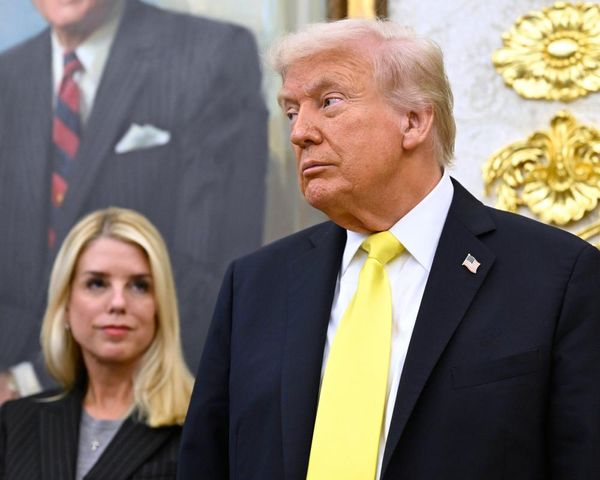
Today’s press conference also reflected the political battle raging outside. Yellen found herself forced to defend the Fed against Donald Trump’s claims that political pressure has influenced monetary policy.
She declared:
We do not discuss politics at our meetings, and we do not take politics into account in our decisions.
That could be a foretaste of the turmoil if Trump wins in November....
And that’s all for tonight. Thanks for reading and commenting. GW.
Updated
Wall Street closes higher
Ding Ding! The closing bell is being rung at the New York stock exchange.
And shares have rallied pretty strongly, after the Fed left interest rates on hold and gave a fairly upbeat view of the US economy.
The Dow Jones and the S&P 500 have both gained almost 1%, as traders welcome the decision not to hike borrowing costs today.

Tony Bedikian, Head of Global Markets at Citizens Bank, explains why:
“Today’s decision by the Fed was not a surprise. It was the outcome that many market followers expected, but we are still seeing a bounce in equities because now the question has been answered.
It was interesting to see the split vote with three members of the policy committee willing to break ranks and support raising rates. Fed policy makers have said all along that their decisions will be data dependent and their statement today indicates that the majority of committee members still don’t feel the data is strong enough to tighten yet.”
Updated
Close Brothers: Economic data didn't justify a hike
Nancy Curtin, Chief Investment Officer at Close Brothers Asset Management, also predicts a rate rise before Christmas.
But today, though, the economic picture simply wasn’t good enough.
“Any expectation of a Fed rate rise in September unwound following weak economic performance in the third quarter. Stumbling growth in the economy, particularly in industrial production, was a significant counterbalance to the more hawkish sentiment displayed by certain members of the Fed earlier in the month.
“The Fed is highly pragmatic though, and if wider data, including inflation, begins to mirror the strength of the labour market then they may be able to raise interest rates again before the year is up. In the meantime, as in the UK, investors continue to keep their eye on fiscal policy and carefully watch how this will develop as the cornerstone to long-term economic recovery.”
ETX Capital: It's a Hawkish Hold from the Fed
Reaction to the Federal Reserve meeting is coming in now...
Neil Wilson, markets analyst at ETX Capital, says the US central bank has pulled off a “Hawkish hold” today.
With three policymakers voting to hike, as December rise looks likely.
“That was about as hawkish a hold as you’re ever likely to get from the Fed. Three dissenting voices is highly unusual for the US central bank policy team, and indicates just how close the FOMC is to raising rates. The fact that Mester, George and Rosengren all want to raise rates also points to some division and potentially a question mark over the authority of Janet Yellen.
Interestingly she said the decision not to hike this month does not reflect a lack of faith in the US economy. Instead it looks like the Fed is simply being very cautious as it has a bit of slack in the labour market and inflation is not yet at target.
Yellen: Hope to see wages rising
Q: And finally.... when is America actually going to see some meaningful wage growth?
Yellen offers some hope to hard-pressed workers.
The Fed does expect the unemployment rate to decline, she says, and the labour market to improve.
So:
My hope and expectation is that we will see a pick-up in wage growth, that is broadly beneficial to US household.
And that’s the end of the press conference. I’ll pull a short summary together shortly.
Some reaction to that last question:
"I’m not in favor of a 'whites of their eyes' kind of approach" to staving off inflation with rate hikes, Yellen says
— Joseph Lawler (@josephlawler) September 21, 2016
Nudge against Summers: Yellen says she's "not in favor" of whites-of-eyes approach on inflation.
— Michelle Jamrisko (@mljamrisko) September 21, 2016
Asked about inflation expectations, Yellen says the Fed must be “forward looking”. No-one at the FOMC wants to allow inflation to overshoot badly.
But we must also look at Japan as a reminder that inflation expectations can become un-anchored.
Another question about Wells Fargo - what is the Fed going do to clean it up?
Yellen says the Fed wants all banks, not just Wells, to have robust risk management systems to protect customers.
This is a better way to ask the Wells question: connect it to systemic level, soundness. However, it still won't get a meaningful answer, .
— Anne-Marie Fowler (@WaterAndWool) September 21, 2016
Updated
Asked about leverage risks, Yellen says she’s “worried” that bubbles could form in the US economy.
But no-one knows for sure when a valuation turns into a bubble, she argues.
#Fed's Yellen: "We are worried that bubbles could form in the economy." pic.twitter.com/fsXcLsxSYV
— Holger Zschaepitz (@Schuldensuehner) September 21, 2016
Q: Does the Wells Fargo scandal imply that some banks are simply too big to manage and should be broken up?
Janet Yellen says no - the key is that banks need to be run properly.
Updated
Q: Has the Fed launched an investigation into the scandal at Wells Fargo?
Yellen says this is a matter for other regulators (as it affected consumers, who were wrongly given phoney bank accounts and credit cards).
But the Fed will be watching Wells Fargo closely, to ensure its top managers are obeying compliance rules.
We have been “distressed” to see these kinds of problems, she adds; banks need to ensure that their staff are acting ethically and protecting customers.
Donald Trump is looming over today’s press conference...
Q: Are you worried that Trump could go back through the meetings of Fed meeting for signs that politics has influenced your decisions?
No, Yellen replies, insisting again that politics does not play a role.
"The Federal Reserve is not politically compromised. We do not discuss politics at our meetings," Yellen says in answer to @RebeccaJarvis
— Jana Kasperkevic (@kasperka) September 21, 2016
Q: Is there a risk in leaving interest rates too low for too long?
Yes, Yellen replies. But the bigger risk is to raise rates too soon.
We could cause a recession in the process - that isn’t something that I and my colleagues want to be responsible for.
* FED's Yellen says there are risks in waiting too long to raise rates - RTRS
— Fabrizio Goria (@FGoria) September 21, 2016
* FED's Yellen says risk that FED would need to tighten policy too quickly if wait to long to raise rates again - RTRS
— Fabrizio Goria (@FGoria) September 21, 2016
Q: Why did the Fed cite the Brexit vote as a key risk back in June, but hasn’t cited the November elections as a risk today?
Yellen won’t be tempted with this curveball, saying simply that she won’t comment on the US election.
Two political questions...
Q: Is political uncertainty weighing on US growth, in the run-up to November’s election?
Yellen says that investment spending has been weak recently, but she isn’t exactly sure why.
Consumer sentiment is “perfectly solid”, though.
Q: Does the Fed want government spending to take more of the strain?
There are ways that fiscal policy could help, Yellen replies, especially though ‘automatic stabilisers’ which would kick in during a slowdown.
Q: Could interest rates rise at the next meeting, in November?
Yellen confirms that the November meeting is ‘live’.
Yellen rejects Trump's criticism over rate policy
A zinger of a question:
Q: Donald Trump claims that the Federal Reserve has kept interest rates artifially low for political reasons. What’s your response?
Yellen tries to sweeps the Republican presidential nominee’s criticism aside.
I can say emphatically that political issues play no part in the path of monetary policy, she insists.
We do not discuss politics at our meetings, and we do not take politics into account in our decisions.
Q: Is the Fed’s credibility being hurt by the different briefings we’ve heard from policymakers, with some hinting at rate hikes and others much more dovish?
Yellen says there is less disagreement within the FOMC than you might think from recent speeches and comments.
We do not suffer from “group think”, she adds; we are debating the issues around when to raise interest rates.
#FED YELLEN: MOST COLLEAGUES AGREE CASE FOR HIKE HAS STRENGTHENED - MNI
— Christophe Barraud (@C_Barraud) September 21, 2016
Yellen is repeating her line about how there is a bit more ‘running room’ left in the economy, but an interest rate rise will probably soon be appropriate.
Yellen: No sign that the economy is overheating
Onto questions...
Q: Aren’t you just looking for excuses not to raise interest rates?
We are pleased about the state of the US economy, Janet Yellen replies, citing the steady job creation in recent months.
But people are still coming back into the labour market, she repeats, so there’s no sign of “overheating”
So....
The economy has a little more room to run than might have been previously thought. We don’t see the economy overheating now.
Yellen: We're generally pleased with how the U.S. economy is doing...Payroll gains in recent months have been solid.
— Polya Lesova (@PolyaLesova) September 21, 2016
Yellen:"“The labor market does have that potential to have people come back in without having the unemployment rate coming down.”
— Ylan Q. Mui (@ylanmui) September 21, 2016
Yellen argues that US monetary policy stance is currently only “modestly accommodative”. So there is little danger of dropping behind the curve by leaving interest rates on hold today.
Policy is not on a pre-set course, she adds.
And then she argues that by not raising rates too soon, the Fed cuts the risk of having to cut rates in the future.
Yellen asks the question on everyone’s lips - if the US economy is improving, why didn’t they raise the federal fund rate?
She insists that the Fed isn’t worried about an economic slowdown.
Instead, there is still “scope for further improvement in the labour market”. So with inflation below target, the Fed decided to leave rates unchanged and let more data flow in ...
The Fed still expects inflation to rise to 2% in the next two-to-three years, Yellen continues.
But the Fed can’t take it for granted that long-term inflation expectations will remain well-anchored (ie, that American citizens will believe that inflation is actually heading back to target)
Recent employment data shows that more people are coming back to the labour market looking for jobs, says Yellen. That’s a very encouraging sign - but also means there is still some slack to mop up.
Yellen press conference begins
Janet Yellen is giving a press conference right now! It’s being streamed live here.
The Fed chair confirms that the Fed believes the economy has strengthened, but left rates on hold.
She says household spending has driven growth up, but business investment remains “soft”.
Some snap reaction and analysis:
A divided Federal Reserve left rates unchanged "for the time being." 3 officials dissented in favor of higher rates. https://t.co/U4H58QnQFa
— Binyamin Appelbaum (@BCAppelbaum) September 21, 2016
Yellen's presser sure to see serious verbal gymnastics. Keep market honest, December on the table, yet maintain Fed flexibility.
— Adrian Miller (@amillerstrategy) September 21, 2016
I don't see anythimg hawkish in this #fed
— Andreas Wallström (@anwallstrom) September 21, 2016
Fed explicitly acknowledged of reality by reduction in the long term growth path to 1.8 percent. I'm at 1.5% with downside risk of 1%
— Joseph Brusuelas (@joebrusuelas) September 21, 2016
Median Fed official's estimate for longer-run trend GDP growth has slipped below 2% for the first time (now 1.8%)
— Matthew B (@boes_) September 21, 2016
The Fed statement: the key points
Alhough the Federal Reserve resisted hiking rates, the US central bank does believe that the economic conditions are improving.
Today’s statement suggests that the economy is in decent-enough shape, but inflation is still too low to justify higher borrowing costs.
The Fed says: (I’ve bolded-up some parts)
Information received since the Federal Open Market Committee met in July indicates that the labor market has continued to strengthen and growth of economic activity has picked up from the modest pace seen in the first half of this year. Although the unemployment rate is little changed in recent months, job gains have been solid, on average. Household spending has been growing strongly but business fixed investment has remained soft. Inflation has continued to run below the Committee’s 2 percent longer-run objective, partly reflecting earlier declines in energy prices and in prices of non-energy imports. Market-based measures of inflation compensation remain low; most survey-based measures of longer-term inflation expectations are little changed, on balance, in recent months.
But...
Consistent with its statutory mandate, the Committee seeks to foster maximum employment and price stability. The Committee expects that, with gradual adjustments in the stance of monetary policy, economic activity will expand at a moderate pace and labor market conditions will strengthen somewhat further. Inflation is expected to remain low in the near term, in part because of earlier declines in energy prices, but to rise to 2 percent over the medium term as the transitory effects of past declines in energy and import prices dissipate and the labor market strengthens further. Near-term risks to the economic outlook appear roughly balanced. The Committee continues to closely monitor inflation indicators and global economic and financial developments.
Wall Street has taken today’s decision in its stride - shares are a little higher, and the dollar has dipped a little. But it’s nothing serious.
Fed reaction. pic.twitter.com/mTC9EgyxSe
— Lady FOHF (@LadyFOHF) September 21, 2016
The Federal Reserve has also cut its interest rate expectations - now only expecting 1 rate hike this year (down from two in June).
The Fed also expects rates to rise more gradually in 2017 and 2018, and cut its longer-run interest rate forecast to 2.9 percent from 3.0 percent.
But yet....the Fed said the near-term risks for the economic outlook “appear roughly balanced.”
This new dot chart shows how the Fed’s policymakers expect rates to change of the next few years:

The Fed has dropped a clear hint that it is close to raising interest rates - just not today.
In today’s statement, it says:
“The case for an increase in the federal funds rate has strengthened”.
And 14 of the Fed’s 17 policymakers expect at least one hike by the end of this year.
Three policymakers wanted to hike
Today’s decision isn’t unanimous! Three Federal Reserve policymakers voted to raise borrowing costs today.
They are: Kansas City Fed President Esther George, Cleveland Fed President Loretta Mester and Boston Fed President Eric Rosengren.
*FED KEEPS RATES UNCHANGED AS THREE OFFICIALS DISSENT FOR HIKE
— World First (@World_First) September 21, 2016
Updated
US RATE DECISION
BREAKING: The Federal Reserve has left interest rates unchanged at 0.25% to 0.5%.
More to follow.....
#hawkish hold or #dovish hike? We will find out soon! #Fed #Yellen
— Anna Stupnytska (@AnnaStupnytska) September 21, 2016
OK, nearly time for the most eagerly anticipated Central Bank decision since the Bank of Japan shook up its stimulus programme this morning :)
We get the decision at the top of the hour, along with new economic forecasts.
Then 30 minutes later, Fed chair Janet Yellen holds a press conference.
It’s been a nervous few hours on the New York stock market.
The Dow opened higher, then slid into negative territory as Fed jitters gnawed away at traders. And now it’s back where it started, up just 0.07%.
15 mins #Fed pic.twitter.com/k6LAY5s5BR
— Fabrizio Goria (@FGoria) September 21, 2016
Updated
This chart also shows how investors are positioning themselves for rates to be higher in three month’s time.
Here comes Fed tightening? Excluding Memorial Day weekend, one-month OIS three months forward is highest since 2008 pic.twitter.com/pT0grECyNF
— Matthew B (@boes_) September 21, 2016
Anticipation is growing....
Getting excited about the Fed now. pic.twitter.com/a3pRrFaQAD
— Robin Wigglesworth (@RobinWigg) September 21, 2016
Just 30 minutes to go! And the markets reckon there’s less than a one-in-four chance that the Fed will raise interest rates.
Wall Street isnt’ always right, of course. So you can expect some wild movements if Janet Yellen produces a surprise at 2pm Eastern Time (7pm in the UK).
This chart shows how a September hike is a 22% chance, while rising to 31% in November, and then 59% for December.

Updated
Here’s a look at various probabilities for the Federal Reserve’s actions and comments, courtesy of John Kicklighter, chief strategist at DailyFX:
Here's the FOMC scenario table I will be operating on tomorrow. Remember, rate, forecasts and Yellen pic.twitter.com/7Lu2mgPayR
— John Kicklighter (@JohnKicklighter) September 20, 2016
Ahead of the Federal Reserve press conference due in just under an hour and a half, here’s the link to watch it live.
European markets close higher ahead of the Fed
After the Bank of Japan caught some observers by surprise with its new stimulus measures and boosted European markets, some of the gloss came off during the course of the day ahead of the Federal Reserve’s rate decision. As we’ve covered, most people believe the Fed will leave rates on hold, although there is still a chance it might catch markets on the hop with a surprise increase. And even if rates are left unchanged, investors will be looking for any hints from US Federal Reserve chair Janet Yellen about when borrowing costs might rise. In Europe the final scores showed:
- The FTSE 100 finished virtually unchanged, up just 3.98 points or 0.06% at 6834.77
- Germany’s Dax rose 0.41% to 10,436.49
- France’s Cac climbed 0.48% to 4409.55
- Italy’s FTSE MIB closed up 0.88% at 16,349.82
- Spain’s Ibex ended up 0.83% at 8758.5
- In Greece, the Athens market added 0.27% to 562.12
On Wall Street, the Dow Jones Industrial Average is currently pretty flat, up just 2 points.
Markets are betting on a no-change statement from the Federal Reserve on US interest rates but will be keen to hear the tone of the central bank’s comments, says strategist James Chen at City Index:
Not much has changed from the past several weeks in terms of the very low expectations for a rate hike. If anything, [today’s Bank of Japan] announcement of new easing measures could even further discourage a Fed move, but as it already stands, there are very few market participants that are betting on such a move to higher interest rates, at least for this particular Fed meeting. Key Fed speakers and major US economic data releases have alternately shifted the discussion from one side to another in the past few weeks. Some members advocated a rate hike this year, even citing the possibility of one occurring in September, while others, like Fed Governor Lael Brainard, cautioned against raising interest rates too quickly.

Additionally, September has thus far seen a general deterioration of US economic data in the form of substantially worse-than-expected releases regarding employment (NFP), both the manufacturing and services industries (PMI), retail sales, and housing, that were all significantly worse than expected. The one potentially brighter spot for the Fed was the Consumer Price Index (CPI) inflation reading for August, which showed that both headline and core prices increased by more than expected. Despite this more buoyant view of inflation, however, it is still unlikely to be enough to sway the Fed into action today.
Amidst all of these economic data releases and Fed member speeches, the market’s view of the implied probability of a rate hike today has continued to hover in the low-to-high teens. Of course, there could always be a surprise move, but the much more likely scenario will be a characteristically unmovable Fed.

Therefore, the market’s focus, as has consistently been the case from the beginning of the year, will be concentrated on the words emanating from the Fed statement as it relates to the indication of a possible rate hike in December and the potential pace of tightening going forward. The current market probability of a December hike remains around 60%.
The key markets to watch today, as always, will be US equity markets, gold, and the US dollar, particularly US dollar/Japanese yen due the earlier Bank of Japan announcement. A more hawkish Fed today could lead to a rebound for the dollar/yen while a more dovish statement could lead to a further drop for dollar/yen towards the key 100.00 mark and below.
Updated
Predictions of the economic gloom which would follow the Brexit vote seem to be wide of the mark, according to a new Guardian project tracking the state of play as Britain prepares to leave the European Union.
As a reminder, the UK Treasury for one forecast dire consequences in the immediate wake of the vote:
@EdConwaySky The HM Treasury document is clear & specific. A vote to leave would cause...https://t.co/Mlk3W8dUbO pic.twitter.com/B3EfvYVzJW
— Noble Francis (@NobleFrancis) September 21, 2016
Unveiling the new Guardian project, Katie Allen writes:
Fears that Britain will slide into a post-referendum recession have been allayed after a Guardian analysis showed the latest news on the economy has confounded analysts’ gloomy expectations, with consumer spending strong, unemployment low and the housing market holding steady.
The finding comes as a leading thinktank toned down its earlier dire warnings of economic turmoil for the UK and its neighbours in the event of a leave vote. The Paris-based Organisation for Economic Cooperation and Development (OECD) said prompt action by the Bank of England to cut interest rates had cushioned the blow from June’s Brexit vote but it still believes the UK will suffer a sharp slowdown next year amid heightened uncertainty.
Official figures on the state of the public finances, released on Wednesday, also showed little impact from the vote to leave the EU. Government borrowing was a touch higher than economists had expected in August, but was lower than a year ago in a boost to the chancellor, Philip Hammond, as he prepares to give his maiden autumn statement in November.
Following the historic 23 June vote to leave the EU, analysts were quick to predict the UK economy would grind to a halt or even shrink. They warned businesses and households would stop spending because of job cuts, political uncertainty and a squeeze on living standards as the weak pound stoked inflation.
But since the Bank stepped in with a package of measures to shore up the economy, much of the economic news has defied expectations and many analysts have toned down their post-referendum gloom.
Now the picture of early resilience is bolstered in the first snapshot of post-referendum Britain in a new Guardian project that will track the economy as the Brexit talks begin and progress, and as more data on the economy becomes available.
The first report is here:
Oil prices rise after inventory figures
US crude stocks fell unexpectedly last week as producers reduced their output, helping oil prices extend their early gains.
Crude inventories dropped by 6.2m barrels, according to the Energy Information Administration, compared to expectations of an increase of 3.4m barrels.
Gasoline stocks fell by a larger than expected 3.2m barrels, with analysts forecasting a 567,000 decline according to Reuters.
But stocks of distillates - which include diesel and heating oil - increased by 2.2m barrels compared to forecasts of a 250,000 rise.
Brent crude is now 1.35% higher at $46.50 a barrel while West Texas Intermediate - the US benchmark - is up 1.95% at $44.91.
Christopher Vecchio, currency analyst at DailyFX, said:
Here we go again: What once was a much heralded and anticipated rate decision, the September FOMC meeting seems all but wrapped up at this point. The Federal Reserve will keep its main rate on hold at 0.25-0.50%, citing near-term, weak economic developments, yet insisting that enough progress has been made to warrant a rate hike at one of the upcoming meetings (hint: December, when the next SEPs are released). The key for the US Dollar today, however, is to what degree of confidence the FOMC has in the US economy, or simply, ‘how quickly does the Fed think it will be able to raise rates next?’
...In actuality, rate expectations are completely muted for today and are sitting on the fence for 2016.
This is the main source of risk for markets today. Should the FOMC choose to be headstrong and tear down conventional wisdom - a small possibility with two prime dealers coming out and calling for a rate hike - global markets will be shocked. But assuming the Fed plays it safe as it usually does, a lack of a rate hike may not hurt the US Dollar significantly. By suggesting that a rate hike is still “on the table” in the near-term, and by laying out an interest rate glide path for next year calling for multiple rate hikes, then the Fed could help insulate the US dollar, plain and simple. It’s starting to feel like a September-December 2015 redux.
So what are the chances of a US rate rise?
Every time the US FOMC has hiked rates in the past 20 years, the market was pricing in >70% probability pic.twitter.com/Sm3NIxhM2E
— Bond Vigilantes (@bondvigilantes) September 21, 2016
Wall Street opens higher
Ahead of the Federal Reserve interest rate decision, US markets are moving higher. Most investors expect the Fed to leave rates on hold, but this is by no means guaranteed.
The Dow Jones Industrial Average is currently up 76 points or 0.4% while the S&P 500 opened 0.36% higher and the Nasdaq composite was up 0.4% initially.
European markets are holding onto their gains - albeit off their best levels - with Germany’s Dax and France’s Cac both climbing 0.6%. But the FTSE 100 is up just 0.15% or 10 points. Connor Campbell, financial analyst at Spreadex, said:
The FTSE has seen its gains roughly halve as the day has gone on, the early Bank of Japan stimulus excitement gradually waning as more and more analysts voiced their scepticism about the effectiveness of the measures Kuroda and co. announced this morning. The same thing has happened in the Eurozone, the DAX and CAC now both up around half a percent having surged by as much as 1% after the bell.
Updated
Summers: 10 good reasons not to raise US interest rates today
Larry Summers, the former US Treasury secretary, has fired an epic Tweetstorm towards the Federal Reserve, explaining why they shouldn’t hike.
He argues that the US labour market is far from overheating, and that the Fed should be comfortable with inflation running over its 2% target for some time, following the current underrun (inflation is currently 1.1%).
He also fears that a surprise hike tonight might unbalance the economy at a crucial moment, sending the dollar too high, and creating a mess the Fed can’t fix....
There are many reasons, each of which would be reason enough alone, for the Fed not to raise rates today 1/11
— Lawrence H. Summers (@LHSummers) September 21, 2016
The Fed should not raise rate because total hours worked in US are flat to down over last 6 months 2/11
— Lawrence H. Summers (@LHSummers) September 21, 2016
The Fed should not raise rates because inflation expectations are falling not rising 3/11
— Lawrence H. Summers (@LHSummers) September 21, 2016
The Fed should not raise rates because in the 8 year of recovery it should be targeting inflation above 2% so inflation averages 2%. 4/11
— Lawrence H. Summers (@LHSummers) September 21, 2016
The Fed should not raise rates because it lacks the tools to respond if a downturn comes 5/11
— Lawrence H. Summers (@LHSummers) September 21, 2016
The Fed should not raise rates because it will come as a shock at a fragile moment 6/11
— Lawrence H. Summers (@LHSummers) September 21, 2016
Fed should not raise rates b/ the economy is sign. weaker & inflation expectations weaker than when it erred (judged expost) last Dec. 7/11
— Lawrence H. Summers (@LHSummers) September 21, 2016
Fed should get off the idea credibility requires raising rates now, Dec or at any point b4 inflation expectations are accelerating. 8/11
— Lawrence H. Summers (@LHSummers) September 21, 2016
There are much better ways than rate increases for dealing with any concerns about bubbles 9/11
— Lawrence H. Summers (@LHSummers) September 21, 2016
The Fed should take on board that with the economy so slow over the last 3 quarters rates may not be below neutral now. 10/11
— Lawrence H. Summers (@LHSummers) September 21, 2016
Tightening now will induce artificial dollar strength, which is hardly a good thing given the magnitude of protectionist pressures 11/11
— Lawrence H. Summers (@LHSummers) September 21, 2016
Federal Reserve meeting begins....
Over in America, policymakers at the Federal Reserve have just begun today’s monetary policy meeting.
FED: FOMC MEETING RESUMED AT 9 A.M. ET AS SCHEDULED
— zerohedge (@zerohedge) September 21, 2016
In five hours time, they’ll announce whether they’ve raised US interest rates for the first time this year.
The financial markets are widely expecting the Fed to sit elegantly on its hands tonight - but perhaps drop a big hint to expect a December rate hike.
But some investors, such as hedge fund manager Dan Loeb, fear that the markets are hopelessly addicted to easy money....
Fed policy isn't a "punch bowl" it's a crack cocaine pipe," according to Dan Loeb #ReutersLive
— Carleton English (@carletonenglish) September 21, 2016
Some City cynicism about the BoJ’s bold pledge to get inflation above target:
Macro Man announced his intention to grow from 5'10" to 6'2" pic.twitter.com/1ySunmLv56
— David Schawel (@DavidSchawel) September 21, 2016

Royal London Asset Management have kindly sent over their full reaction to the Bank of Japan (as flagged earlier).
Trevor Greetham, their head of multi asset investing, says:
“This is helicopter money in all but name and it is supportive of our overweight stance in Japanese equities.
“Japan has been suffering from excessive debt and deflationary pressure for longer than any other developed market, so we should watch new policy developments in Tokyo with interest.
“Today’s announcement makes it clear that the authorities are going down the route of explicit financial repression, boosting nominal growth while keeping interest rates near zero at all maturities. The idea is to transfer wealth from savers to borrowers, the government included, to reduce debt burdens and wipe the slate clean.
“Monetary policy didn’t ease today, as the muted market reaction shows, but the economy isn’t weak enough to merit it. If growth turns downwards, the new framework allows Japan to make short rates more negative, increase the monetary base and expand government spending without needing to worry about the markets.”
The markets are still digesting today’s announcement, which sent the Tokyo stock market up by 2%.
The yen, though, has reversed its initial selloff and is now at a four-week high against the US dollar. That’s not what the BoJ wants to see....
Bank of Japan not getting much buck for its bang. Yen rises to highest in a month vs dollar, looks like it could soon break 100. pic.twitter.com/LiHxpcOUtr
— Jamie McGeever (@ReutersJamie) September 21, 2016
Lord Livermore (a former top strategist for Gordon Brown and Tony Blair) cautions against complacency over the EU referendum effect.
BBC News - Brexit has had 'no major effect' on economy so far https://t.co/biYZxiSWzO
— Stephen Gifford (@SGiffordUK) September 21, 2016
That's probably because Brexit hasn't happened yet. https://t.co/KnQQAtXNsM
— Spencer Livermore (@SpenceLivermore) September 21, 2016
Bank of Japan's stimulus drive divides experts
City experts have now had a few hours to digest the Bank of Japan’s new stimulus plan. And opinion is still split.
Duncan Weldon of Resolution Group reckons that the BoJ is paving the way for the Japanese government to boost its spending, turning monetary stimulus into fiscal muscle.
He explains:
The BOJ is effectively pledging to hold ten year borrowing costs at around zero (the yield curve target) and to do this for quite some time (the inflation overshoot pledge). That is a strong signal that the government should follow through with fiscal stimulus — stimulus that effectively comes with no borrowing costs.
It’s not quite a monetary financing but it’s a step closer.
A pledge to overshoot a target you’ve consistently failed to hit isn’t especially credible. The macro impact of that pledge through expectations is unlikely to be large. But a pledge to finance government spending at zero per cent for the coming years could be a much bigger deal — even if it is only making explciit what has been implicit in Japan for quite some time.
Here’s the full piece:
Rebooting Abenomics: Quick BOJ Thoughts - https://t.co/eieBG39JSw (which Medium tells me is a 3 minute read).
— Duncan Weldon (@DuncanWeldon) September 21, 2016
Nick Gartside of JP Morgan Asset Management says the BoJ have been pretty creative, defying those who thought central banks were out of ammunition.
By adopting the ‘yield curve control concept’, which is designed to steepen the Japanese yield curve by targeting a 10 year JGB yield of 0%, the Bank of Japan showed that central bankers still have a few tricks up their sleeves.
“This is a creative and imaginative policy and markets have reacted favourably. The policy, which also commits to expanding the monetary base until inflation reaches 2% on a sustainable basis, is a form of long range forward guidance.
Royal London Asset Management reckon the BoJ will be flooding Japan with money for some time -- which should pump share prices higher.
Royal London Asset Management:
— Katie Martin (@katie_martin_fx) September 21, 2016
“This is helicopter money in all but name and is supportive of our overweight stance in Japanese equities"
Bur Robin Bew of the Economist Intelligence Unit fears the BoJ may be firing blanks.
Good #BoJ trying to do more, but sceptical that it will have much impact. Bond buying little changed, and 2%+ inflation promise hollow?
— Robin Bew (@RobinBew) September 21, 2016
Here’s our news story about today’s UK public finances....
Every cloud has a darker cloud behind it....
Actually, for the time being the @OECD sounds much more concerned about collapsing world trade growth than Brexit pic.twitter.com/EmXrhawlIz
— Ed Conway (@EdConwaySky) September 21, 2016
In a busy morning for Brexity data, the Bank of England’s regional agents have reported that UK firms have cut back on investment intentions, and hiring plans, since the Referendum.
But there are signs of a pick-up in August.
Here’s the key points:

More here:
Economist Rupert Seggins has helpfully charted today’s data:
BoE agents scores for investment intentions are a rough signal & they've weakened, but they're not indicating an investment collapse in Q3. pic.twitter.com/8J4IRMAhOx
— Rupert Seggins (@Rupert_Seggins) September 21, 2016
Updated
Housing market slows, but avoids Brexit shock

Property transaction figures from HMRC out today show that there hasn’t been the market crash that many feared following the Brexit vote in June. Residential property transactions were broadly flat between July and August, albeit down 6.1% from a year ago.
The provisional figures show that 97,660 homes were bought in August, only slightly lower than the 97,710 that changed hands in July. (These are seasonally adjusted figures.)
Commercial deals picked up again, after a drop in the immediate aftermath of the Brexit vote to 10,010 in July from 10,630 in June. Non-residential transactions totalled 10,620 in August, up 6.1% from July and 8% higher than a year ago.
David Brown, chief executive of London estate agents Marsh & Parsons, said of the residential figures:
“The total numbers for Q1 and Q2 of 2016 were astronomically high compared to the corresponding period last year. Consequently the market is still levelling after the frenzy we saw as people clambered to meet the April Stamp Duty deadline. This, along with the Bank of England’s plans to curb Buy-to-let mortgages, caused such an enormous spike in activity, that even if we had not had the referendum vote, we would have expected to spend a good few months seeing the market recover to some level of normality.
“At Marsh & Parsons we are certainly seeing good levels of activity, and it is particularly pleasing to see a number of enquiries resurfacing from people who had put their property searches on hold a couple of months ago. We are feeling optimistic about the remainder of the year.”
The Financial Times also reckons Britain is going to miss its borrowing target this year:
The UK government seems to be overshooting its borrowing forecasts again, regular as clockwork https://t.co/g65iN32hJN pic.twitter.com/XhmPlwBowg
— fastFT (@fastFT) September 21, 2016
The old targets may be academic, though, if Philip Hammond does tear up George Osborne’s fiscal targets in two months time....
This chart shows how the OECD have just halved their forecast for UK growth next year, from 2% to 1%.
But Britain is one of the few countries whose 2016 growth has been revised UP (by 0.1% to 1.8%):
The latest #OECD stats...avert your eyes unless you are Brazil (and they are still in recession for another year). UK post Brexit cuts too. pic.twitter.com/W8pGnqs43h
— Chris Bailey (@Financial_Orbit) September 21, 2016
Hammond sees difficult times ahead
Chancellor of the Exchequer, Philip Hammond, has responded to the OECD’s warning that UK growth be robust this year, but slow in 2017.
He says:
“The underlying strength in the UK economy will support growth this year, and we have seen that in the labour market where employment is at a record high.
The OECD highlights uncertainty in their outlook, and while I recognise that there may be some difficult times ahead, I am confident that we have the tools necessary to support the economy as we adjust to a new relationship with the EU and take advantage of the opportunities that it offers.”
That reference to ‘tools’ suggests Hammond is planning to use November’s Autumn Statement to reset the government’s fiscal plan - perhaps through additional infrastructure spending funded by more borrowing?
PwC: Hammond likely to miss borrowing targets
Today’s public finance figures show that Britain has borrowed £5bn less this financial year, compared with a year ago.
Encouraging...but not enough to hit this year’s deficit targets.
John Hawksworth, chief economist at PwC, explains:
“It may still be very difficult for the Chancellor to meet the March Office for Budget Responsibility (OBR) forecast for 2016/17, which envisaged public borrowing being £21 billion lower than the latest estimate for 2015/16.
We expect that the OBR will revise up its borrowing projections materially in November and the Chancellor is unlikely to seek to offset this at a time when the priority is to support the economy in the uncertain period following the Brexit vote.
OECD u-turns on Brexit...and cuts global growth forecasts
Speaking of Brexit...The west’s leading economic thinktank has backtracked on its warning that the UK would suffer instant damage if the public voted to leave the European Union.
In a new report, the OECD has thrown its weight behind plans by Theresa May to provide fresh post-referendum support to growth in November’s autumn statement.
Our economics editor, Larry Elliott, reports:
Until recently a staunch supporter of George Osborne’s austerity plan, the OECD said it was appropriate for the new chancellor, Philip Hammond, to increase public spending in his first major policy statement later this year.
The thinktank said it was still predicting a sharp slowdown in the economy, but that this would not happen until 2017. It said that the expected negative effects on the rest of the global economy of Brexit – compared in June to the equivalent of a hard landing for China – had also been delayed.
The OECD now expects the UK to grow by 1.8% this year, a small increase on its old forecast. But this will fall to 1% in 2017, they fear.
The OECD also cut its growth forecasts for the global economy; world GDP is now expected to rise by 3.2% in 2017, down from the 3.3% previously.

Suren Thiru, Head of Economics at the British Chambers of Commerce (BCC), fears that Britain’s public finances will deteriorate in the months ahead:
“Although government borrowing fell in August, it was by less than many had expected.
“If the UK economy slows as we expect, cutting the deficit is likely to become increasingly problematic as materially weaker growth will make it more difficult to generate tax revenue.
ONS chief economist Joe Grice says today’s data confirms that Britain hasn’t suffered a severe Brexit shock.
“As the available information grows, the referendum result appears, so far, not to have had a major effect on the UK economy.
So it hasn’t fallen at the first fence but longer-term effects remain to be seen.”
Of course, Britain hasn’t even triggered Article 50 yet -- and no-one knows what kind of Soft Brexit, or Hard Brexit, we will end up with.
UK deficit reduction plan 'still off course'
The 8% improvement in August’s UK public finances isn’t enough to get the British government’s deficit reduction plan back on track.
So says Howard Archer, economist at IHS Global Insight. He’s encouraged that there’s no sign of a Brexit-induced meltdown, but fears the economy will slow in 2017 as negotiations with the European Union intensify.
Here’s his snap take:
- Mixed news for Chancellor Phillip Hammond as the public finances saw a modestly reduced year-on-year shortfall in August and July’s surplus was revised up slightly.
- On the positive side, this adds to the evidence that the economy has been resilient so far following June’s Brexit vote, with tax receipts holding up relatively well overall.
- Nevertheless, the public finances are still off track to meet the March budget target, which highlights the fact that the Chancellor really has limited ability to provide a boost to the economy in November’s Autumn Statement if he is to maintain a semblance of fiscal discipline.
Updated
UK public finances show bigger deficit than expected
Newsflash from London: Britain’s monthly deficit shrank by 8% in August, despite the shock of June’s EU referendum.
The Office for National Statistics reports that the UK borrowed £10.546bn to balance the books last month, down from £11.47bn in August 2015 [that excludes the impact of our stakes in Royal Bank of Scotland and Lloyds Banking Group].
However, that’s more than expected - the City had forecast a monthly deficit of £10.0bn. So the government may still be struggling to hit this year’s borrowing target:

Importantly, the ONS says there are no clear signs of any impact on the public finances, following the Brexit vote.
They report that income tax receipts were strong in August, but VAT receipts grew at their slowest pace since March 2015.
More to follow....
Bloomberg’s Jonathan Ferro smells a rat....
"So we are clearly running out of stuff to buy but let's call it 'yield curve control' and hope nobody will notice"
— Jonathan Ferro (@FerroTV) September 21, 2016
Oh dear... the early yen selloff has faded:
Yen back to flat as drinks run out at BOJ party pic.twitter.com/WSQZ7K98g7
— Richard Frost (@frostyhk) September 21, 2016
Kuroda: We won't hesitate to do more

Bank of Japan governor Haruhiko Kuroda has put down the jam knife, and faced the press to explain the new stimulus measures agreed today.
He insists that the BoJ could launch more stimulus measures, if needed, including cutting interest rates deeper into negative.
Kuroda says:
“We won’t hesitate to adjust monetary policy with an eye on economic and price developments. “We will ease further when necessary. We can cut short-term rates, lower the long-term rate target, buy more assets or if conditions warrant, accelerate the pace of expansion in monetary base.
There’s room to ease further with the three dimensions of quantity and quality of assets as well as interest rates.”
Kuroda also conceded that his stimulus package hasn’t yet delivered the goods, since it was launched in 2013.
“It’s true that more than three years have passed. But there’s absolutely no change to our commitment to achieve 2 percent (inflation) at the earliest date possible.
And he also claimed that the BoJ will be able to manage the ‘yield curve’ (which tracks the interest rate on shorter and longer-dated bonds)
“I won’t say we can fully control long-term rates like the way we control short-term rates. But central banks have already been taking steps to directly influence long-term rates. The BOJ has done so too and clearly has been successful.”
(thanks to Reuters for the quotes)
Kit Juckes, currency expert at Societe Generale, reckons governor Kuroda has scraped together whatever he could find:
BOJ studiously scrapes jam from bottom of policy jar. JGB yields up small, Nikkei up more, yen weaker cos positions
— Kit Juckes (@kitjuckes) September 21, 2016
Some City investors are wondering whether to bet against the central bank...
"The BOJ has effectively told markets it has a Royal Flush, and the markets are questioning Kuroda’s poker face” - Aberdeen Asset Management
— Jamie McGeever (@ReutersJamie) September 21, 2016
There’s nothing like the smell of more easy money to get bank shares rallying...
Euro zone bank stocks give initial thumbs up to BOJ's yield curve targeting, now +3.3%, best day in over 2 months pic.twitter.com/LCcxbCGg67
— Jamie McGeever (@ReutersJamie) September 21, 2016
Markets rally after BoJ reboots stimulus
European stock markets are rallying in early trading, led by the banking sector.
The FTSE 100 has jumped by 35 points, or 0.5%, to 6867, as investors give an early thumbs-up to the BoJ’s announcement.
Barclays (+4%) is the top riser in London, with Lloyds Banking Group (+2.5%) and Standard Chartered (2.2%).close behind
Bank pop! #BOJ helps guide longer-end yields higher...banks rally in Japan & here in Europe pic.twitter.com/5VE3gPiQsV
— Caroline Hyde (@CarolineHydeTV) September 21, 2016
Germany’s DAX index has jumped by 1%, while the French CAC is up by 1.2%.
That follows the strong trading in Asia, where Japan’s market jumped by 2%.
Traders are welcoming the new that central banks can still find ways to stimulate their economies (even though we don’t know if it will work.
Mike van Dulken & Henry Croft at Accendo Markets explain:
The positive start comes after a markets welcomed the Bank of Japan (BoJ) leaving its already negative interest rates unchanged overnight and tweaking its existing stimulus programme.
This buys governor Kuroda some time and leaves the door open for more rate cuts/policy easing which has seen the Yen weaken to the benefit of Nikkei exporters and helped financials rally.
As expected, the BoJ has offered an interesting policy update for markets to digest and is a good effort at dispelling uncertainty about global central bank’s losing potency and running out of ammo. And while the Fed is unlikely to make any policy change tonight, its message and sure-fire subtle hints certainly could, especially in light of fresh Yen weakness sending the US dollar basket to September highs.
Japan launches QQEYCC
Today’s measures are being dubbed “QQEYCC”, or “quantitative and qualitative monetary easing with yield curve control”.
Yield curve control? Well, that’s the new commitment to keep the yield, or interest rates, on Japanese 10-year bonds at zero.
Peter Wells of FastFT has done a nice explanation:
If there’s one thing we can be sure of, it’s that the Bank of Japan has added to its alphabet ramen of policy terms.
Markets will now be served a piping hot bowl of “quantitative and qualitative monetary easing with yield curve control”.
Yield curve control… isn’t that part of the auto-pilot function in a Tesla?
It may well be, but in the context of the Bank of Japan it means policymakers are making a renewed effort to keep borrowing costs low in an effort to spur growth.
JGBs weaker after BoJ caps 10-year yield https://t.co/GHddR9QQmY
— fastFT (@fastFT) September 21, 2016
BoJ reboots stimulus: What the experts say
There’s broad agreement that the Bank of Japan has taken monetary policy into new territory today, despite leaving interest rates on hold.
But while some financial experts welcome the changes to the BoJ’s stimulus package, others fear that it won’t work.
Takashi Miura, banking analyst at Credit Suisse, says the new measure are a “positive surprise”.
It’s positive for banks. The BOJ did not deepen the negative rate, so there’s no impact on banks’ lending rates.
Furthermore, I think the BOJ’s new target to keep 10-year yields hovering around zero percent means the central bank effectively won’t deepen the negative rate. That is a positive for banks.
Divya Devesh of Standard Chartered says the key news is the BoJ’s new commitment to overshoot the 2percent inflation target:
That’s committing to continue easing for longer than previously expected. Also hinting that the balance sheet will remain large for a long time. We think that’s dollar/yen positive. Also, markets are a bit relieved given no further cuts to interest rates.”
However.... Nick Kounis of ABN Amro isn’t convinced that today’s measures go far enough.
#BoJ first central bank to essentially raise its inflation target but accompanying stimulus does not make it credible. deflation more likely
— Nick Kounis (@nickkounis) September 21, 2016
This is from Ilya Spivak of DailyFX.com
Committing to "overshoot" 2% inflation rings hollow if you can't get there in the first place. #BOJ
— Ilya Spivak (@IlyaSpivak) September 21, 2016
Seems to me that hitting one's head against the wall harder than before won't make it any more likely to crack #BOJ
— Ilya Spivak (@IlyaSpivak) September 21, 2016
Duncan Weldon of the Resolution Group argues that Tokyo’s government needs to boost spending too:
1. Feels like a decent effort from BOJ. The inflation overshoot stuff (or rather the "we'll keep easing") commitment important.
— Duncan Weldon (@DuncanWeldon) September 21, 2016
2. That said, further improvement requires fiscal action. Monetary policy/debt management all getting very blurry with yield curve targets.
— Duncan Weldon (@DuncanWeldon) September 21, 2016
The Bank of Japan will be pleased to see that the yen is weakening.
The Japanese currency has fallen by 1% against the US dollar, from ¥101 to ¥102.
Lower is better, if you’re trying to get inflation higher #CurrencyWars
#yen weaker 102.52 #BOJ shifts from pre-set target for expanding #money supply to controlling yields' shape #japan pic.twitter.com/RofGKCqKVq
— Shery Ahn (@SheryAhnNews) September 21, 2016
Japanese stocks surge after BoJ announcement
The Tokyo stock market has rallied strongly, as investors welcome the Bank of Japan’s new commitment to overshoot its inflation target.
The Nikkei has jumped by almost 2%, or 315 points, while the wider Topix index gained 2.7%.
Bank shares are leading the rally; on relief that the BoJ didn’t slash interest rates deeper into negative territory.
Nikkei jumps 1.9% to 16807.62 as Yen weakens after BoJ kept neg rate unch at -0.10% BUT adopts QQE w/ yield curve control to prop up banks pic.twitter.com/CIVwvniTxj
— Holger Zschaepitz (@Schuldensuehner) September 21, 2016
Updated
Introduction: Bank of Japan shakes up stimulus programme
Good morning.
Central bankers have fired a lot of ammunition into the financial system, in the eight years since the crisis blew up. And the Bank of Japan has just shown that they’re not out of firepower yet.
The BoJ has rebooted its stimulus programme overnight, announcing a cocktail of new targets and measures. It’s a new bid to drive inflation and growth, and weaken the yen.
But it also resisted slashing interest rates; instead, it has adjusted its bond-buying efforts, and reasserted its commitment to getting inflation back to 2%.
At its eagerly awaited policy meeting today, the BoJ:
- Left interest rates at their current record low of minus 0.1%.
- Promised to keep intervening until inflation “exceeds the price stability target of 2 per cent and stays above the target in a stable manner”.
-
Vowed to maintain its existing its government bond buying “more or less in line with the current pace” of ¥80tn a year. But it will buy fewer very long-dated bonds, which should push up long-term interest rates and help banks make profits.
- Announced a pledge to cap 10-year government bond yields at zero per cent. That means the BoJ must keep intervening in the markets to prevent borrowing costs rising, and to ensure Tokyo can borrow for a decade for free.
It all adds up to another commitment to do “whatever it takes” to drag Japan’s economy out of its ever-lengthening period of weak growth and soggy inflation.
Brave new world: #BOJ "pledged to expand the monetary base until inflation is stable above 2% target" - basically committing to overshoot
— Alessandro Speciale (@aspeciale) September 21, 2016
The Financial Times are calling it an “unprecedented new kind of monetary easing”.
We should hear more from Japanese central bank chief Haruhiko Kuroda shortly.
And it sets the tone for a big day in central banking. At 7pm BST, the US Federal Reserve will announce whether it has taken the plunge and raised interest rates for the first time this year. The markets are expecting the Fed to leave rates on hold, probably until December. But as the BoJ showed today, you never quite know where you are with central banks....
Updated