The Bank of England has said UK interest rates are likely to rise "over the coming months" in order to curb inflation.
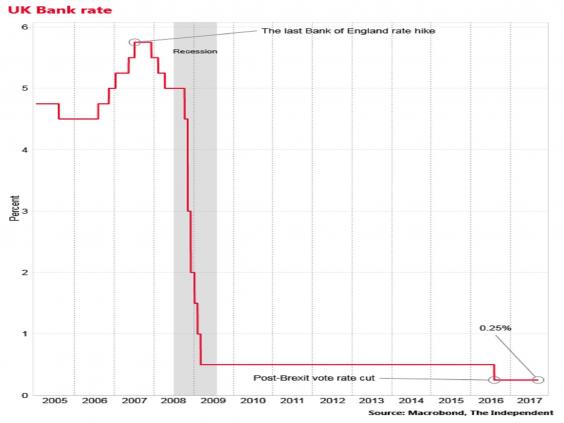
It would be the first rate hike from the central bank since 2007 and while it would mean higher mortgage repayments for many borrowers it would also mean larger returns on savers' bank deposits.
In its latest meeting the Bank's nine member Monetary Policy Committee (MPC) voted by a 7-2 margin to keep rates on hold at their record low of 0.25 per cent.
Nevertheless, the MPC signalled that it was gearing up for a rate increase, possibly later this year.
"A majority of MPC members judge that, if the economy continues to follow a path consistent with the prospect of a continued erosion of slack and a gradual rise in underlying inflationary pressure then...some withdrawal of monetary stimulus is likely to be appropriate over the coming months in order to return inflation sustainably to target," the minutes of the meeting said.
The Bank's official inflation target, set by the Government, is 2 per cent.
The Bank cut rates in August 2016 to their present level to support the economy in the wake of the shock Brexit vote.
They had previously been at 0.5 per cent since March 2009.
Thursday's statement sent sterling up sharply to $1.3330, almost 1 per cent higher on the day, as financial traders in the City of London adjusted their bets on the timing of the next hike.
One possibility for the timing of a vote to raise rates would be November, when the Bank publishes its next round of official Inflation Report forecasts.
The Office for National Statistics reported earlier this week the inflation hit 2.9 per cent in August, already higher than the peak the Bank of England had projected in its August Inflation Report.
Inflation has mostly been driven upwards by the rising cost of imports stemming, in turn, from the slump in sterling since the June 2016 Brexit vote.
The minutes also stressed that there were accumulating signs that "slack" in the economy is being rapidly eroded, which could put additional upward pressure on domestic prices.
The UK unemployment rate has now fallen to just 4.3 per cent, its lowest since 1975.
"Recent developments suggest that remaining spare capacity in the economy is being absorbed a little more rapidly than expected at the time of the August Report, and that inflation remains likely to overshoot the 2 per cent target over the next three years," it said.
The Bank repeated its view from August that financial markets are under-estimating the prospect of an earlier rate rise.
"All MPC members continue to judge that, if the economy follows a path broadly consistent with the August Inflation Report central projection, then monetary policy could need to be tightened by a somewhat greater extent over the forecast period than current market expectations," it said.
However, the Bank also stressed that rates were very unlikely to return rapidly to their pre-recession levels of more than 4 per cent.
"All members agree that any prospective increases in Bank Rate would be expected to be at a gradual pace and to a limited extent," the minutes said.