Bangladesh is again on edge after a series of crude bombings and arson attacks rocked its capital and several other cities this week.
The spate of attacks over the past three days has triggered a high alert across the South Asian country, which is still limping back to normalcy over a year after it witnessed a bloody revolution that ousted then-prime minister Sheikh Hasina.
At least 17 crude bombs were hurled at multiple locations in Dhaka on Monday, while more than 10 vehicles were torched in other parts of Bangladesh until the early hours of Wednesday.
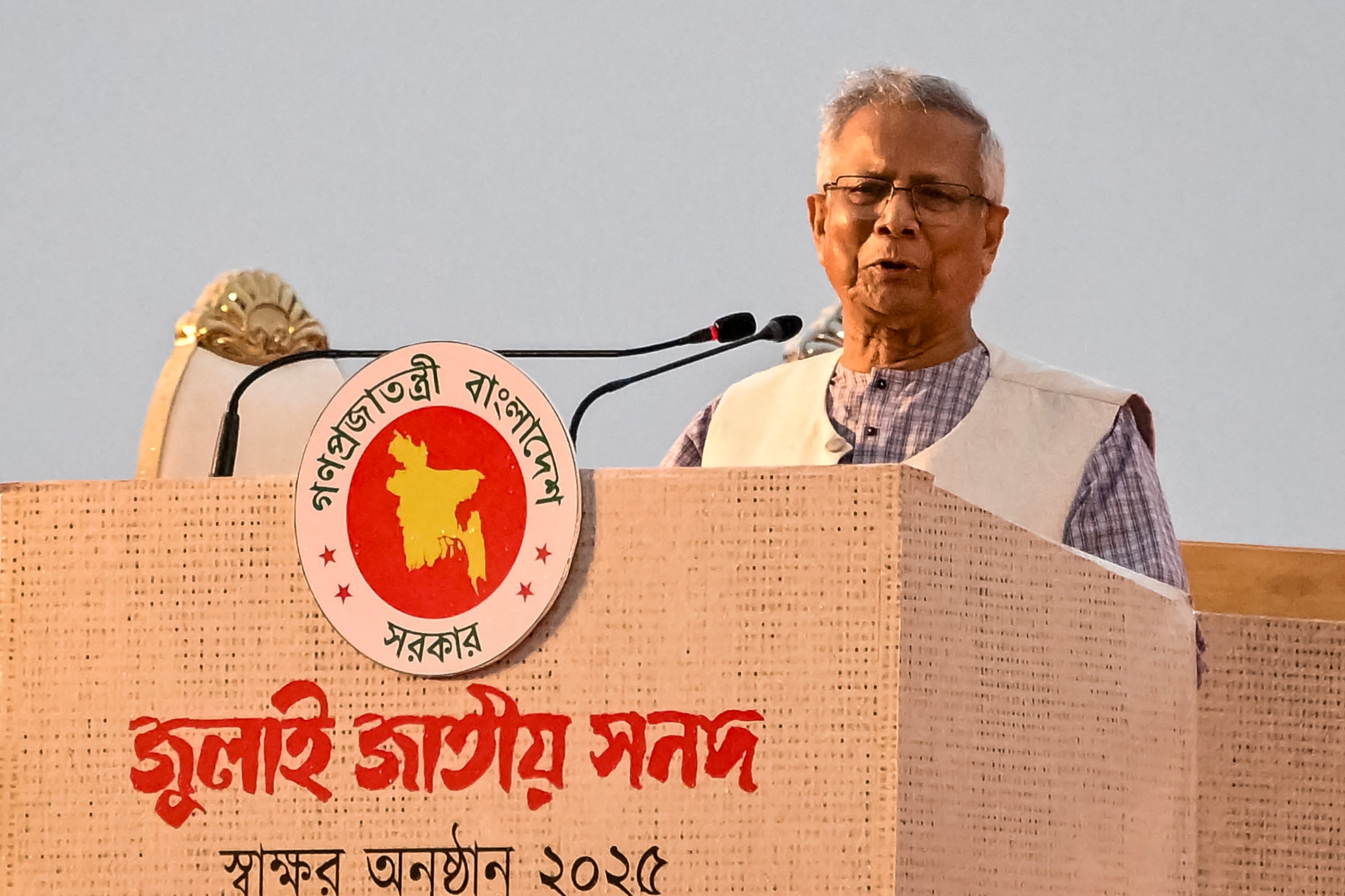
The first explosion was reported at around 3.45am local time on Monday near the headquarters of Grameen Bank, founded by Muhammad Yunus, the interim leader since Ms Hasina’s ouster.
The Dhaka police said that a motorcyclist hurled a crude bomb at the building before fleeing. No casualties were reported.
Mr Yunus won the 2006 Nobel Peace Prize for helping lift millions out of poverty by providing micro loans of less than $100 through the Grameen Bank to the rural poor who were too impoverished for traditional banks to lend to.
Within a few hours, a duo on another motorbike threw crude bombs at a business establishment owned by the government’s Fisheries and Livestock adviser, Farida Akhter, in the capital.
A school was struck with a petrol bomb on Tuesday night, three days after two bombs went off on the premises of St Mary's Cathedral and St Joseph School, which is run by the Catholic Church.
The Dhaka police claimed the attacks on establishments associated with the advisers were meant to make people anxious ahead of the "lockdown" declared by Ms Hasina's outlawed Awami League party on Thursday. “We have increased security everywhere,” an official told The Independent. “These miscreants are trying to create tension again in Bangladesh.”
Bombs were also thrown outside the International Crimes Tribunal's investigation agency office in Dhanmondi.
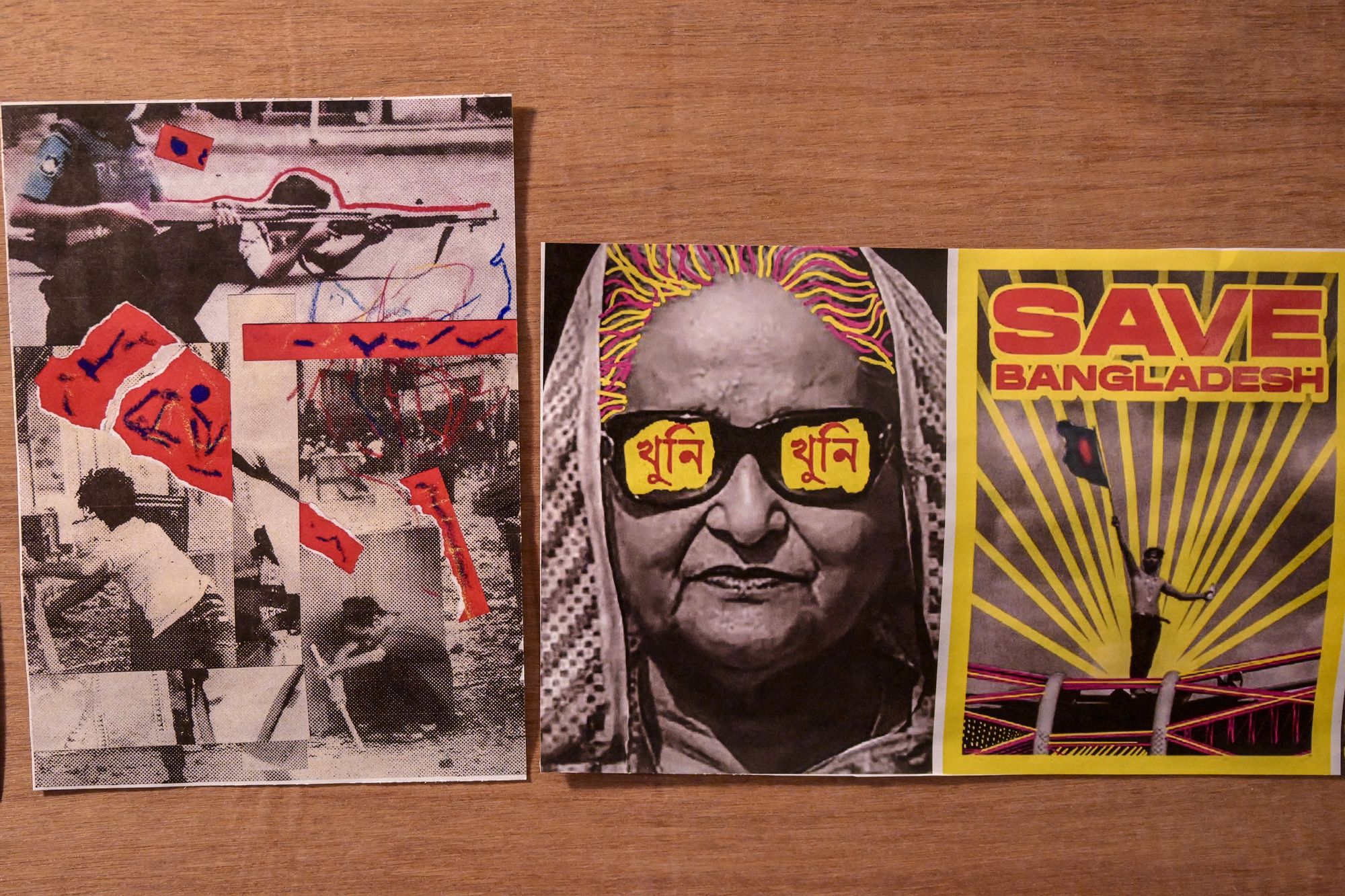
The tribunal is expected to set a date soon for a ruling in the case against Ms Hasina. The former leader is charged with committing crimes against humanity for her alleged involvement in launching a brutal police crackdown on the protesters last monsoon. The UN estimates up to 1,400 people were killed between July and August last year.
"Multiple units of our police forces are patrolling the important areas and we have increased surveillance across Dhaka. We won't let these miscreants get away with arson and blasts. We have launched a citywide manhunt to arrest them. Our force is very active on the ground," the official said.
The attacks prompted several English-medium schools, mostly run by convents, to switch to online classes, citing safety concerns, The Daily Star reported.
In the northern city of Mymensingh, a driver sleeping inside a bus was killed after the vehicle was torched.
At least four other parked buses were set ablaze in Gazipur district between Tuesday night and early Wednesday morning.
"It is a never-ending nightmare in this country," Muhammad Hassan, who runs a grocer shop in Gazipur city, said. “We are scared to step out of our houses, but I run a shop, so how can we stay indoors in fear of a blast or attack.”
Home affairs adviser Muhammad Jahangir Alam Chowdhury said on Tuesday that law enforcement agencies were on high alert ahead of the "Dhaka lockdown", called by the Awami League to protest against Ms Hasina's trial.
"They will remain in a strong position to ensure normalcy,” he said. “There is no cause for concern.”
The army has been deployed across the nation for the last 15 months to support civil authorities. Last week, about half of the 60,000 soldiers on policing duty were pulled back to barracks for rest and retraining.
The security situation has deteriorated since the Yunus administration set a seven-day deadline for political parties to reach a consensus on conducting a national referendum on 84 reform proposals, some of which contradict the current constitution, and the implementation of the July Charter, drawn up with the help of the agitation leaders after Ms Hasina’s ouster.
The Awami League has not been involved in the political dialogue since the interim government dissolved the party.
Ms Hasina fled by helicopter to India after a student protest turned into a mass uprising against her 15-year authoritarian rule.
She has since been living in Delhi, close to the corridors of power in the Indian capital.
Bangladesh is scheduled to hold its first national election since Ms Hasina’s ouster in February 2026.
Probe reveals reason behind Bangladesh’s worst aviation disaster in decades
Defiant ousted Bangladesh leader refuses to apologise for protester deaths
Delhi and Islamabad blasts expose South Asia’s fragile security as rivals trade blame
At least 12 killed in suicide bombing outside court in Pakistan’s capital
What to know about Afghanistan and Pakistan’s collapsed peace talks
Peace talks between Afghanistan and Pakistan collapse amid mounting border clashes