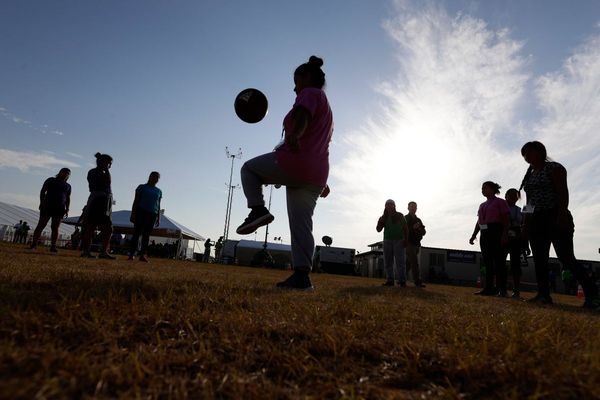
Over the past two days, there has been non-stop revelry with colours and crackers around the Durga temple at the “Bangla camp” of Hindu refugees in Sindhanur taluk in Raichur district.
While the contentious Citizenship (Amendment) Bill (CAB) has received criticism by civil society groups across the country for being “discriminatory”, the Bill, which has now got the President’s assent and become an Act, has been welcomed by refugees from Bangladesh in the dry parts of Sindhanur taluk. For, it is set to directly benefit about 5,000 people out of the around 20,000 at the Bangla camp, besides indirectly benefiting most families there.
“A large part of the third-generation population that has made Sindhanur home does not have citizenship status as one of their parents does not have citizenship. Now, with this Act, all these people will get citizenship,” said Prasen Raptan, a second-generation Bangla living in Sindhanur. His father, Abinash Raptan, had escaped persecution at Khulna in Bangladesh and come to India.
Most of the Bengali-speaking population in the camp came from Khulna, Jessore, Dhaka,Barisal and Faridpur areas in Bangladesh. They entered India before or soon after the 1971 Indo-Pak war. While the government accommodated them in various temporary shelters, they were eventually settled in permanent camps across the country, including the one in Sindhanur, with an allotment of five acres to each family. Permanent camps are in 18 States, including Odisha, Chhattisgarh, Uttar Pradesh, Uttarakhand, Madhya Pradesh, Maharashtra and most north-eastern States.
The problem that the community here faced was that only 727 families, accounting for about 4,000 people, had citizenship conferred as part of their settlement package. However, about 200 families that were related or friends with those settled here also migrated, and they did not get the citizenship status as part of their settlement package. In the past two decades or so, marriages took place between these two sets of families. Their children (or the third generation) also did not receive citizenship because both parents were not citizens as per the 1955 Act, Mr. Raptan said.
Documentation has been a problem for the third generation in getting voter ID cards, ration cards and income certificates, as the Revenue Department asks for the citizenship status of both parents. “Marriage, strangely, created documentation problems for us. Though I am an Indian citizen, my wife is not because her family came [to the country] later. My child does not have citizenship. Our community is now relieved,” he said.