It was function over fashion when the decision to allow the wearing of white spikes at Koshien Stadium was made for the first time, a measure to prevent heatstroke during a special series of high school baseball games that started on Aug. 10 in place of the canceled annual national tournament.
Previously, players were allowed to wear only black spikes at the famed stadium in Nishinomiya, Hyogo Prefecture. However, the Japan High School Baseball Federation lifted the ban as white spikes were found to be effective in lowering the temperature inside the spikes. Half of the teams that have already played games in the series so far have switched to white spikes.
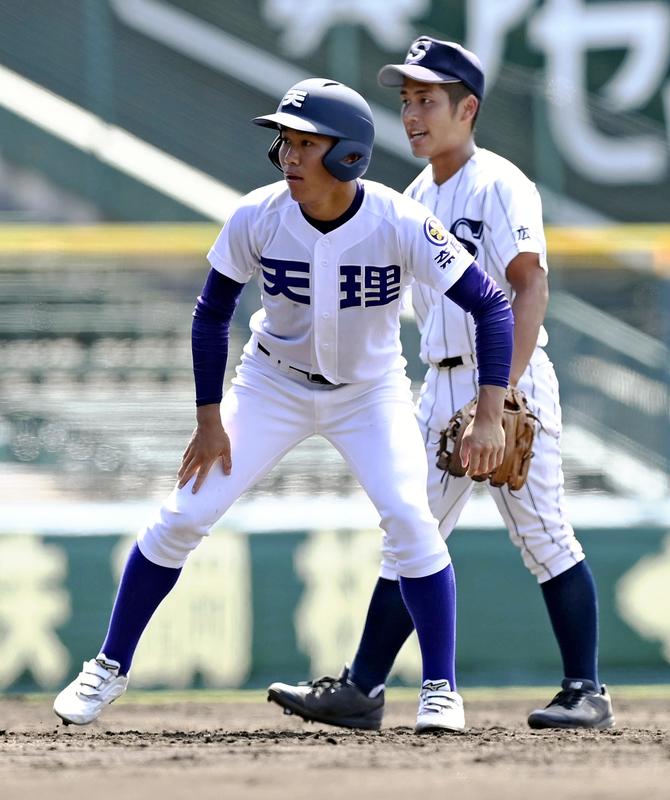
With the nation engulfed in a scorching heat wave, the first game on Aug. 11, the second day of the series, featured a battle between white-spikes-clad Tenri High School of Nara Prefecture against the black-spikes-wearing Hiroshima Shinjo High School of Hiroshima Prefecture.
Tenri had worn white spikes at Nara's intra-prefectural tournament held from July 18 to Aug. 6, which the traditional powerhouse went on to win. While Tenri lost 4-2 in the Aug. 11 game at Koshien, first baseman Hiro Kawanishi said he found the white spikes effective. "My feet previously got sweaty in spikes and sometimes it felt gross. But I didn't have such problems with the white spikes," he said.
Conversely, Hiroshima Shinjo first baseman Shuto Sugii wasn't swayed from his attachment to black spikes, saying, "I've been using them for a long time, so I feel ready for a game when I put them on."
The federation has strict regulations for high school baseball equipment, even down to the color of belts (black or navy) and gloves (brown, orange, or black).
The color of spikes is restricted to black. However, as summers starting getting hotter and countermeasures became necessary, the federation began looking into allowing white spikes, which were said to have less internal temperature rise because they reflect sunlight, compared with black spikes that absorb it. A number of sporting goods companies researched the matter and, when results proved the temperature inside white spikes was lower, the federation approved their use in March this year.
Sporting goods giant Mizuno Corp., based in Osaka City, conducted an experiment on the change in temperature inside spikes on an artificial field in summer. It found that compared with black spikes, the internal temperature in white spikes was about 10 C lower, and the surface temperature about 20 C lower.
Mizuno has released a line of white spikes, dubbed "Shiro supa," with a range of five prices. Others such as Osaka City-based Descente Ltd. and Asics Corp. of Kobe have also marketed products and launched campaigns to expand sales.
Although black spikes remained the mainstream in this year's independently organized regional tournaments, seven of 14 schools that had played in the Koshien series through Wednesday had donned white spikes, with Kochi Prefecture's Meitoku Gijuku and Nagasaki Prefecture's Soseikan among those joining Tenri. The participating schools have split into black and white factions.
One downside to white spikes is that dirt and stains are more noticeable. Sports Sakurai Co., which operates three sporting goods stores in Osaka Prefecture, responded to that by displaying cleaners and other related products in the special section that it set up for white spikes in February this year.
Sports Sakurai Presdient Yoshifumi Sakurai sees a growing market. "Compared with black spikes, white spikes need frequent care," he said. "But if players on powerful teams look good wearing them at the [Koshien] games, it could lead to more young players thinking, 'I want to give them a try.'"
Read more from The Japan News at https://japannews.yomiuri.co.jp/