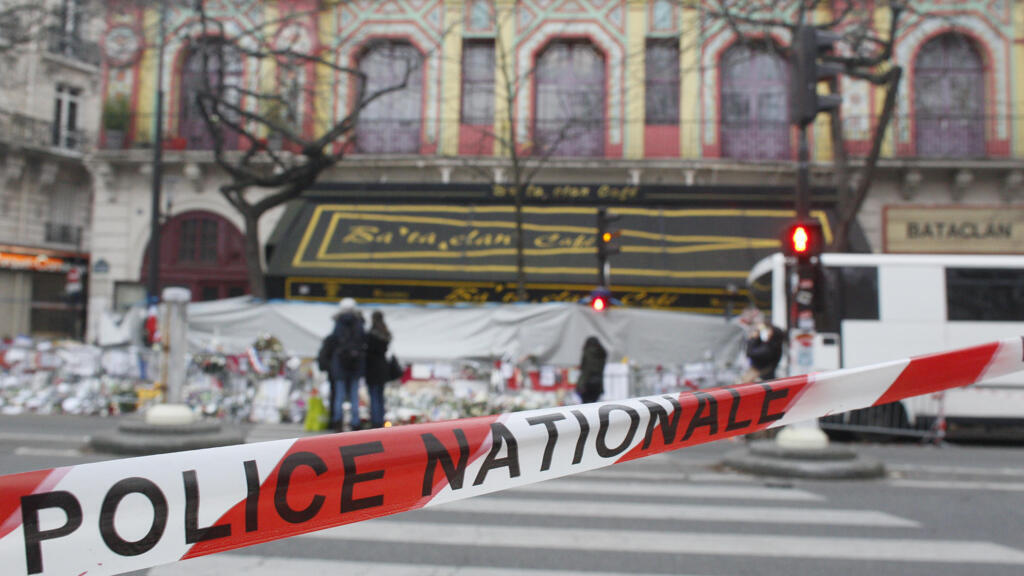
Immediately after the 2015 Paris attacks, French police were granted extra powers to search and detain people suspected of links to terrorism. Ten years later, many of these exceptional measures have become law and legislators continue to expand surveillance – steps that human rights experts say encroach on civil liberties in the name of security.
On the night of 13 November 2015, then president Francois Hollande declared a nationwide state of emergency, granting French police and intelligence services extraordinary authority to carry out searches and detain people suspected of being involved in terrorism.
These measures, extended a week later, let police bypass the ordinary judicial process and decide whom to target, with judges reviewing the legality only afterwards if officers' choices were challenged in court.
The public largely accepted these restrictions on civil liberties because the terrorist threat remained high.
“After a traumatic event, after a crisis, it is easier to justify a reduction in rights and heightened security measures. People are expecting the government to do something, whatever it is,” explains Sophie Duroy, a professor at the University of Essex School of Law’s Human Rights Centre.
“In a way, the population may be willing to sacrifice some of their liberties because they fear the next terrorist attack.”
Listen to an interview with Sophie Duroy in the Spotlight on France podcast:
When a deadly truck attack in Nice followed in July 2016, France's parliament incorporated these emergency powers into ordinary law, through bills passed in 2017 and in 2021.
According to Jean-Christophe Couville, national secretary of the Unité police union, France previously lacked the tools to address terrorist threats.
In the days following the November 2015 attacks, emergency powers enabled police to search over 400 people and seize dozens of arms as well as drugs, he told RFI, in what he calls “collateral effects” that he argues “maybe saved lives”.
Abuse of power
Rights defenders say it is an abuse of power to use extraordinary measures intended to fight terrorism in order to deal with ordinary crime.
Duroy points to the disproportionate impact of these powers on France’s Muslim community in the aftermath of the 2015 attacks.
“Individuals and associations were subjected to house arrest, or their places of worship were closed, for instance. Their freedom of religion, freedom of association, freedom of assembly – their basic liberty – was affected,” she says.
And there was “mission creep”, as police used their expanded powers more broadly.
How French Muslims have wrestled with Charlie Hebdo's impact, 10 years on
Policing dissent
During the Cop21 summit in Paris in December 2015, police detained and placed climate activists under house arrest on the grounds that they might disturb public order.
“Because there is very little judicial oversight, it is very hard to control who you target with these measures,” says Duroy.
“And we have seen this kind of mission creep more and more in the past few years to police dissent, rather than to police terrorism.”
Other terrorist attacks – realised and foiled – continued to keep France on high alert.
Later, during the Covid pandemic, France declared a health state of emergency, restricting peoples’ movements. Meanwhile laws introduced for the 2024 Paris Olympics temporarily authorised algorithmic video surveillance, which the government is considering renewing through 2027 in preparation for the 2030 Winter Olympics in the French Alps.
“France is the main advocate for digital surveillance technologies and for authorising them and using them on a large-scale basis,” says Duroy.
Expanded surveillance
For police unionist Couville, digital surveillance is just another means to anticipate crimes, or find culprits after the fact.
“We need these new tools,” he said. “They help us to work proactively, to identify someone who is wanted, for example. It helps us to reconstruct a crime scene and helps with arrests.”
Duroy warns, however, that more tools and repressive measures could backfire, putting the public on the defensive.
She argues that respecting human rights and international law is the best way to protect national security, because it avoids escalation and maintains public trust.
"If the population believes you are respecting their rights they would be willing to cooperate with security services and the police,” she says.
“If people think that their rights are not going to be respected or their family's rights are not going to be respected, they will not give a tip to the police about the fact that maybe their brother is becoming radicalised or their son is becoming radicalised.”
France accused of restricting protests and eroding democracy
Siding with caution
Because counterterrorism is global, France both shares and relies on information from other countries’ intelligence services, which may be more likely to cooperate if they trust that international standards are being respected.
Yet arguing against tougher security powers is an uphill battle.
Those trying to slow the expansion of surveillance regularly challenge these measures in court – something Duroy says is not always effective, as judges often side with governments.
“Courts have been very happy to defer to national governments in matters of national security because they trust their risk assessments and because of the very high stakes of terrorism,” she says. “No one wants to be blamed if a terrorist attack happens.”
Listen to an interview with Sophie Duroy on the Spotlight on France podcast, episode 135.