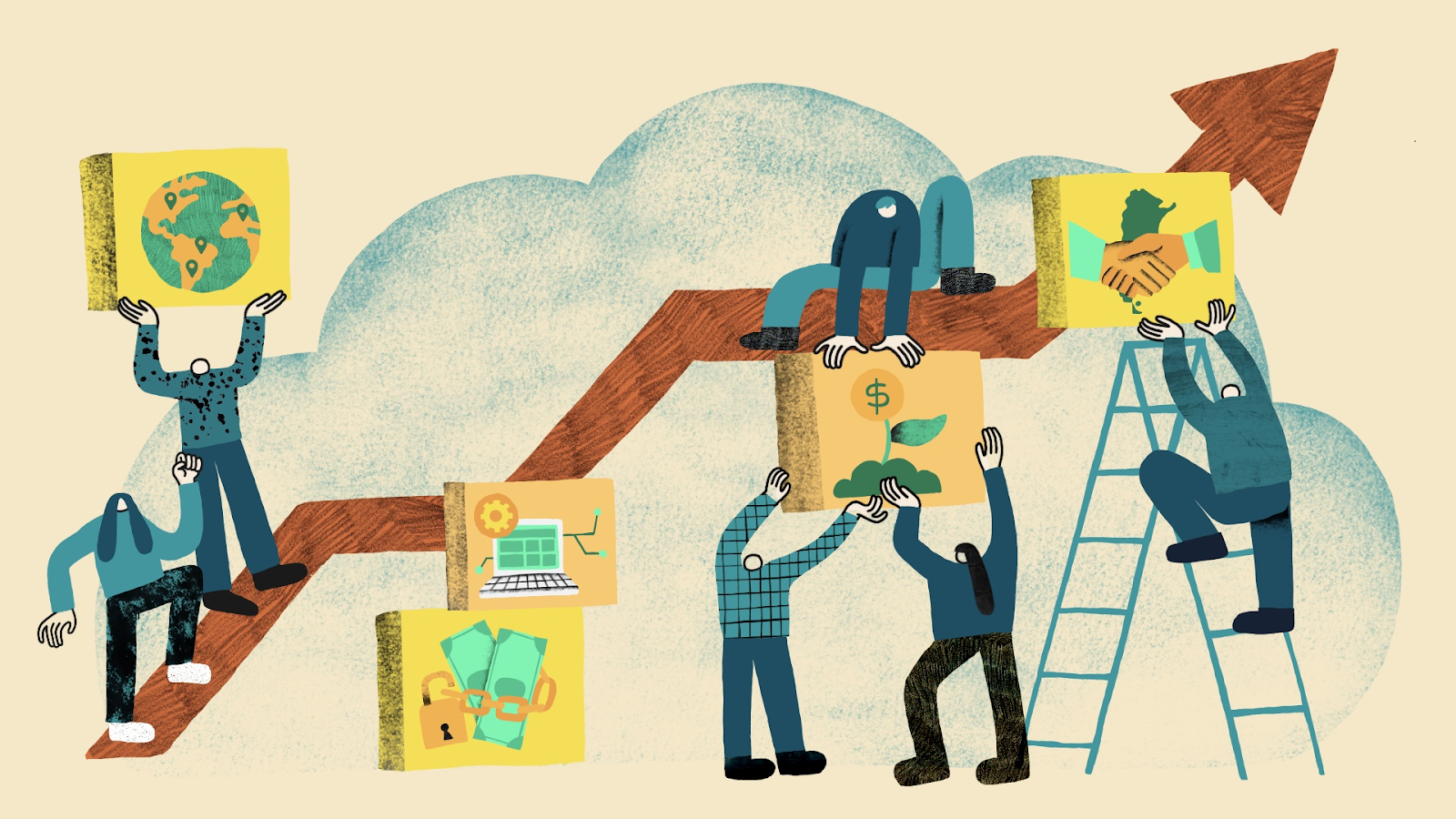
For most businesses, growth is not constrained by ambition. It is constrained by cash flow. Revenue can rise, demand can be strong, and sales pipelines can look healthy, yet many companies still struggle to scale without creating financial strain. The issue is rarely a lack of opportunity. More often, it is the tension between cash coming in, cash going out, and the debt used to bridge timing gaps.
Debt is not inherently negative. In many cases, it is a practical tool that enables investment ahead of revenue, smooths uneven payment cycles, and funds long-term assets. But debt can also amplify fragility when obligations outpace a company’s ability to service them through reliable, recurring cash flow. Sustainable growth depends on managing this balance intentionally.
Why Cash Flow, Not Profit, Determines Survival
Profit tends to dominate financial conversations, but cash flow determines whether a business can function day to day. A company can appear profitable on paper and still fail if it cannot meet payroll, pay suppliers, or cover loan obligations when they come due.
Cash flow pressure often intensifies during growth phases. As sales increase, costs frequently rise ahead of collections. Inventory must be purchased before it is sold. New hires are added before their output converts into revenue. Marketing spend increases before results materialize. These timing mismatches create stress, even in businesses with strong fundamentals.
Debt is often used to absorb these gaps. When the debt is aligned with predictable cash inflows, it can be effective. When it is used to cover structural weaknesses such as poor collections, thin margins, or inefficient operations, it can become a long-term risk. Understanding cash flow cycles, not just income statements, is the foundation of sustainable growth.
The Role of Debt in Business Expansion
Debt can play a legitimate role in financing growth. It may fund equipment, support working capital, or enable strategic initiatives that would be difficult to execute using retained earnings alone. Used well, it accelerates progress without undermining stability.
Problems typically arise when borrowing becomes a substitute for operational discipline. Financing recurring shortfalls or declining margins creates dependency. Over time, more cash is allocated to servicing debt, leaving fewer resources for reinvestment, process improvement, or resilience.
Sustainable businesses treat debt as a tool, not a crutch. They borrow against assets or initiatives that produce durable cash flow and avoid obligations structured around best-case assumptions.
Cash Flow Predictability Matters More Than Growth Speed
Fast growth is often celebrated, but predictable growth is more valuable. Cash flow volatility increases risk, particularly when debt is involved. Even manageable loan payments can create pressure when revenue is inconsistent month to month.
Businesses that prioritize predictability typically strengthen:
- Billing and collections discipline
- Conservative forecasting practices
- Customer diversification
- Pricing and retention models that stabilize revenue
Predictable cash flow improves planning confidence, supports clearer repayment schedules, and increases credibility with lenders, investors, and strategic partners. In many cases, slowing expansion slightly to improve predictability results in stronger long-term performance.
When Debt Supports Sustainability
Debt supports sustainable growth when it meets a few practical criteria.
1) The purpose is clear. Borrowing should be tied to a defined use and an expected return, such as equipment that increases capacity or systems that reduce operating costs.
2) Repayment aligns with cash generation. The asset or initiative funded by debt should produce cash flows that comfortably cover repayments, even under conservative assumptions.
3) Flexibility is preserved. Sound debt structures allow room to adjust if conditions change. Rigid terms can turn manageable disruptions into crises.
4) Debt reflects risk tolerance, not optimism. Businesses that assume everything will go right often discover too late that debt magnifies downside scenarios.
As Sharon Amos, Director at Air Ambulance 1, a provider of specialist air medical transport services, says, “Good debt is structured around reality, not best-case assumptions. If repayments still work when timing slips, or costs rise, the business stays in control instead of the lender.”
Warning Signs of Overleveraging
Overleveraging rarely happens all at once. It tends to develop gradually as borrowing decisions accumulate. Common warning signs include:
- Increasing reliance on short-term debt to fund long-term needs
- Rolling loans forward instead of paying them down
- Rising interest costs as a growing share of revenue
- Management decisions driven by lender pressure rather than business strategy
A subtler signal is when growth feels stressful instead of empowering. If increased sales consistently worsen cash strain, the business may be scaling in a way that misaligns costs, collections, or working capital requirements. Recognizing the pattern early gives leaders time to correct course before options narrow.
The Trade-Off Between Control and Capital
Debt provides capital without ownership dilution, which makes it appealing to founders who want to maintain control. However, control comes with obligations. Unlike equity, debt requires repayment regardless of performance.
This trade-off should shape financing decisions. Businesses with stable, recurring cash flow can typically carry more debt responsibly than those operating in volatile or cyclical markets. Companies with thin margins or long cash cycles often need more caution, not because debt is inherently harmful, but because timing risk is higher.
Sustainable growth comes from matching financing structures to business realities, not aspirations.
As Julia Rueschemeyer, Divorce Mediator & Divorce Lawyer at Amherst Divorce, a firm focused on guiding clients through complex financial decisions during separation, explains, “Control always has a cost. Whether in business or personal finances, taking on obligations requires clarity about what you can sustain over time, not just what you can manage today.”
What Mortgages Reveal About Long-Term Financial Discipline
Mortgages offer a useful parallel for thinking about sustainable debt. In personal finance, a mortgage is typically assessed based on long-term affordability, payment predictability, and resilience under stress, not simply on whether financing is available today.
The same discipline applies to business debt. Fixed obligations can reduce uncertainty but may cost more upfront. Variable obligations can be cheaper initially but increase risk during rate changes or downturns.
Businesses that evaluate debt through the lens of long-term affordability tend to make more resilient choices. They ask whether payments remain manageable under pressure, not just whether funding is accessible.
As Jack Miller, Founder & President of Gelt Financial, a private commercial real estate lender, explains, “When debt is evaluated through long-term affordability rather than short-term approval, it becomes a stabilizing tool. The goal is confidence that payments remain workable across different economic conditions, not just in ideal ones.”
Using Cash Flow Forecasting as a Decision Tool
Cash flow forecasting is one of the most underused tools in business finance. Many companies rely heavily on historical reports rather than forward-looking projections. As a result, debt decisions are often made without visibility into future constraints.
A simple rolling forecast helps leaders spot low-cash weeks early and time decisions accordingly.
Effective forecasting does not require perfect accuracy. It requires realistic assumptions and regular updates. Even a simple rolling forecast can surface upcoming pressure points and support better timing for borrowing, hiring, or investment.
As David Lee, Managing Director at Functional Skills, a leader in practical workforce training and capability development, says, “The real value of a cash flow forecast is not predicting the exact number. It is spotting the timing gaps early enough to make calm choices, before debt becomes the default solution.”
Forecasts also allow businesses to test scenarios. Leaders can ask what happens if sales decline by ten percent or costs rise unexpectedly. These exercises often highlight whether existing debt levels are truly sustainable.
Why Conservative Assumptions Enable Long-Term Growth
Optimism fuels entrepreneurship, but conservatism sustains it. Businesses that plan for delays, disruptions, and variability design more durable financial structures.
Conservative assumptions do not prevent growth. They shape how growth is financed. By leaving room for error, companies reduce the likelihood of cascading issues triggered by one missed projection. This may result in slower expansion, but it also reduces the chances of retrenchment, layoffs, or emergency refinancing later.
Aligning Financial Strategy With Operational Reality
Balancing cash flow and debt is not a finance-only exercise. It reflects how operations are run, how customers pay, how costs scale, and how risk is managed.
Finance works best when it mirrors operational reality rather than attempting to override it. Businesses that integrate financial planning into everyday decision-making make fewer reactive choices and maintain greater strategic freedom.
Sustainable growth emerges when cash flow, debt, and operations reinforce each other instead of competing for attention.
As Dana Ronald, CEO of the Tax Crisis Institute, a firm that helps individuals and businesses navigate complex tax issues and IRS resolution strategies, says, “The strongest financial strategies are built on operational truth. When leaders connect pricing, delivery, staffing, and payment cycles to the numbers, cash flow becomes a steering wheel, not a scoreboard.”
Conclusion
Sustainable business growth is rarely the result of aggressive borrowing or rapid expansion alone. It is built through disciplined cash flow management, thoughtful use of debt, and a clear understanding of financial trade-offs.
Businesses that balance these elements grow with confidence rather than urgency. They retain options during uncertainty and avoid being forced into decisions by creditors or cash shortages.
In the long run, the most successful companies are not those that grow the fastest, but those that grow in a way they can support, sustain, and control.