Blue background
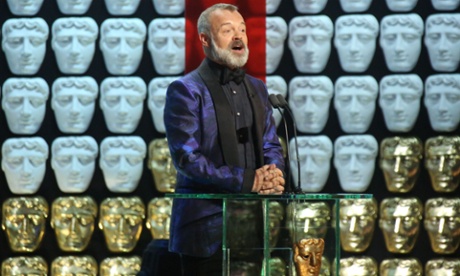
David Cameron wasn’t there – that might have been interesting – but the spectre of the unexpected Tory general election win hung heavy over the Bafta TV awards from the moment host Graham Norton told the audience that the country was “blue. Very blue. Really, really blue”. Actor Jason Isaacs followed it up with his observation that “someone has to win but personally I’m all for proportional representation” before Marvellous writer Peter Bowker told the audience: “Thank you Bafta. At least one vote went the right way this week.” Bowker, whose previous credits include Iraq war drama Occupation and From There to Here, described his double Bafta-winning Marvellous as a “celebration of the positive contribution everyone can make, a celebration of diversity and community and the spirit of optimism. These are values worth fighting for, more so now than ever.” The night ended as it began – with politics – and an unexpected tribute from Channel 4 News anchor – and new Bafta fellow – Jon Snow, who thanked Margaret Thatcher for helping create Channel 4.
BBC3’s reversal of fortune
It was a good night for BBC3 and a bad one for BBC1. BBC3, about to lose its TV channel and go online-only if controversial cost-saving plans are approved by the BBC Trust, won two Baftas, one for Georgina Campbell, star of its real-life drama Murdered by My Boyfriend, and one for its documentary Life and Death Row, matching its double win last year. BBC3 equalled the haul of the vastly better funded BBC1, which also took home two awards, for Sarah Lancashire drama Happy Valley and Graham Norton’s Friday night chatshow (BBC1 also won the Radio Times audience award, for Sherlock, but that’s not really a Bafta). And why is BBC3 being sacrificed? To help BBC1 of course, some of the savings used to shore up its drama budget and its slot on the EPG handed over to timeshifted channel, BBC1+1. BBC2, having won nothing last year, won five, matching ITV’s haul, but the night belonged to Channel 4 which tottered home with six.
Not marvellous all round
It wasn’t quite the night of a thousand surprises, but there were still a few big name shows that went, er, missing on Sunday night. Both BBC1’s The Missing and Line of Duty on BBC2, two of the most acclaimed dramas of the last 12 months, went home empty handed from the Theatre Royal despite three nominations each. Instead there were two drama gongs apiece for another BBC2 show, Marvellous, and ITV’s The Lost Honour of Christopher Jefferies. Special mention also to Stephen Rea, who won best supporting actor for BBC2’s The Honourable Woman. Still no Bafta for Benedict Cumberbatch, though. Better luck next (sixth) time, Sherlock.
No laughing matter
The award for most pleasantly surprised winner of the night was a toss-up between Matt Berry and Jessica Hynes, who won the two comedy performance awards. Berry, co-creator and star of Channel 4’s Toast of London, who not long ago was sending people to their death in the London Dungeon, said: “I kind of came in through the back door, this is something else. I get to work with the best, Graham Linehan, Arthur Mathews, Vic and Bob, I’ve been very lucky.” Berry also thanked Channel 4 – “no one really makes these kind of shows any more” and paid tribute to his parents who have had a “roughish year”. Hynes looked taken aback, having earlier confidently declared that her role in BBC2’s W1A was not the sort of part that traditionally wins a Bafta. Hynes, who used her speech to urge people to tackle the cuts in education and training in the arts, said later: “Yes, I was disappointed by the election result on Thursday. Financially it is very difficult to justify arts further education in this climate. Arts is the first thing to go in austerity and without organisations to support arts and arts education it is very very difficult, particularly with the high fees for university and drama schools.”
Clive James’ perfect timing
Clive James, honoured with a special award from Bafta, recalled the days of writing his TV chatshow with his long-time collaborator, Colin Bostock-Smith. “We would lock ourselves away for two days, in fact we were locked away for two days and fed through a flap in the door, and from my room, which was my office, gales of laughter would sweep as we entertained each other with jokes, and put quite a lot of them in the show. It was a wonderful time,” said James in a pre-recorded acceptance speech. The writer and broadcaster, who said it was the right decision to retire from TV in 2001 – “I could have struggled on a bit. After all, when I entered my career Bruce Forsyth was just beginning his, he did his first shows under Queen Elizabeth I” – also mentioned many of the women he had worked with during his career. “There are scores of people who worked for my television outings … many of them women and a lot of them have done very well. I am very proud that women weren’t held back in our unit.”
Public inconvenience
The Radio Times doubtless pays a shiny penny or three for the privilege of sponsoring the audience award, the closest the Baftas has to a National Television Award because it’s the one voted for by viewers. “The public only get to vote on one category this evening, thank God for that,” Norton told viewers. Ordinary punters were also allowed into the auditorium at the Theatre Royal in Drury Lane, albeit all the way up in the gods. “You thought you could smell something,” said Norton. “The aroma of Lynx and rented suits.” Elsewhere in Norton’s opening monologue – we listened to it so you didn’t have to – “There are more stars of stage and screen here than Jeremy Clarkson has had hot dinners…. A drama about a Cornish miner [Poldark] has done very well for the BBC. The first positive story involving a miner they have had for years.”