In recent years, the Bafta fiction categories have provoked off-screen dramas and dialogues over three issues: a confusion about the distinctions between the duration and durability of a “series”, “mini-series” and “single drama”; the emphasis on production credits leading to a reduction in the recognition of writers; and the fact that almost all nominated shows turned on either a dead body or a dead ringer for a showbiz celebrity.
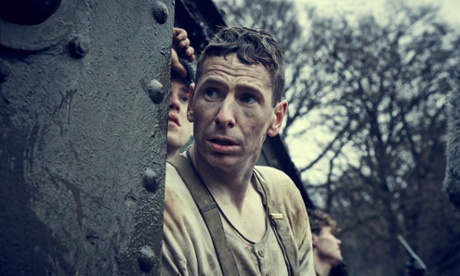
The third of these concerns – the genre’s parallel obsessions with crime stories and biopics – is confirmed by the 2015 shortlists: of the 28 available awards for making or appearing in a British TV drama, 27 go to plots involving cops, corpses or famous people (or some combination), with the single outlier – BBC3’s Our World War – not completely offering diversity. Rather than being a sci-fi musical romance, it is a biographical drama recreating the lives of men killed in the first world war.
Although producers in their acceptance speeches routinely say that “everything begins with the script”, the people who write them are still likely to rank low in the citations unless, in the style of American “show runners”, they also have major production input: people such as Jeff Pope (Cilla), Sally Wainwright (Happy Valley) and Jed Mercurio (Line of Duty.)
At least there seems to be greater clarity about shapes. After recent nominations for “mini-series” that consisted of two one-hour episodes and “single dramas” that were clearly pilots for series, the slots are more logical this year, with the “drama series” running to at least six chapters (Happy Valley, Line of Duty, The Missing and Peaky Blinders), the “minis” four (apart from the two-part The Lost Honour of Christopher Jeffries) and the one-offs having no obvious spin-off potential, not least because the protagonists of A Poet in New York, Murdered By My Boyfriend and Common are either dead or imprisoned by the final credits. Conversely, the otherwise impressive Missing may be marked down in drama series for a conclusion that was widely considered too open-ended.
As for predictions and preferences, the jurors with the hardest task look to be those required to separate Happy Valley and Line of Duty in drama series, and their respective stars, Sarah Lancashire and Keeley Hawes, in leading actress.
The sort of ticket-splitting common in the Oscars – A over B for best film, but the director of B for best director – is impossible to bring off at Bafta because most categories have a separate, secret jury. I’d be surprised if no one on the series panel asked if the award could be shared (the rules say no) but, on agonised balance, I would just go for Happy Valley on the grounds that it takes the police procedural form in marginally darker and more innovative directions than its rival.
The acting stand-off between Lancashire and Hawes is complicated by the shortlisting alongside them of Sheridan Smith, rapidly becoming heiress to Julie Walters as an Academy favourite; the chances of all three women are helped by the inexplicable absence of Maggie Gyllenhaal’s Streepish virtousity of English accent acting in The Honourable Woman. On the grounds that Smith in Cilla was brilliantly repeating skills already familiar, I would favour Lancashire or Hawes, who extended and darkened their range in these parts, with Hawes perhaps just ahead, as her complex villainess was a showier role. A further factor, though, may be that Smith is the only ITV nominee in her category, and individual juries sometimes do what they can to balance likely BBC whitewashes elsewhere.
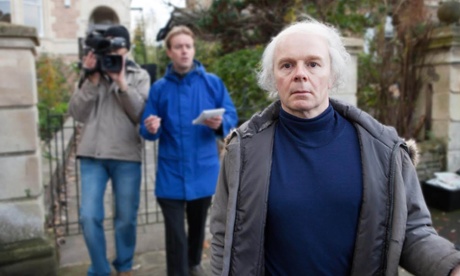
The same consideration may help Jason Watkins, the commercial network’s only challenger to the BBC’s James Nesbitt, Benedict Cumberbatch and Toby Jones in leading actor. The Baftas, like the Oscars, are prone to reward acting that is biographical (because the process of transformation is obvious) and/or heartwarming. Watkins, a long underrated actor, offers both in The Lost Honour of Christopher Jeffries, as the Bristol landlord who was accused by the police and media of having murdered the architect Joanna Yeates.
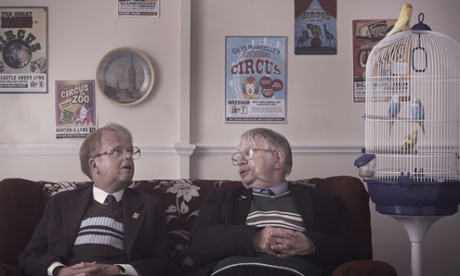
However, Toby Jones in Marvellous perhaps provoked even greater emotion in his own impersonational performance as Neil Baldwin, a Staffordshire man who overcame a learning disability to achieve success in clowning, football, academia and as a friend of celebrities including Gary Lineker and the archbishop of Canterbury. Jones should surely take home the trophy for acting that avoids easy sentimentality and, as they say on the election pages, it would be a considerable upset if Peter Bowker’s script doesn’t secure victory in the single drama section. Biopic has become a lazy screen genre, but Bowker introduced structural innovations including music and a startling scene in which Jones, in character, talks to the real Baldwin. Bowker should surely soon be given a special writer’s statuette for his work on this and, previously, Occupation and Blackpool.
Each year, before the Bafta nominations are announced, I write down the television that has stayed in my memory without reference to notebooks or search engines. This time, in drama, it was Happy Valley, Line of Duty, The Honourable Woman and Marvellous. I hope the division of honours on Sunday gives decent recognition to them all.