On July 18 2016, health professionals from around the globe will return to Durban for the International Aids Conference after a gap of 16 years. That first Durban Conference in 2000 opened the eyes of the world to the depth of the HIV/Aids crisis, especially in Africa. For many it was a life-changing awakening. It certainly was for me. Many of us in Durban all those years ago didn’t fully appreciate the scale of the crisis. We did, however, learn that there were already tools available to tackle the pandemic and that it was up to us to use those tools effectively. Durban 2000 began a journey for me that led to 10 years specializing in supply chains for HIV on behalf of Crown Agents, as part of the PEPFAR-funded Supply Chain Management System.
In 2016, many of those tools have been used very well, and the toolkit has been significantly expanded and improved. We still don’t have a vaccine or a cure, but we can treat those living with HIV, restoring most to a near normal life. Modern treatment will suppress the virus to a level that it will not be transmitted. The challenge now is basically to double the number of adults on treatment, ensure that those on treatment are virally suppressed, and to end childhood AIDS.
This challenge is encapsulated in the UNAids 90-90-90 target: 90% of those living with HIV know their status, of those 90% will be on treatment, and 90% of those on treatment will be virally suppressed. At that level, modelling suggests that new infections will begin to drop, leading to an “end to Aids by 2030”. This is a hugely ambitious target, and requires that everyone diagnosed as HIV positive is offered treatment immediately.
I have worked extensively in paediatric HIV/Aids since having my eyes opened to the looming crisis and the solutions at Durban 2000, and it is an area in which we are finally making good progress. A number of countries are making huge strides in eliminating mother-to-child transmission. Cuba and Thailand for example have been declared free of MTCT, and many others are getting close. We are also finally seeing many more children being placed on treatment, although this remains very demanding. I have been working on the supply chain aspects of this challenge and, with colleagues from Unicef, the Clinton Foundation, WHO and others in an Inter-agency task team, we have introduced a widely-used optimal formulary list of paediatric ARVs to provide high quality care.
In Durban I shall be looking for the ideas and innovations that will enable us to double the number of patients on treatment in an era of flat-lined donor funding and continuing health system challenges. In addition to paediatric care, we also need to find new and better ways to access key populations such as; sex-workers, drug-users and the LGBT community. In many countries there is still significant stigma and discrimination against these populations (including legal barriers) that increases their vulnerability, and makes them hard to reach with health services.
I will also be looking out for new initiatives regarding the impact or threat of HIV/Aids in humanitarian crises around the world, as well as cancer in people living with HIV. With regards to cancer, as people on ART live longer they become susceptible to various cancers, and I want to understand if living with HIV makes you more vulnerable to particular cancers even if a person is on treatment, and if so, what should we do about it.
As far as the supply chain challenges in reaching 90-90-90 are concerned, I am contributing to a luncheon and panel discussion hosted by the Partnership for Supply Chain Management on Wednesday 20 July at 12.45pm, in the Rainbow Terrace Restaurant at the Hilton Hotel, Durban. All are welcome. I shall be drawing on this recent article published by the Journal of the International Aids Society:
Durban 2016 will be exciting, exhausting and exhilarating. It will be up to us all to make it even more important than Durban 2000 in keeping the world on the path to #EndAIDS.
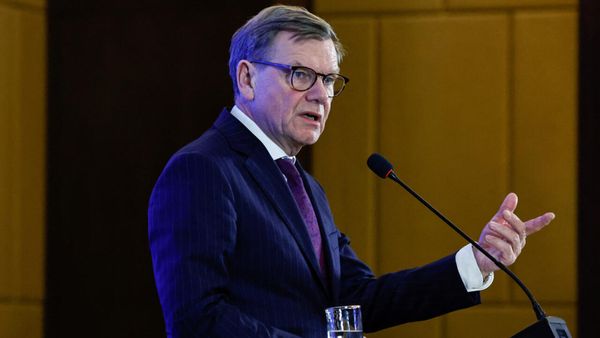
David Jamieson is senior adviser on health supply chains at Crown Agents and deputy director, global partnership, partnership for supply chain management
Content on this page is paid for and provided by Crown Agents, a sponsor of the Guardian Global Development Professionals Network.