A baby who died of septicaemia could have been saved by a doctor if an NHS 111 call handler asked the right questions about her symptoms, an inquest has heard.
Lily Teale died aged just ten months hours after a doctor dismissed her symptoms as a common tummy bug on November 22, 2017.
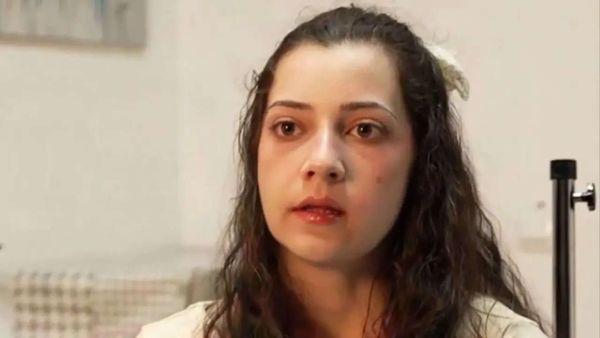
An inquest into her death today heard how her mum Rebekah Watson told an NHS call handler Lily had a high temperature, was vomiting and shaking.
The advisor stuck to questions that are predesigned "pathways" for triaging patients and did not ask Ms Watson to elaborate on what she meant by shaking during the call at 4.45am.
Ms Watson was advised to take Lily to see a GP within 12 hours of the call being made.
She eventually saw a doctor later that day.

The inquest heard call handlers at the NHS's 111 non-emergency line follow a set list of "reductive questions" that rule out life-threatening conditions.
But Dr Iyaz Ghani, a medical system developer for NHS Digital, told the inquest he "would have expected" the handler to "probe more about the shaking".
He told coroner Louise Slater if Ms Watson rang 111 now and gave the same answers, she would have been given a consultation within an hour.
Dr Ghani said: "If the handler had asked about the shaking, perhaps it would have gone down a different route.
"I would have expected the call handler to probe further about the shaking.
"This would have prompted questions about whether the infant was limp and floppy; if they were able to stay awake or keep their eyes open and about their core body temperature.
"They could have asked about the length of the shaking episodes, if the baby had been shaking for more than five minutes, that would have resulted in an ambulance being sent.
"Two or more shaking episodes would have resulted in an ambulance too."

Dr Ghani told the inquest, held at Doncaster Civic Chamber, South Yorks, that "substantive changes" had been made to the 111 pathways since 2017.
He said this was driven by sepsis and that the time frame for a patient having a one-to-one consultation - either in person on the phone - could be an hour in some cases.
Ms Slater asked him: "If Lily's mum rang up now saying the same sort of things she said at the time, would Lily have seen a clinician or at least been referred to a consultation with the hour?"
He replied: "Yes absolutely. At a minimum."
When asked why he thought the call handler did not probe further about Lily's shaking, he said: "The symptoms are not specific. All of these symptoms could be caused by a number of conditions.
"Triage is not trying to diagnose that, but it is trying to establish the overall clinical nature of the child."

Lily was rushed to a health centre later that day after her mum could not get a GP appointment and a doctor dismissed her symptoms as gastroenteritis.
The inquest heard he had not checked under her nappy for a rash.
Her mum later discovered a rash under her nappy when she was changing her and rushed her to hospital.
Dr Ghani said the 111 call notes would not have been shared with the same day health centre that Lily was taken to.
He told the inquest: "The notes would have gone to her GP's surgery. They are sent to the individual's GP but not necessarily to every other practice out there."
The inquest previously heard Ms Watson was concerned because Lily was "very clingy", which was out of character for her.
Dr Ghani said other changes included checking for "the absence of normality" in a child's behaviour.
He added: "If you have a patient that is not behaving normally, combined with other symptoms, it would be a sign of serious illness.
"It is important to recognise that sepsis is not a condition on its own. Sepsis is a part of a spectrum in which an individual is deteriorating.
"Children can deteriorate very quickly. You could ask multiple questions, such as have they got a rash, fever, what is their breathing like?
"They are important when put together, but they can come under the question has your child stopped behaving normally?"
The inquest, expected to conclude today, continues.