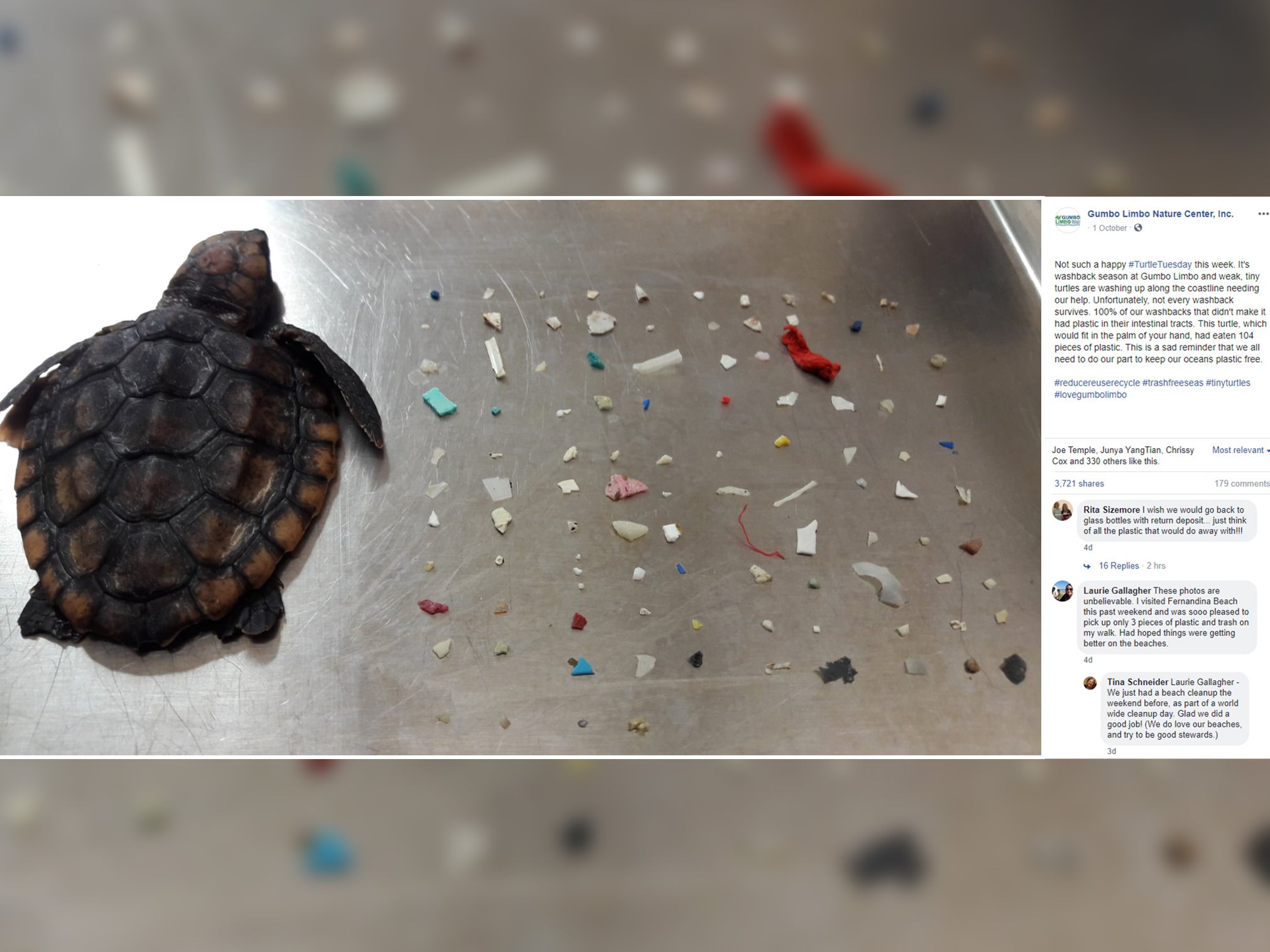
A dying baby turtle that washed up on a beach in Florida had 104 pieces of plastic in its stomach.
Experts say it was one of just dozens of young turtles that have starved to death in the area after eating microplastics in the sea this year.
The Gumbo Limbo Nature Centre posted a photograph on Facebook of the loggerhead sea turtle and the fragments of plastic found in its stomach after it died.
Emily Mirowski, a turtle rehabilitation assistant, told CNN that the turtle, which was small enough to fit in the palm of a hand, was weak and emaciated.
“It was really heartbreaking. But it’s something we’ve seen for several years and we’re just glad people are finally seeing this image, and hopefully it’s raising awareness.”
When babies hatch between March and October each year, they head towards floating seaweed called sargassum, where they live for their first few years.
“The issue is that with all the plastic in the oceans, that’s where the plastic sticks,” Ms Mirowski said. “All the microplastics stick to the seaweed, and it looks like food to the baby turtles.”
The plastic in their stomachs makes turtles feel full, so they don’t eat or receive the nutrition they need to survive.
This season, members of the public have dropped off at the centre dozens of washbacks – babies that have washed back ashore after just a few weeks – and all had plastic in their stomachs, CNN reported.
Turtles suffering from malnutrition due to plastic consumption are so common that the nature centre, in Boca Raton, put a cool box outside its building for residents to safely drop them off for rehabilitation.
Some survive but many are too weak and emaciated.
“We give them a small amount of fluids every day to get them hydrated,” Ms Mirowski said. “Then we hope they’ll pass the plastic naturally. The important thing is getting them hydrated to get their appetite back.”
The problem won’t end until people stop buying plastics and disposing of them improperly, she said.
“We have to reduce plastic use as much as possible,” she said.
“Not just recycling, but eliminating plastic out of daily use. Every piece of plastic that’s ever been made is still out there. It never goes away, it just breaks down to smaller pieces.”