For decades, one woman's cryptic prophecies have captivated millions whilst simultaneously unsettling policymakers, business leaders, and ordinary people seeking glimpses of what lies ahead. Now, as 2025 draws to a close, the predictions attributed to Baba Vanga, the Bulgarian blind mystic who died in 1996, have resurfaced with renewed urgency.
According to proponents of her visions, 2026 will be a year unlike any other—marked by extraterrestrial contact, geopolitical upheaval, economic collapse, and the transformative rise of artificial intelligence. Whether one believes in her supernatural abilities or not, the consistency with which her name surfaces in discussions of global futures reveals something profound about our collective anxieties.
Baba Vanga, often referred to as the 'Nostradamus of the Balkans', earned her reputation through a remarkable track record that believers cite with unwavering conviction. She is credited with predicting the Chernobyl disaster, the death of Princess Diana, the devastating UK floods of 2022, and the terrorist attacks of 9/11.
The blind Bulgarian healer worked from a small cottage in the Rupite region, where she spent her life channelling messages she claimed came from beyond the material world.
Though her predictions remain unverified by scientific standards, they have achieved a cultural significance that defies scepticism, particularly as we approach a year she apparently identified as uniquely significant for humanity's trajectory.
Baba Vanga Predictions for 2026: From Extraterrestrial Contact to Apocalyptic War
According to reports compiled by WION (World Is One News), Baba Vanga's visions for 2026 paint a portrait of civilisation at a critical juncture. The most extraordinary prediction concerns extraterrestrial contact.
She allegedly foresees the first encounter with intelligent alien life occurring in November 2026, when a massive spacecraft will enter Earth's atmosphere. The implications of such contact, should it occur, would fundamentally alter humanity's understanding of its place in the cosmos.
This prophecy has resonated particularly strongly with those who view the universe as teeming with intelligent civilisations waiting for the moment to reveal themselves.
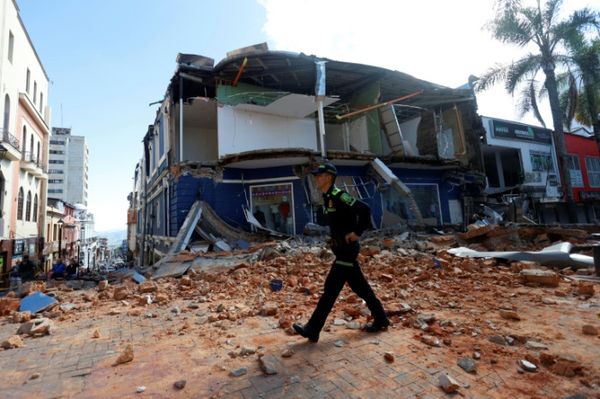
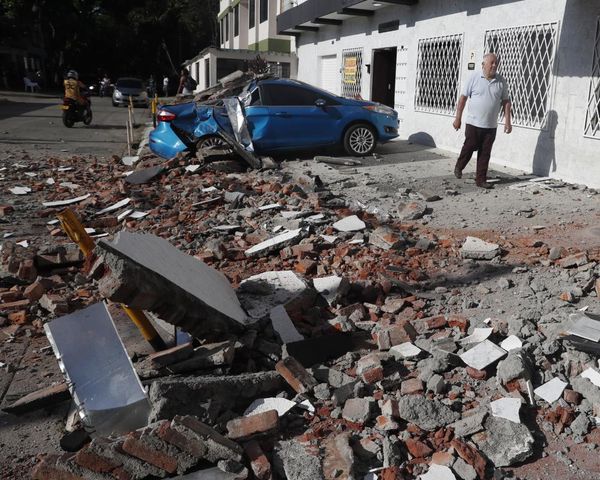
Yet alien arrival pales in comparison to Baba Vanga's predictions of earthbound catastrophes. The mystic is said to have foreseen widespread natural disasters in 2026—tornados, tsunamis, and earthquakes—with particular severity in certain regions.
More alarmingly, she predicted a devastating combination of seismic activity and volcanic eruptions that will impact approximately eight per cent of the planet's surface, triggering severe weather disruptions across multiple continents. For those living in geologically unstable regions, such prophecies resonate with genuine geological risk, even if Vanga's specific foreknowledge remains impossible to verify.
Baba Vanga Predictions: Political Upheaval, Economic Collapse, and the End of Putin's Era
Yet environmental catastrophe may pale beside the geopolitical upheaval Baba Vanga allegedly predicted for 2026. Reports suggest she foresaw the outbreak of World War Three, involving major global powers in large-scale conflict that would spread across continents and trigger unprecedented political instability.
More specifically, she is said to have predicted that China will seize Taiwan and that direct military confrontation between Russia and the United States will occur. These predictions, whilst speculative, tap into genuine geopolitical tensions that analysts and foreign policy experts have warned about for years.
Accompanying global conflict, Baba Vanga purportedly predicted a third catastrophic global financial crash—a major economic downturn that would manifest as market crashes, soaring inflation, and currency collapse. Given the fragility of global financial systems and the interconnected nature of modern economies, such a scenario would devastate millions and reshape the international economic order.
Perhaps most intriguingly for those watching Eastern European developments, Baba Vanga predicted the emergence of a powerful new Russian leader in 2026. This prophecy carries a specific implication: the fall or replacement of Vladimir Putin. Such a development would fundamentally alter the trajectory of the Ukraine conflict and reshape global geopolitics in ways that remain impossible to predict with certainty.
The Artificial Intelligence Question: Transformation or Totalitarianism?
Baba Vanga's final major prophecy for 2026 concerns the transformative power of artificial intelligence. She is said to have predicted that this year marks the moment when AI fundamentally changes human industry and everyday life, raising profound questions about autonomy, employment, and human agency in a world increasingly dominated by thinking machines.
As governments and corporations accelerate AI deployment, her words resonate with both utopian and dystopian visions of our technological future.
Whether Baba Vanga's predictions prove accurate or merely reflect collective human anxieties, they have cemented her legacy as a cultural phenomenon that transcends rational scepticism.
For many, her visions of 2026 serve as warnings; for others, they represent nothing more than coincidental alignments between prophecy and probability. Yet in an uncertain world, such distinction matters less than the deeper question they provoke: what future are we collectively creating?