In the modern era, as air defences become more sophisticated, aircraft grow stealthier and drones become smaller, the continued use of airliner-sized bombers as strategic assets begs the question: why?
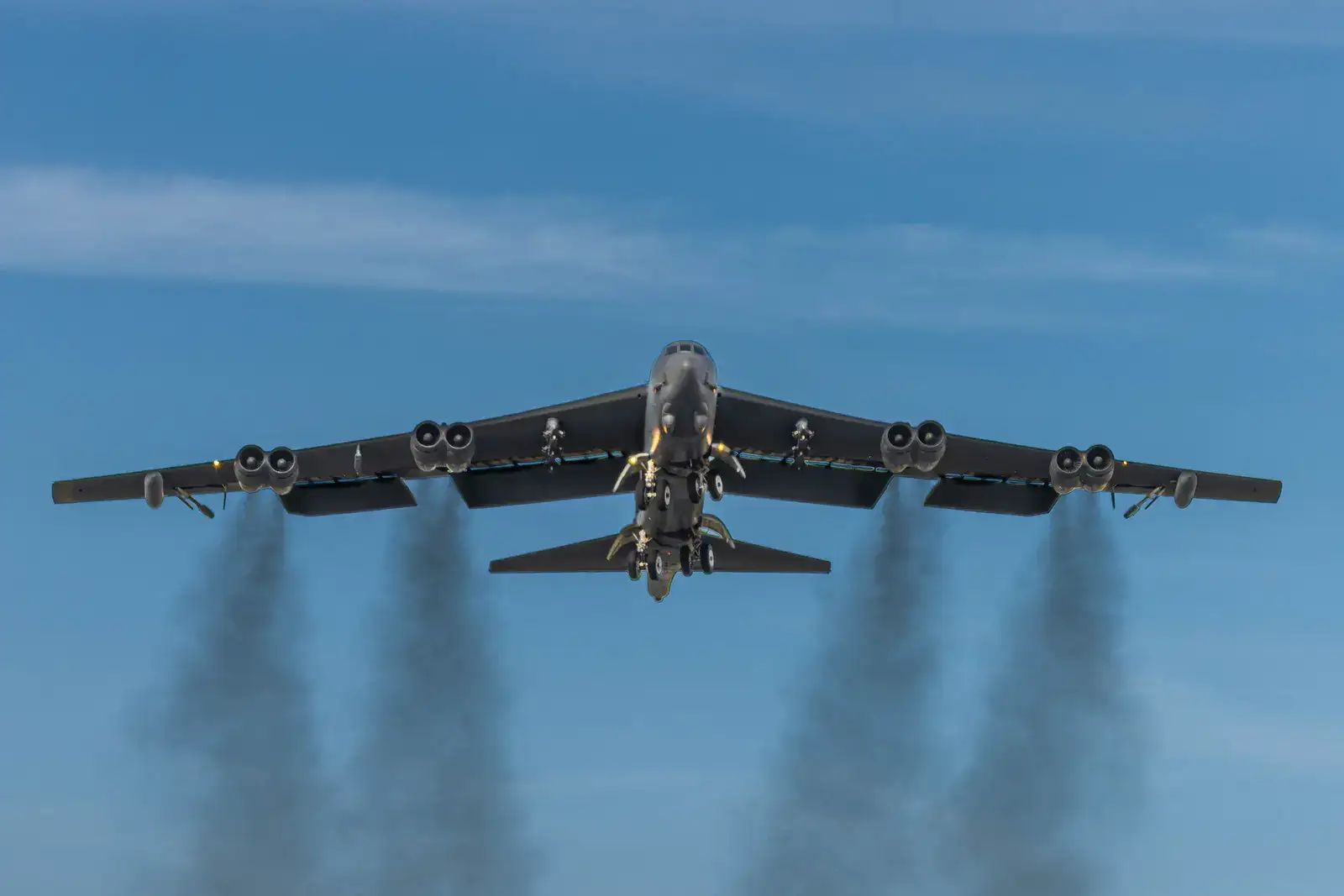
Large strategic bombers such as the B-52 Stratofortress, Tu-95 Bear and H-6 remain key components of the air forces of the United States, Russia and China despite the rise of stealth aircraft and advanced combat systems.
The continued use of these aircraft comes at a time when modern militaries are fielding radar-evading platforms such as the B-2 Spirit, while the United States is also developing the B-21 Raider for long-range strike missions. Even so, these large bombers continue to operate alongside faster aircraft including the B-1 Lancer, Tu-22M and Tu-160.
Also Read: B-52 was in the air a very short time before crashing and killing all 8 on board
Vulnerable in modern combat environments
The B-52 and Tu-95 face considerable risks on contemporary battlefields. Their large size, subsonic speeds and prominent radar signatures make them susceptible to advanced air-defence systems, including long-range surface-to-air missiles and modern fighter aircraft.
Their ageing airframes also increase exposure to electronic warfare, cyber interference and precision-guided weapons. Operations within contested airspace protected by integrated air-defence networks or stealth fighters could significantly reduce their chances of survival without extensive support and escort.
Range and payload remain key advantages
Despite these challenges, the bombers continue to perform missions that capitalise on their strengths. Their long operational range and ability to carry heavy payloads enable them to deploy substantial quantities of conventional or nuclear weapons.
They can also launch large cruise missiles from outside hostile air-defence zones, allowing them to strike targets without entering heavily defended airspace. Many of these weapons are too large to be carried by smaller aircraft.
| Feature | B-52 Stratofortress | Tupolev Tu-95 | Xian H-6 |
|---|---|---|---|
| Country | United States | Russia | China |
| First entered service | 1955 | 1956 | 1969 |
| Crew | 5 | 7 | 4 |
| Powerplant | 8 turbofan engines | 4 turboprop engines | 2 turbofan engines |
| Maximum speed | 1,046 km/h | 925 km/h | 1,050 km/h |
| Range | 14,080 km | About 15,000 km | About 6,000 km |
| Maximum payload | 31,750 kg | Up to 15,000 kg | Up to 12,000 kg |
| Primary role | Strategic nuclear and conventional bomber | Strategic cruise missile carrier | Regional strike and cruise missile carrier |
| Nuclear capable | Yes | Yes | Yes |
| Current status | In service | In service | In service |
Key takeaway
- The B-52 carries the heaviest payload and remains the backbone of US long-range bomber operations.
- The Tu-95 has the greatest range among the three and is known for its large contra-rotating propellers.
- The H-6 is the smallest of the three and has lower range and payload figures, but modern variants compensate with advanced cruise missile and standoff strike capabilities.
Also Read: IAF launches project to produce indigenous long-range kamikaze drones
Stealth bombers: B-2 and B21
The United States' two stealth bombers, the B-2 Spirit and the next-generation B-21 Raider, are designed for penetrating heavily defended airspace and delivering both conventional and nuclear weapons. The B-2, which entered service in the 1990s, is a flying-wing aircraft crewed by two pilots. It has a top speed of about 1,010 km/h, an unrefuelled range of roughly 11,100 km and can carry up to 18,000 kg of weapons internally. The B-21 Raider, currently entering service, remains highly classified, but it is known to feature a similar flying-wing design with a two-person crew, improved stealth characteristics, open-architecture systems and lower operating costs. Public estimates suggest it will carry around 13,600 kg of weapons and possess intercontinental range while being smaller and more maintainable than the B-2. The US Air Force plans to acquire at least 100 B-21s as the future backbone of its bomber fleet.
Modernisation extends operational relevance
Upgrades to avionics, communications systems and weaponry have helped keep the aircraft effective in modern warfare. These improvements support standoff strike capabilities and allow integration into networked combat operations.
The aircraft also offer a cost-effective alternative to replacing entire bomber fleets, while maintaining proven levels of reliability and endurance for long-distance missions.
Central to strategic deterrence
Military planners continue to rely on these bombers because of their ability to project power across vast distances, support nuclear deterrence missions and adapt to evolving technologies. These capabilities ensure that the long-serving aircraft remain an important part of strategic air forces despite the emergence of newer and more advanced platforms.