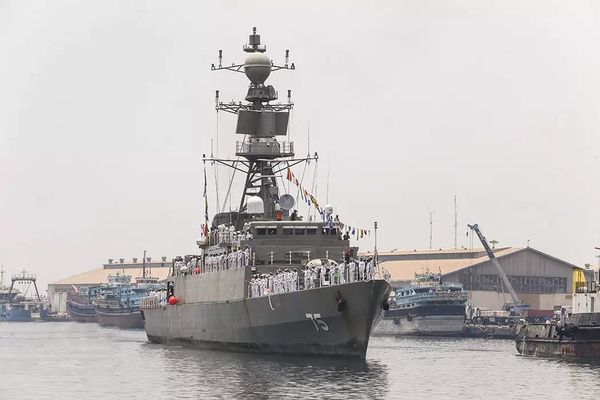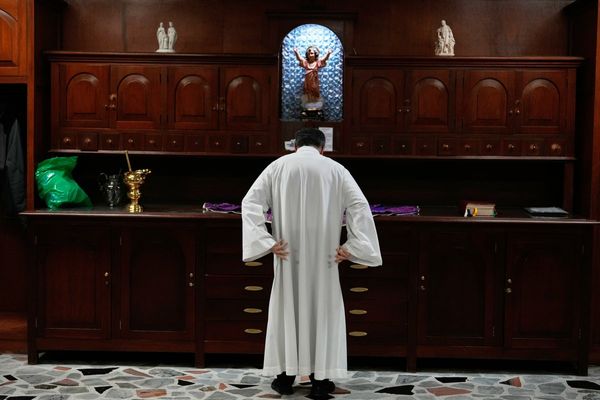

The authorities in Azerbaijan shut down a mosque belonging to the representative of Iranian leader Ali Khamenei in Baku, the Iranian Tasnim news agency reported on Tuesday, days after Baku criticized Tehran’s military exercises near its borders.
“The mosque and the office of Seyyed Ali Akbar Ojaghnejad, representative of Leader Ali Khamenei in Baku, were sealed and closed today by order of the authorities of the Republic of Azerbaijan,” the agency reported, without providing additional details.
Ojaghnejad has held the post since 1996. The office is located inside the Hussainiya, according to AFP.
A spokesman for the Ministry of Interior in Baku explained that the move came as a result of a “recent surge in the number of Covid-19 cases,” which prompted the “temporary” suspension of the mosque’s activity.
Iran enjoys good relations with its northwestern neighbor Azerbaijan. However, over the past two days, the two countries - which share a border of about 700 kilometers - exchanged criticism over maneuvers conducted by the Iranian army near the border with Azerbaijan.
Iranian officials have reiterated in recent days their rejection of any presence of Israel – Tehran’s foe - near their borders, in an implicit reference to the close relationship, including military cooperation, between Baku and the Hebrew state.
The Iranian Foreign Ministry stressed that the military exercises were a “sovereign” decision. Its spokesman, Saeed Khatibzadeh, said on Sept. 28 that Tehran “will not tolerate any form of the presence of the Zionist entity near its borders,” and will take in this regard “what it finds appropriate for its national security.”
In an interview last month with Turkish Anadolu agency, on the occasion of the first anniversary of Azerbaijan’s liberation of Nagorno-Karabakh from the 30-year rule of Armenia with the support of Turkey, President Ilham Aliyev pointed to the military maneuver, which Iran recently carried out near the Azerbaijani borders.
He said: “This is a very surprising event. Each country can conduct military exercises on its territory. This, of course, is its sovereign right. At the same time, analyzing this at a certain point of time, we see that this has not happened before.”