Two weeks have passed since the government declared a state of emergency in response to the spread of new coronavirus infections. In Japan, there is growing concern among automakers that production will be suspended for a long time, and restaurants and retailers are looking for ways to survive under the assumption that temporary closures and shorter working hours will be prolonged.
In addition to the impact of the state of emergency, automakers are suffering from a shortage of parts from Southeast Asia.
According to trade statistics released by the Ministry of Finance, car parts imports from the Association of Southeast Asian Nations (ASEAN) declined 9% year-on-year to 17.6 billion yen in March. This is because of a curfew that spread from China, where the virus broke out, to Southeast Asia, reducing parts production in the region.
Production began to be suspended or reduced at assembly plants in Japan in mid-February. When production was halted in China only, there was still room for inventory at each company, but when the disease spread throughout Southeast Asia, "the parts supply network was torn to pieces," an automaker executive said.
Since March, major automakers such as Toyota Motor Corp., Honda Motor Co. and Nissan Motor Corp. have been forced to suspend or reduce production. On Monday, Toyota implemented an additional cut to production at plants nationwide, including those of its group companies such as Hino Motors Ltd. Honda also announced Monday that it would stop production from April 27 to May 10 at two plants in Saitama Prefecture because parts supply had stalled.
Automakers' production cuts will also affect related industries. Bridgestone Corp., a tire manufacturer, announced Monday it would temporarily suspend its 11 domestic plants during Golden Week holidays.
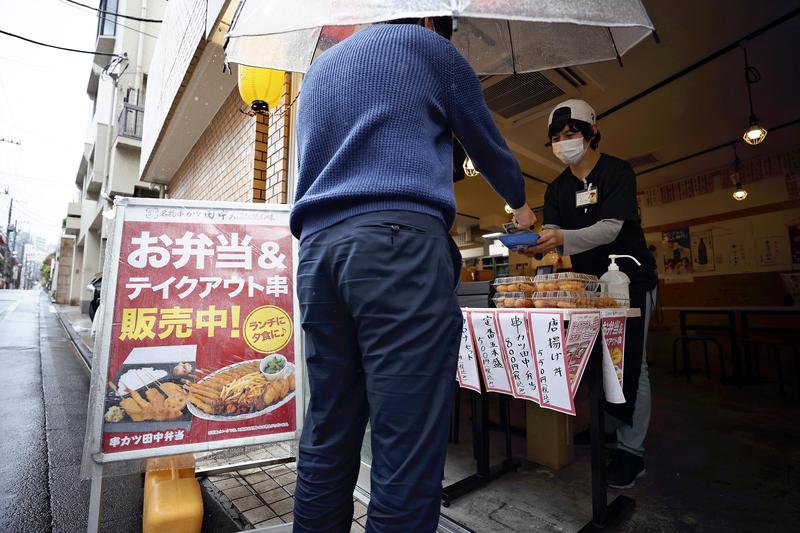
Before the state of emergency declaration, Kushikatsu Tanaka Holdings Co., a chain of izakaya bars, decided to suspend operations at all of its locations, but resumed operation at 73 after April 13. They are open from 11:30 a.m. to 8 p.m., shorter than usual. AP Company, which operates "Tsukada Nojo" izakaya bars, has launched a website that sells locally-bred chickens and other ingredients used in its restaurants.
Meanwhile, Isetan Mitsukoshi department stores' cosmetics sales online in the first half of April more than tripled from the year before. But online sales account for only a few percent of revenue for each store operator. The burden of paying workers on leave is also serious.
BicCamera Inc., a major home electronics retailer with strong online sales, has increased its lineup of products sold by mail order. Amazon Japan imposed restrictions mid-April on the arrival of goods at its distribution facilities in order to prioritize the shipments of daily necessities such as foods and drinks.
Read more from The Japan News at https://japannews.yomiuri.co.jp/