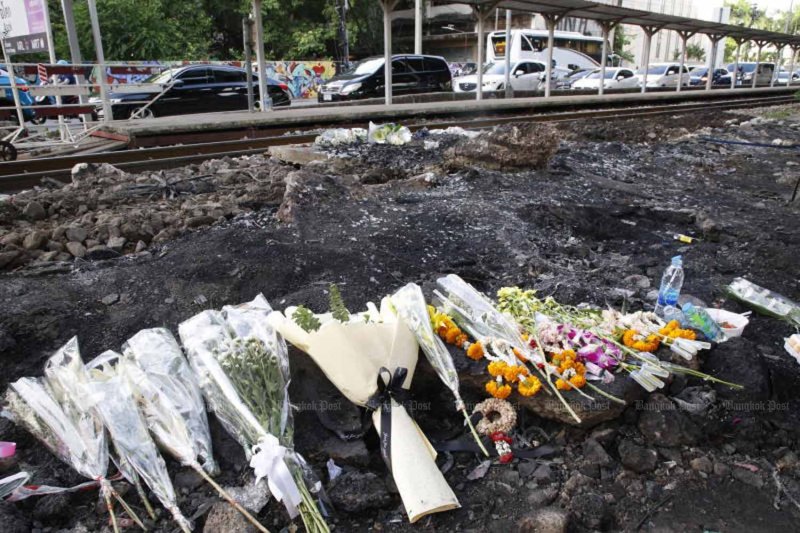
The deadly train–bus collision near Makkasan station last month, which killed eight and injured about 30, is more than a singular tragedy. It exposes persistent failures in Thailand’s transport system that have long gone unaddressed.
Commuters’ trust in mass transit has been eroded. When the passenger bus and the freight train collided near the Makkasan station of the Airport Rail Link on May 16, the question is not only who erred but why basic safeguards failed to prevent it.
This incident echoes a similar accident in Chachoengsao province in 2020, which killed 19 people, and shows that repeated fatalities at crossings and along corridors point to systemic breakdowns rather than mere misfortune.
BMTA director Kittikarn Jomduang said, “From now on, the law will be enforced strictly to ensure the safety of lives and property.” The agency would intensify its operational oversight and enforcement measures, he added.
Official promises matter, but they are insufficient. The BMTA director's vow of stricter enforcement is welcome. However, enforcement must be part of a funded, cross-agency plan with measurable targets, not a seasonal burst of rhetoric.
Attention must shift from post-crash blame to pre-crash prevention. Driver welfare and operating conditions are central. Tight schedules, heavy congestion and inadequate pay pressure drivers into risky behaviour. Any safety strategy that ignores labour conditions is incomplete.
Technical fixes can reduce risk. The Department of Rail Transport should fast-track artificial intelligence (AI) detection systems, train-linked cameras and automatic braking where feasible. But technology must be paired with upgraded crossings, clearer signage, physical barriers where needed and coordinated planning between road and rail authorities.
Accountability remains necessary, but it should be accompanied by reforms. They include sustained political will, proper funding, inter-agency coordination and transparent timelines for upgrades. Short-term crackdowns without structural change will only postpone the next tragedy.
Commuters deserve safe, reliable travel. The Makkasan collision must be a turning point. Outrage must be converted into concrete policies, resources and enforcement that make public transport a safeguard not a hazard.