Australia is demanding the most stringent anti-doping measures surround the path to reintegrate Russia into the Olympic fold.
The International Olympic Committee (IOC) has provisionally lifted its suspension of the Russian Olympic Committee (ROC), a significant step ahead of the Los Angeles 2028 Games.
The ROC was suspended in October 2023, in the wake of Russia's invasion of Ukraine, for recognising regional Olympic councils in Russian-occupied parts of Ukraine - Donetsk, Kherson and Zaporizhzhia.
The IOC's executive board has lifted the suspension but, as noted by the Australian Olympic Committee (AOC), hasn't decided whether Russia could display its flag, colours or have its anthem played at the Games.
"What is of the utmost importance to the AOC is the impact on our athletes and ensuring a level playing field in competition," the AOC said in a statement on Wednesday.
"We therefore support the most stringent possible anti-doping controls being in place to ensure all Russian athletes who are returning, some having been out of the system for many years, are fully compliant.
"Russia has had extremely serious anti-doping breaches in the past.
"Australia's and the world's Olympic athletes will have the highest expectations that rigorous independent testing regimes are in place and being adhered to, so when athletes return to competition we know they are clean.
"This is of fundamental importance and we will continue to speak out and support the work of WADA (World Anti Doping Agency)."
The IOC said it would continue to support Ukraine.
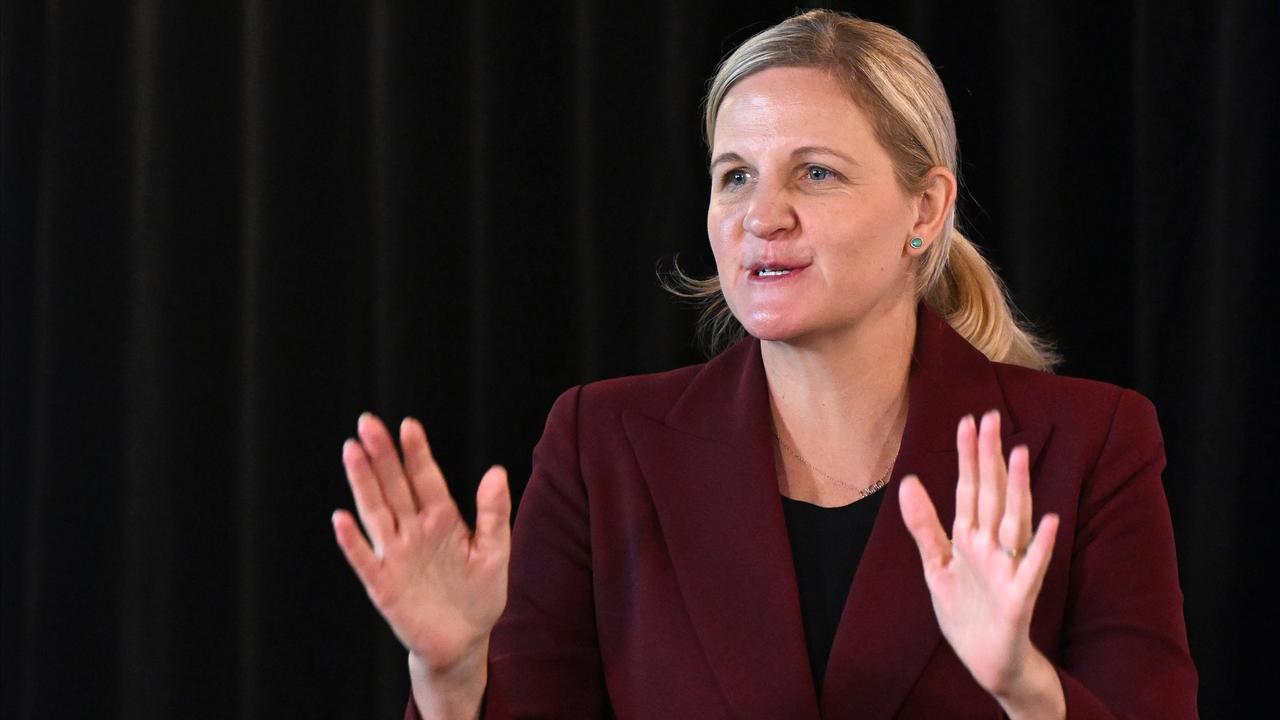
"We don't want to hold athletes accountable for the actions of their government," IOC President Kirsty Coventry told reporters on Tuesday (local time) in Lausanne.
"We made it clear that all athletes had the possibility to compete at the Olympic Games.
"This is what this decision speaks to. It allows Russian athletes to take part in sports competitions. We thought it was really important for athletes to have that possibility."
Winter Olympian and skeleton racer Vladyslav Heraskevych, the Ukrainian face of the Milan-Cortina Games after being banned for wearing a helmet featuring athletes killed in the war, called for a coalition of national Olympic committees to oppose the decision.
Ukraine's foreign ministry said the decision was "a troubling signal for the entire international community".
Russian sports minister Mikhail Degtyarev said the IOC's decision should clear the way for Russian athletes to make a full return to the international sporting stage.
Russian athletes competed as neutrals at the 2024 Paris Olympics and at the 2026 Winter Games.
In addition to Russia being ostracised over its invasion of Ukraine, its athletes' return to competition comes against the backdrop of one of the most damaging doping scandals in Olympic history.
The country has been under scrutiny since a 2015 WADA commissioned report found evidence of systematic doping in Russian athletics, followed by findings a state-sponsored cover-up operated around the 2014 Sochi Winter Olympics.
Russia was barred from competing under its flag at several subsequent Games, with many athletes admitted only as neutrals.
WADA imposed a four-year ban in 2019 after Moscow was found to have manipulated laboratory data, a sanction later cut to two years by the Court of Arbitration for Sport.
With Reuters.