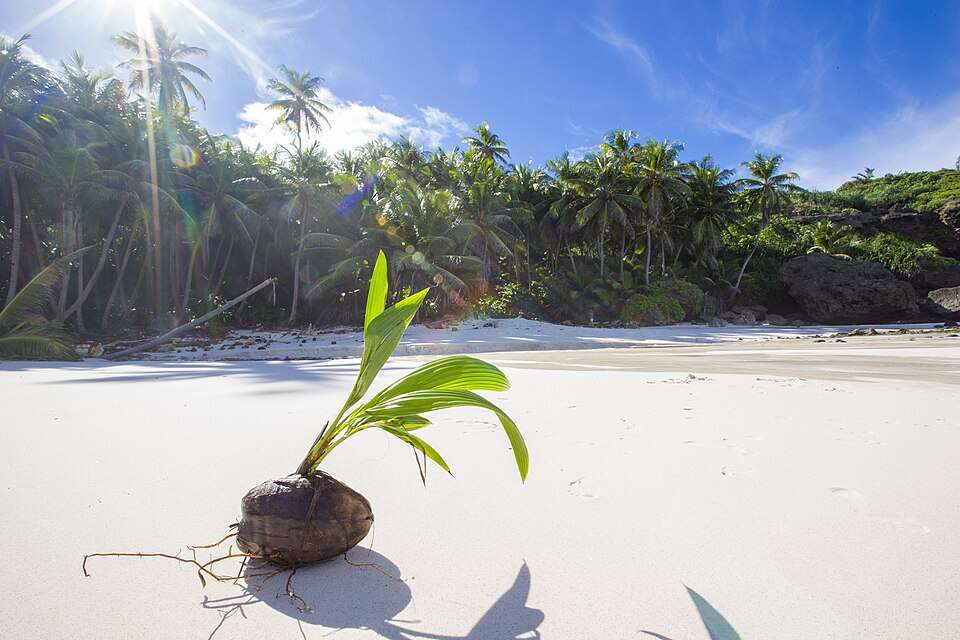
For decades, Christmas Island has been known for a remarkable wildlife event. Every year, millions of red crabs leave the forests of Christmas Island and head to the ocean to mate, forming a vivid red carpet on streets, beaches, and forest paths.
Get breaking news anytime, anywhere. Download the TOI app now!
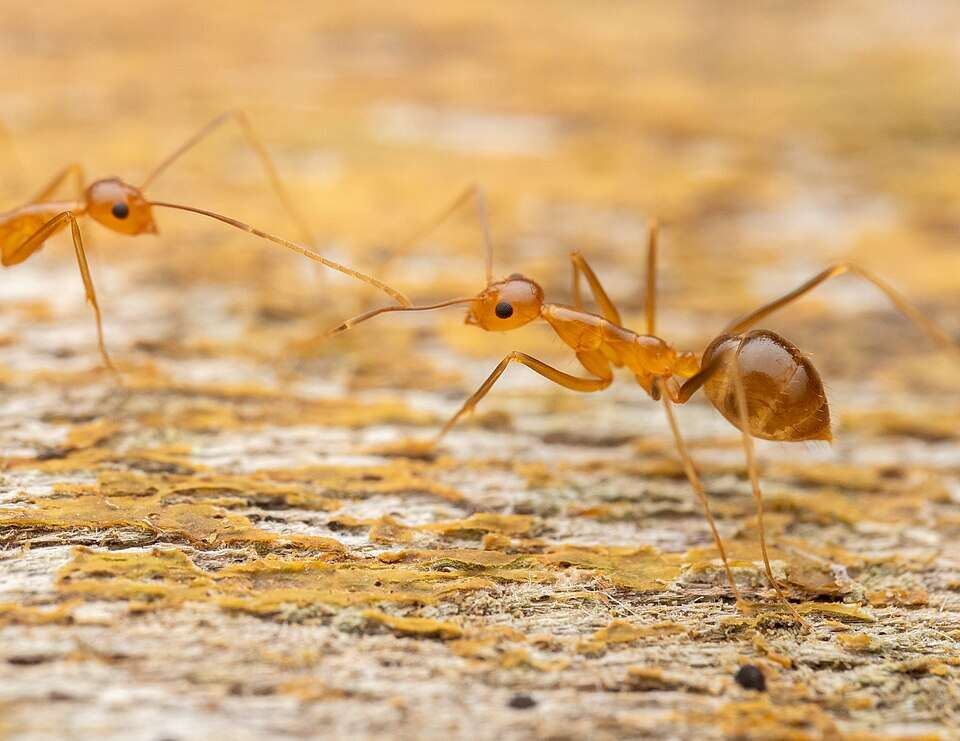
But few people know that all this nearly changed because of an accidental insect invasion. Scientists say yellow crazy ants arrived on Christmas Island in a shipment of cargo in the early 20th century and became one of the clearest examples of a single invasive species reshaping an ecosystem. These ants led to the death of millions of red crabs living on the island, transforming the ancient forests of the island.
Stowaway with deadly repercussions
Yellow crazy ants form massive "supercolonies" with millions of worker ants. It is believed that they got to Christmas Island sometime between 1915 and 1934 as stowaways in shipping containers. Yellow crazy ants create massive "supercolonies" consisting of millions of worker ants. Unlike most ant species, these supercolonies do not compete with each other but rather work together, resulting in rapid population growth.
A study published in Ecology Letters by Dennis O'Dowd, Peter Green and Paul Lake found that the colonies quickly dominated the native ecosystem of Christmas Island, especially the Christmas Island red crabs.
The paper reported field experiments in which crab-access and crab-exclusion quadrats were compared across the Christmas Island rain forest. It found that red crabs removed 30 to 50 percent of leaf-fall at the experimental sites, and that litter near burrow entrances was richer in organic matter and nutrients, with leaves lining chambers in 64 percent of excavated burrows. The ants do not kill the crabs by eating them; instead, thousands swarm each crab and spray formic acid into its eyes and joints. The crabs lose their sight and become vulnerable to starvation, dehydration, or injury.
It is estimated that the ants killed between one-quarter and one-third of the island’s red crab population, about 10 million to 15 million crabs, in the late 1990s. Later studies by the government revealed that around 15 million to 20 million crabs had been displaced or killed because of the expanding supercolonies of ants.
How the loss of the crabs affected the rainforest
But the loss of the crabs had effects that went far beyond the species itself.
Red crabs on Christmas Island act as gardeners in the rainforest. They feed on dead leaves, fruits, flowers, and baby plants, thus ensuring that the forest floor is not overly vegetated. Earlier ecological studies had shown that the crabs remove large amounts of leaf litter each year. The rainforest responded almost immediately after the crabs disappeared from ant-infested areas, according to the Journal of Tropical Ecology .
The authors compared leaf-fall in crab-access and exclusion plots and showed that the difference in litter mass tracked red crab foraging density. Soils around burrow entrances showed significantly higher levels of nitrogen, phosphorus, potassium, calcium, sodium and magnesium.
The Ecology Letters study found more leaf litter, more seedlings, changes in plant diversity and a slower rate of decomposition. At the same time, the ants formed a symbiotic relationship with invasive scales in the tree canopy. The invasive scales provided the ants with sugary honeydew while the ants gave them protection against their enemies. The result was a cascade of ecological effects: the scales multiplied, sooty black mould covered the leaves, and some rainforest trees suffered canopy dieback or died.
Conservation struggle still going strong
The invasion could not escape notice.
From the early 2000s, Parks Australia has undertaken one of the world’s biggest campaigns against invasive ants on Christmas Island. Conservation experts have used aerial baiting, hand baiting, surveillance and, more recently, drone technology to target yellow crazy ant supercolonies before the crab migration. According to Parks Australia , the effort has saved millions of migrating red crabs and reduced ant numbers in parts of the rainforest, although the species remains a persistent threat. In 2024, drones were once again used to eliminate supercolonies before the start of the migration.
Each year, rainfall from October to January signals the start of the red crab migration. The local authorities temporarily close down the roads, put up crab barriers, and guide them via underpasses and bridges. The migration remains one of Australia’s best-known natural phenomena. It is at the same time a clear indicator of the vulnerability of island environments.
For many years, Christmas Island has been cited as one of the clearest examples of how invasive species can reshape an environment. It all started with just a few ants that were brought into the island in cargo and ended up transforming the fate of millions of crabs, as well as altering the makeup of the rainforest.