Voters want big-picture ideas, according to the results of an academic study, as Labor and the opposition accuse each other of being short-sighted.
Three in four Australians believed visions for the country in 10 to 20 years were not being considered by politicians, an Australian National University report has found.
Almost all of the study's respondents said they wanted present-day policies to take into account the interests of future generations.
"This should give political parties of all stripes the confidence that long-term, intergenerational policymaking is a no-brainer and a 'win-win' for governments and the public alike," its co-author Elise Stephenson said.
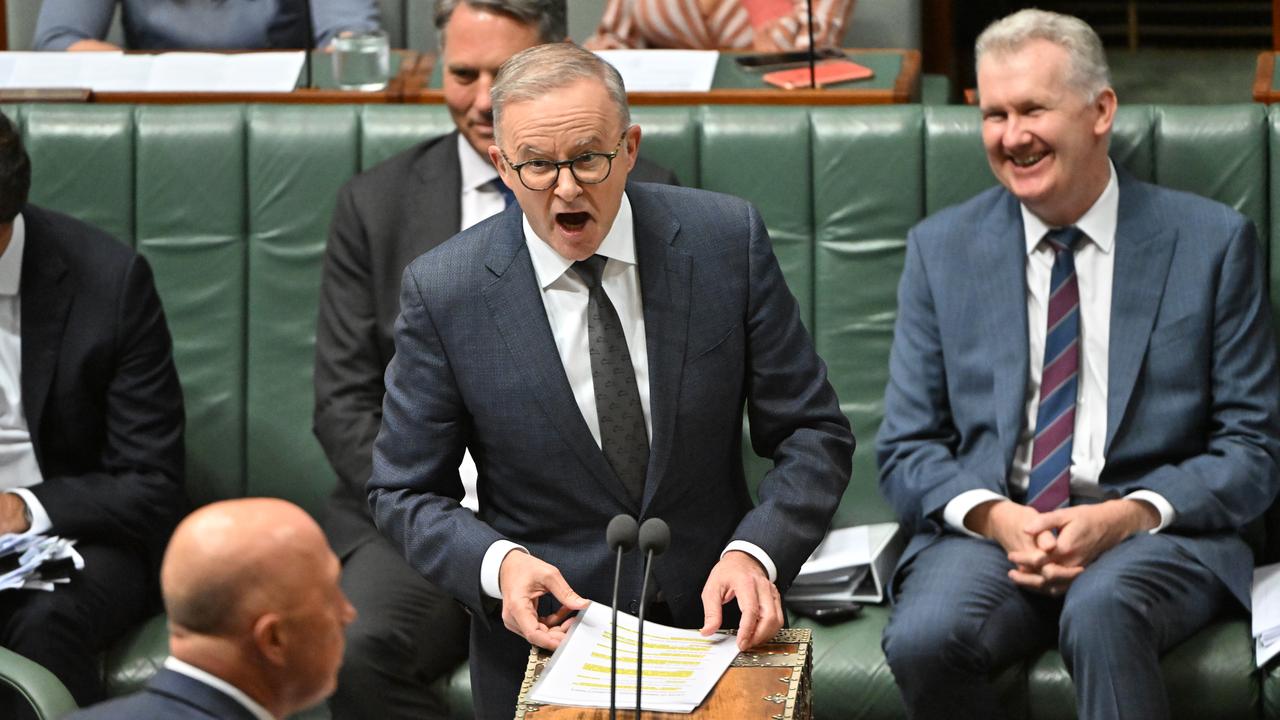
The research comes against the backdrop of a political fight over migration and energy policy, with Prime Minister Anthony Albanese accusing the opposition leader of making announcements that would have disastrous long-term impacts.
Opposition Leader Peter Dutton has announced a coalition government would reduce the permanent migration rate by one quarter, some 45,000 people, and roll out nuclear energy to help achieve net-zero emissions.
But the announcements were all smoke and mirrors, Mr Albanese said, so that the opposition had something to counter the government's argument.
"Whilst he has this so-called plan on nuclear reactors, where he won't tell you where they're going to be, he won't indicate who's going to finance them, and he won't tell you what the cost will be," he said.
On migration, he accused the opposition leader of failing to see the impact on skills shortages it would have down the line.
But Mr Dutton chastised the prime minister for driving up power prices by moving to renewable energy too quickly, saying it's been ideologically driven.
"The prime minister can pretend that the solar panels will work in the night-time or the wind turbines will spin 24 hours a day. It doesn't happen," he said.
A temporary reduction in migration would help reduce congestion and free up housing so it becomes more affordable, Mr Dutton argued.
But the argument over migrants could also cause division within the community, the prime minister warned.
"Peter Dutton always looks to divide," Mr Albanese said.
Focusing on day-to-day squabbling has led Australians to believe policymakers lack the skills or knowledge to make long-term policy on issues like the trilateral AUKUS security agreement, artificial intelligence and climate change.
As such, a commissioner for future generations should be enshrined in law to force the government to focus on the long-term needs of Australians, the university's report recommended.
The position could be modelled on one in Wales, whose commissioner was the world's first of its kind and has helped lead high-profile interventions in transport planning, education reform and climate change.
Health care, improved wellbeing for children and youth, and increased jobs were among the highest priorities for those surveyed.