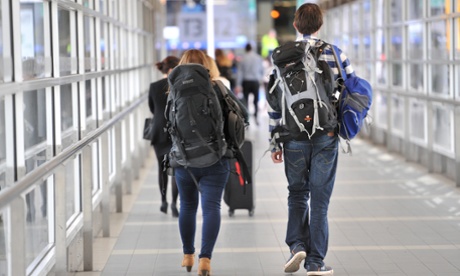
Travellers and expats could be cut off from Australia’s consular assistance program if embassy staff decide they are abusing the system, under a tightening of the rules announced on Wednesday.
The Department of Foreign Affairs and Trade (Dfat) provides assistance to 1,300 Australians around the world every day. Consular officials say there has been a gradual increase over the years in the number of people making outrageous demands.
They cite the case of an Australian man who walked into the Australian embassy in Bangkok and asked for a loan to help pay for the services of his Thai prostitute, who he had brought with him. Or the person who rang and asked for consular help to get a polecat out of his roof in the US. Someone rang the Australian embassy and asked for a marmalade recipe, and officials say they often field requests from expats who want help looking after their pets while they are overseas.
“We’ve got stories you won’t believe,” foreign minister Julie Bishop told reporters on Wednesday. “Some will bring tears to your eyes, they’re so funny.”
“It’s often a misunderstanding of the consular role, and that’s the basis of these sorts of queries,” the acting deputy secretary of Dfat, Justin Brown, said.
He has welcomed the suite of measures announced by the minister to limit the number of “naive” or vexatious claims. Many of the measures, such as a public awareness campaign on consular services, improving the government’s Smart Traveller website and enhancing Dfat’s social media presence, aim to build understanding of the role the department plays abroad.
Brown said the provision to limit consular assistance would only apply to known troublemakers, and was in line with measures considered by other western countries.
Both Brown and Bishop insisted that Australians who genuinely required help while abroad would receive that help.
“There are people we colloquially refer to as serial pests who are constantly bouncing back into the embassy because they’ve run out of money or they’ve got some other personal problem they want consular staff to solve,” Brown said. “People who are wilfully, repeatedly or negligently applying for assistance.”
The move aims to “promote a stronger culture of self-reliance” with travellers, Bishop said, adding that vexatious claims by people who “game the system” are rare but “come up from time to time”.
She said limiting consular assistance was not a budget savings measure, and would have a “minuscule” impact on the bottom line.
Bishop said the new guidelines for assistance would help consular staff, who she admitted sometimes approved claims by problematic claimants because it was easier than querying them.